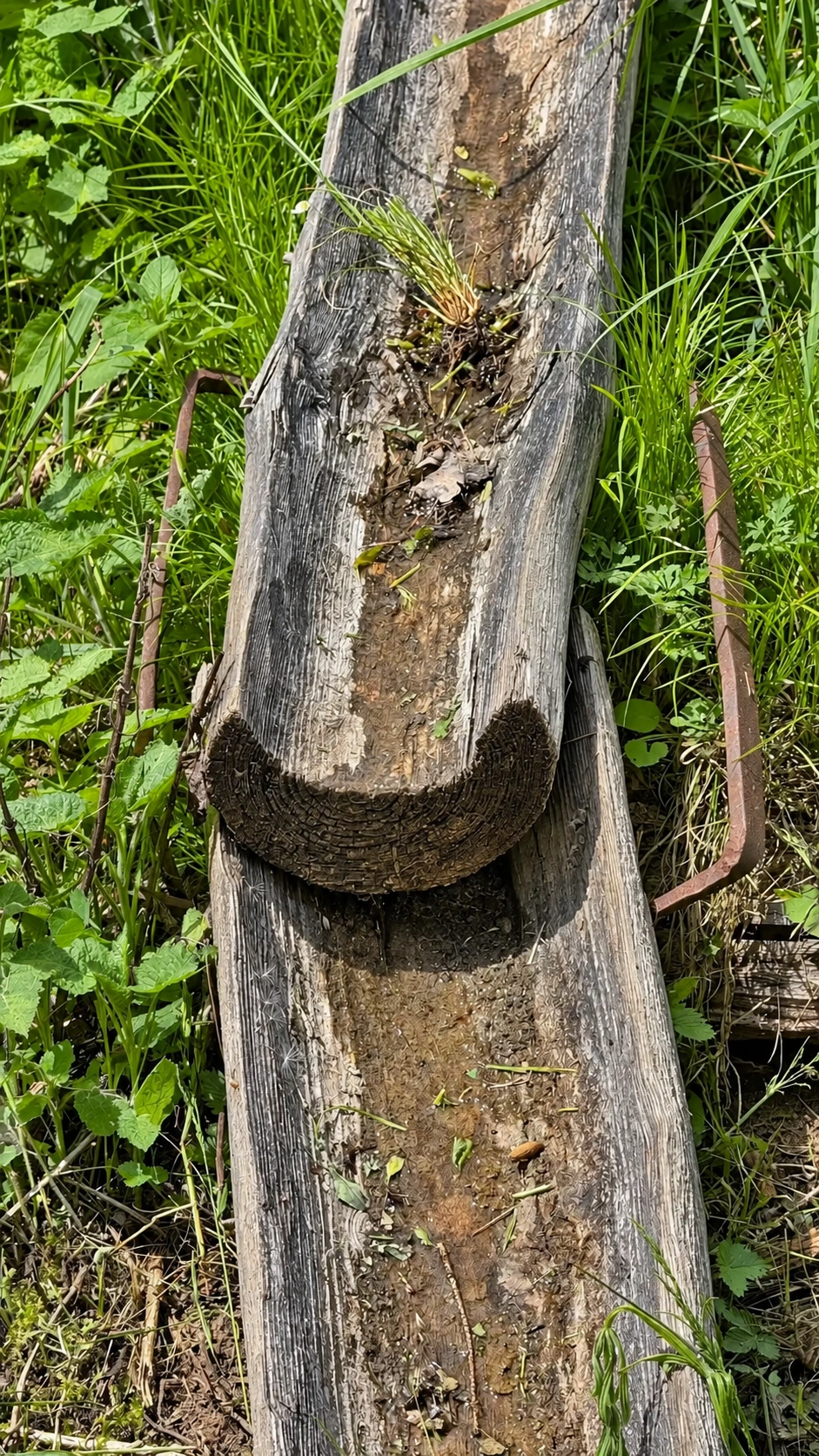
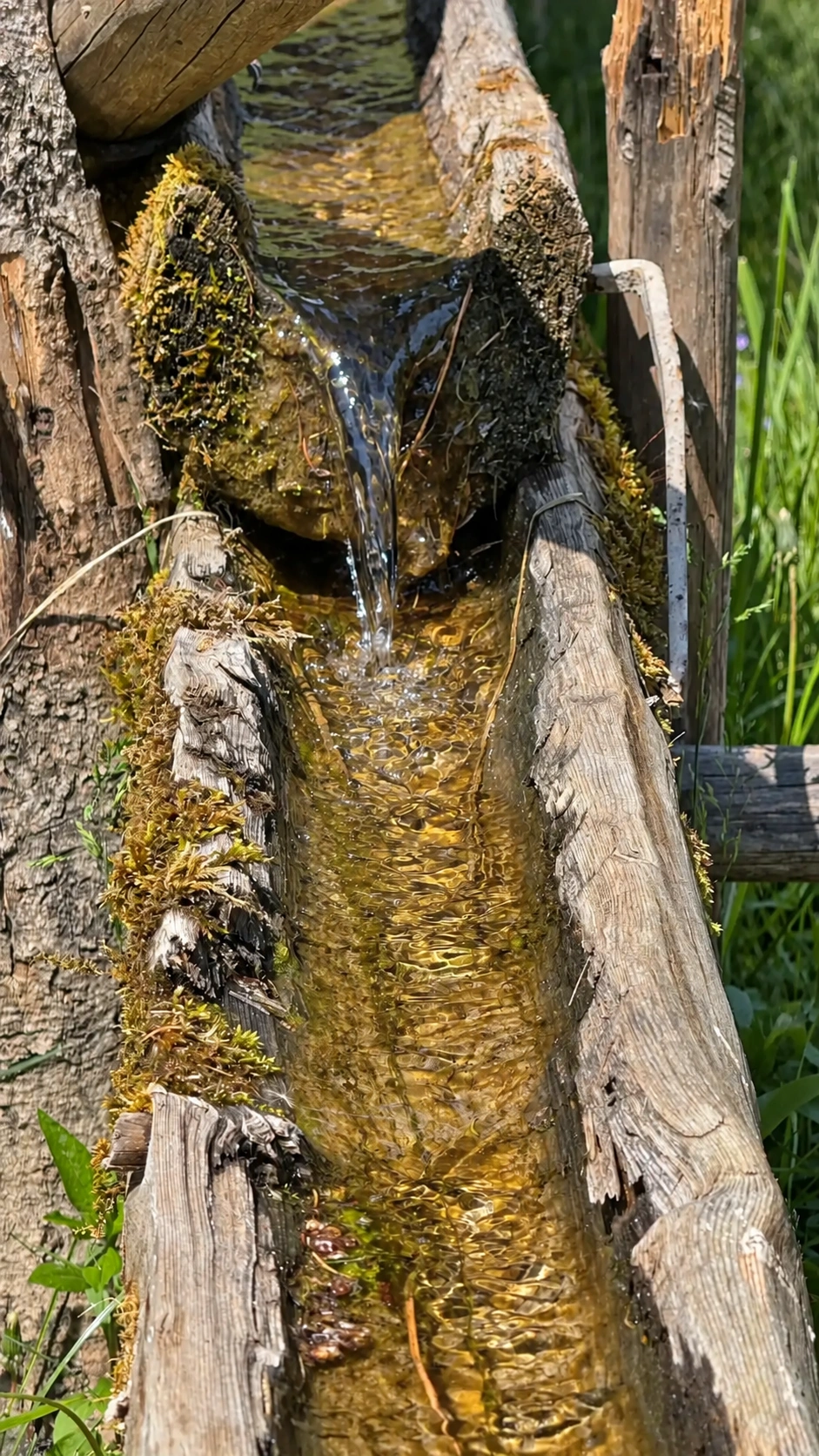
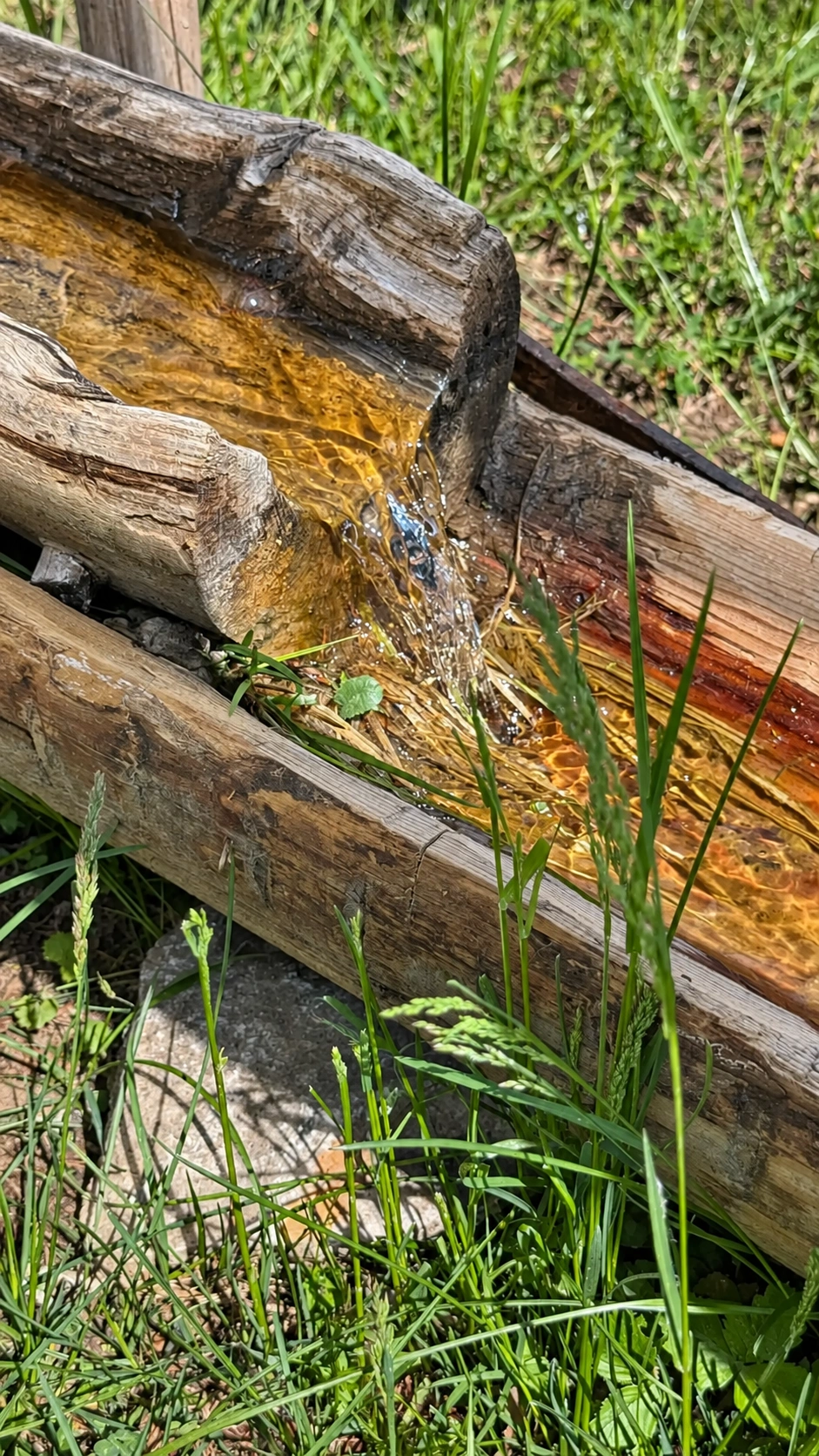
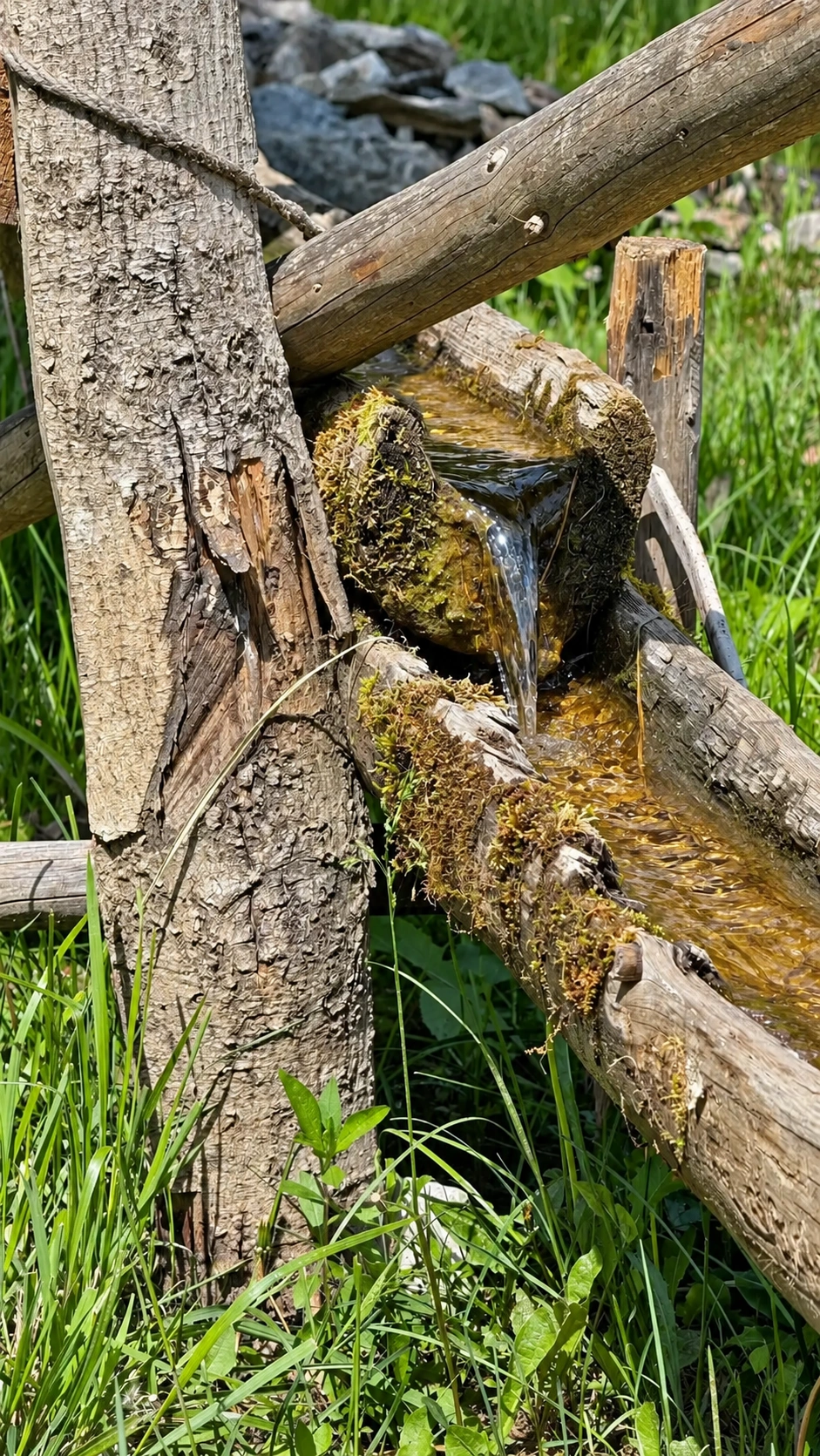
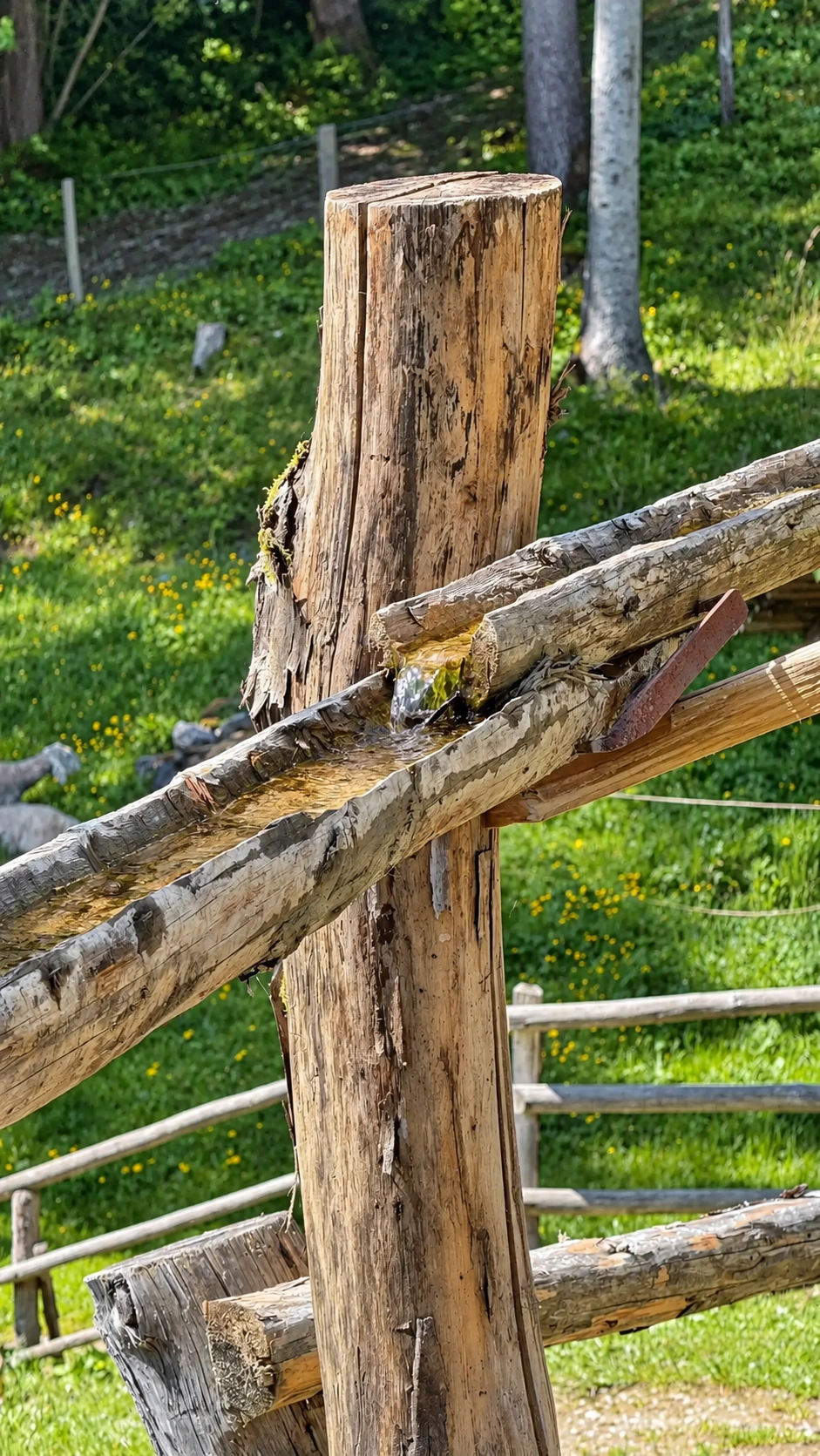
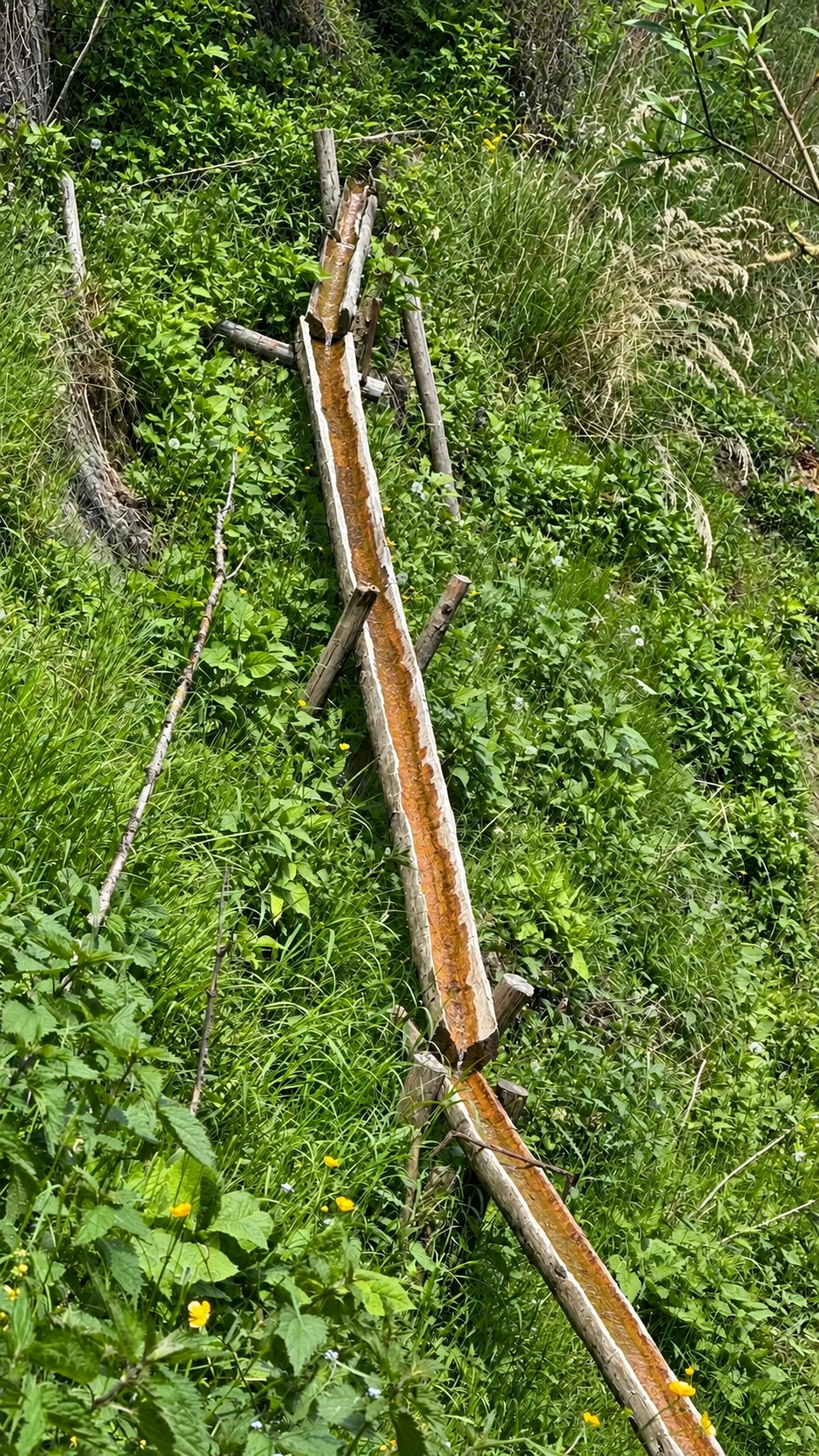
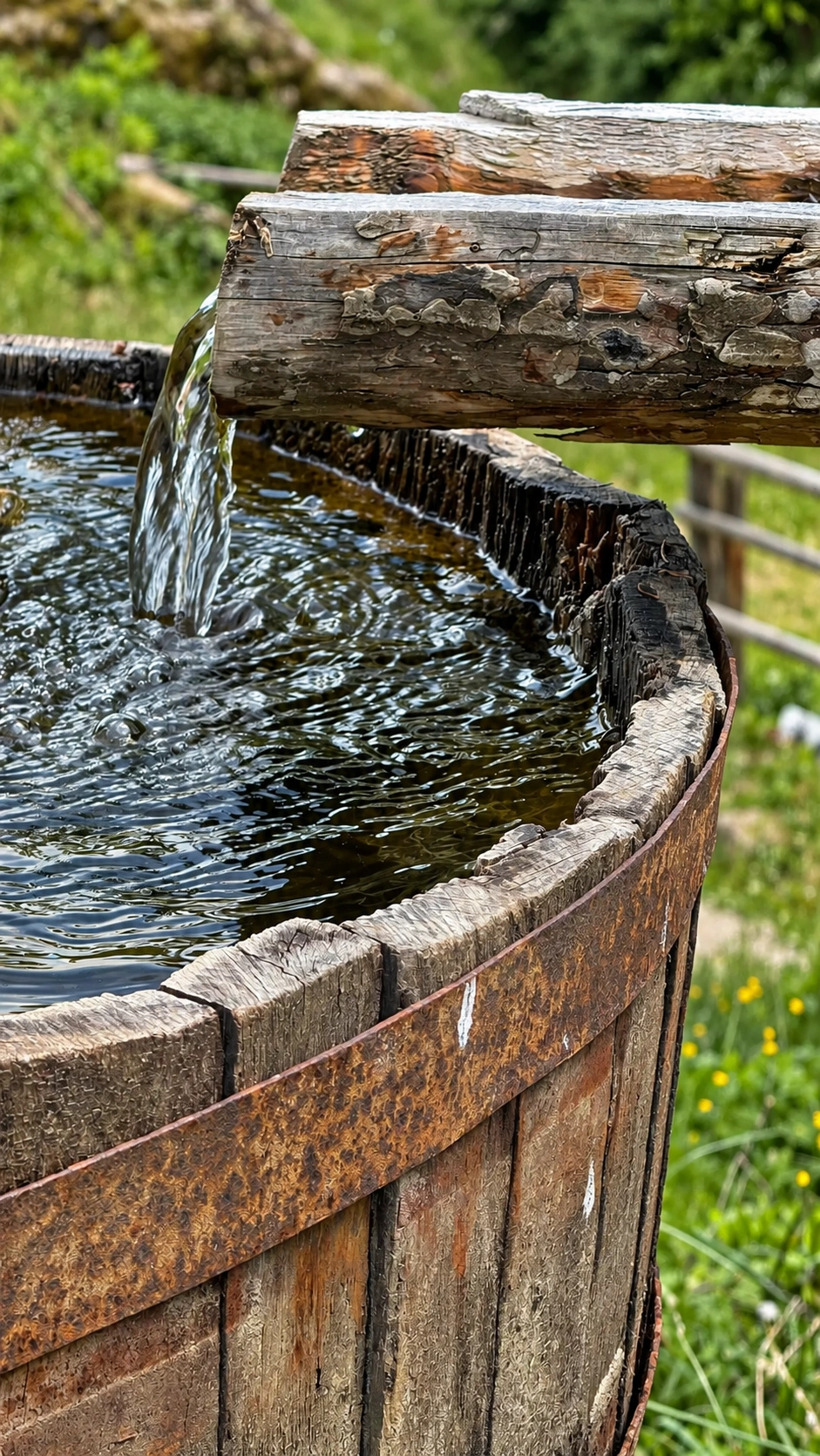
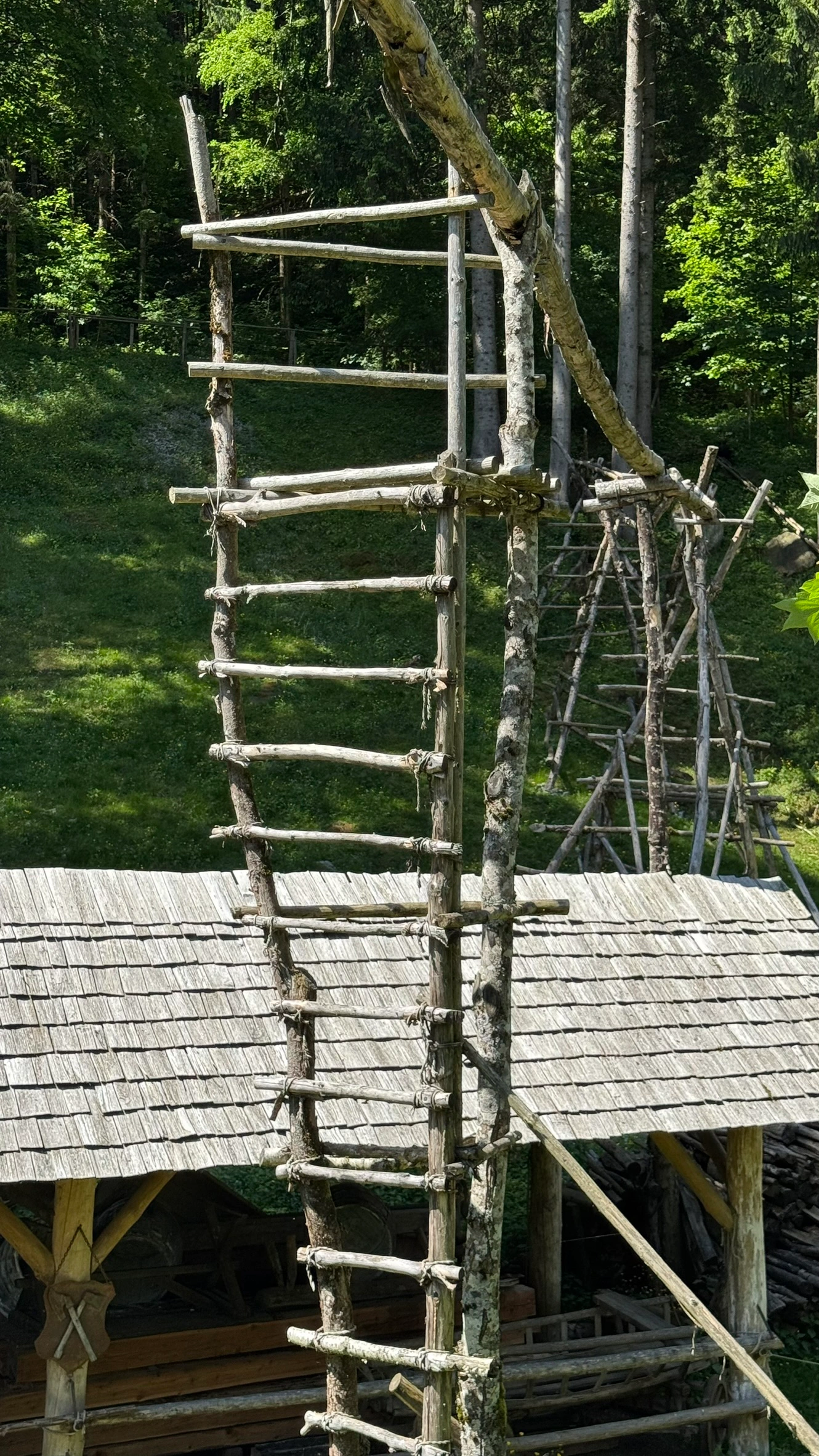
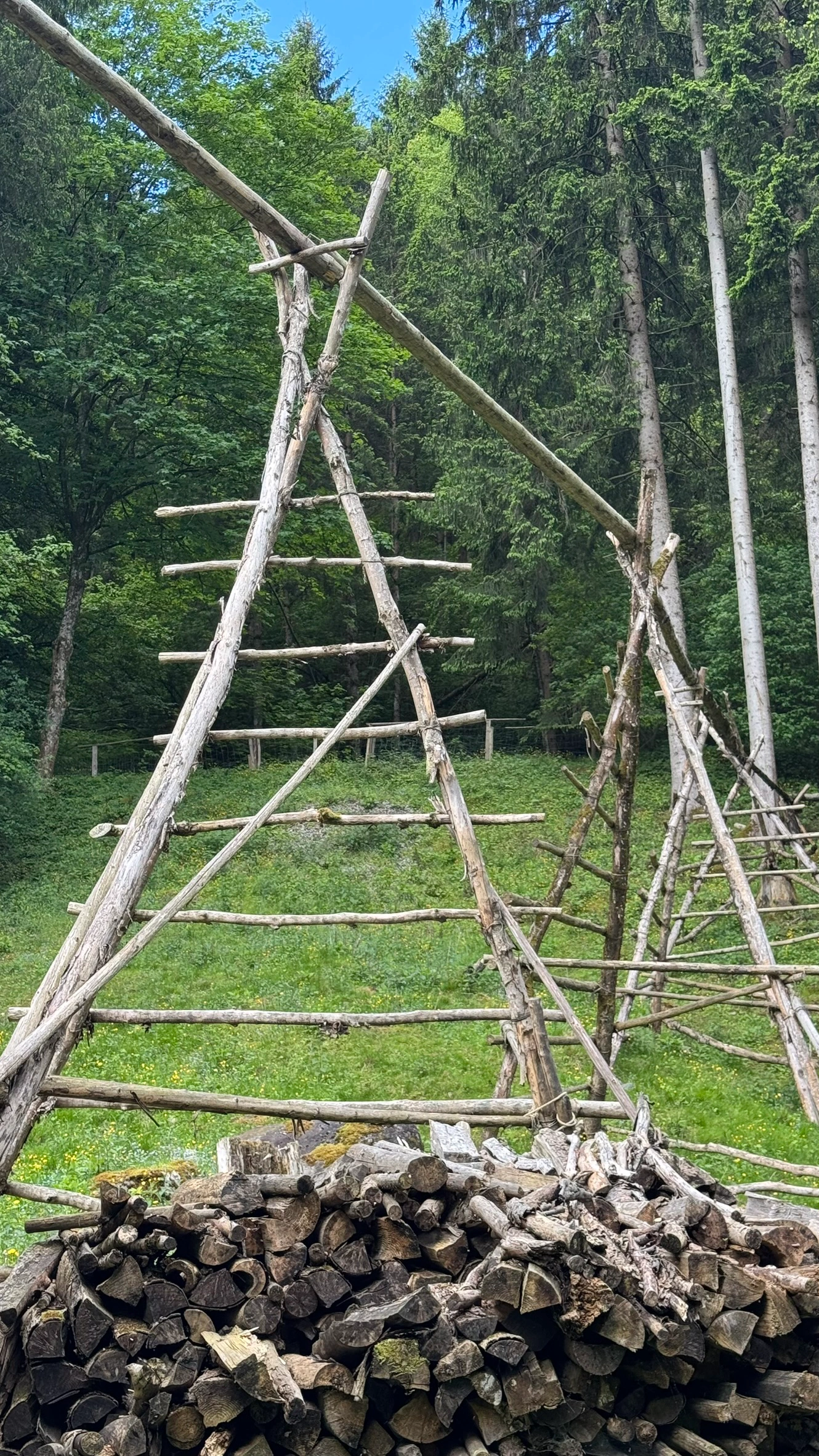
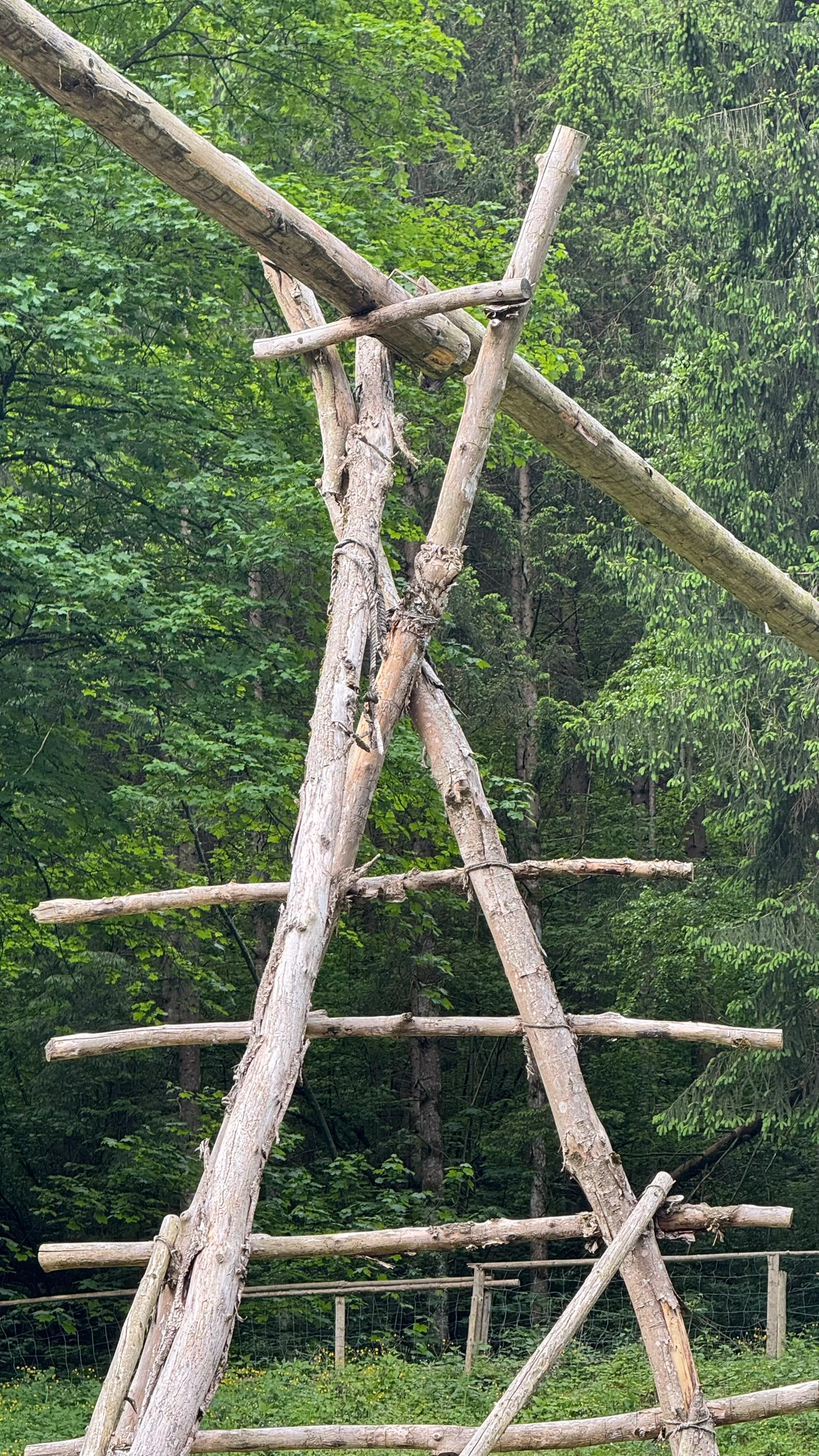
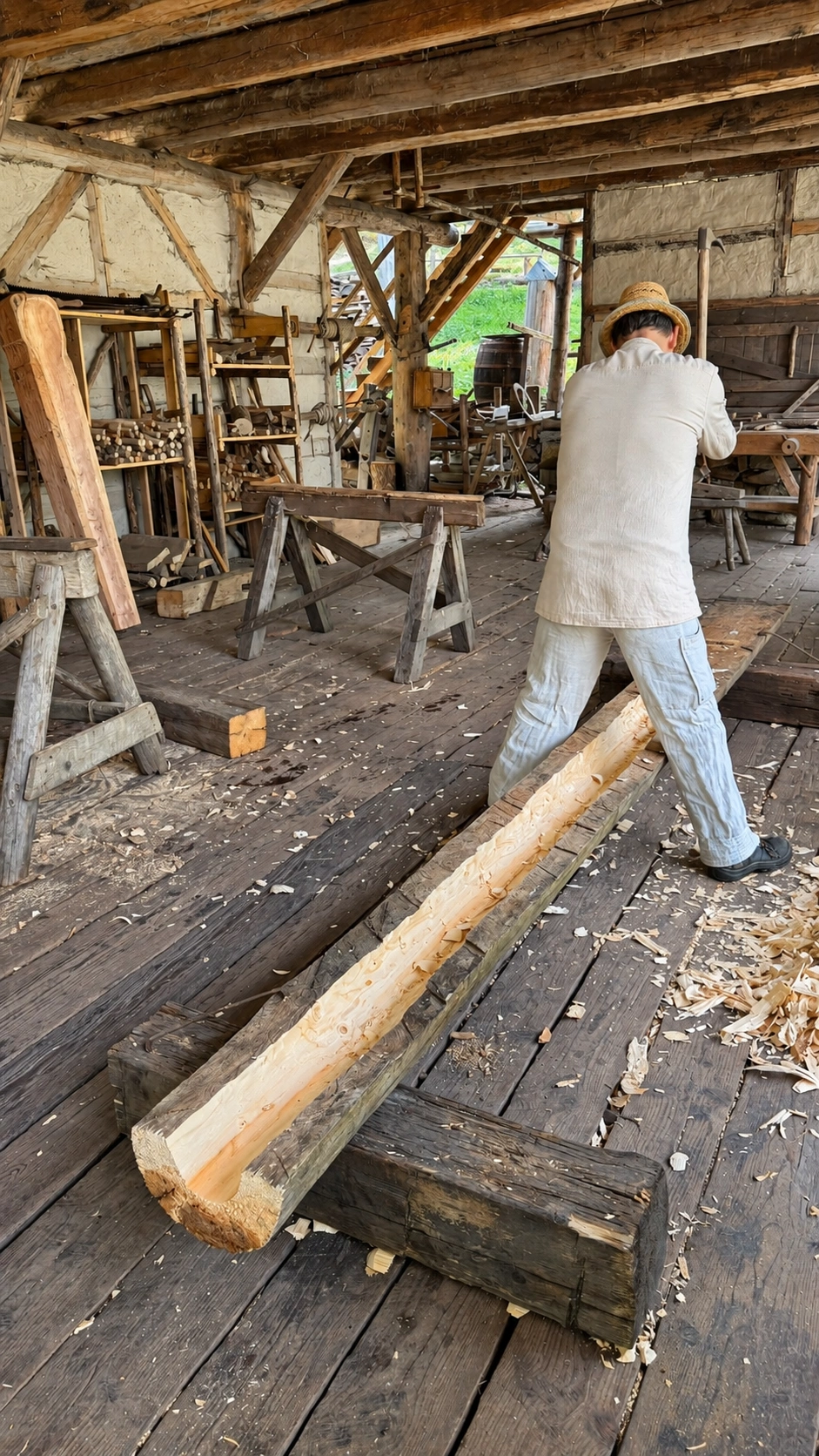
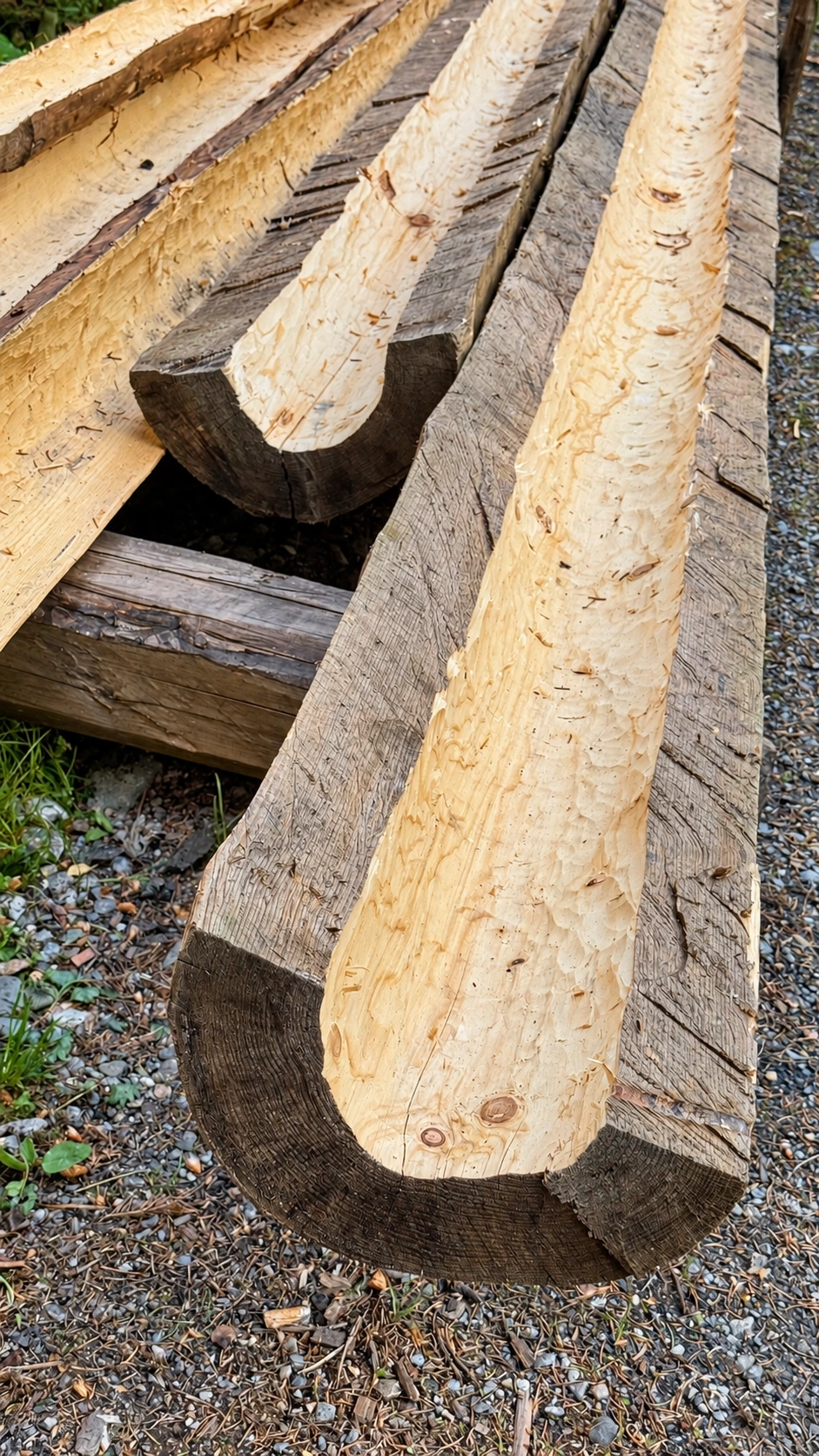
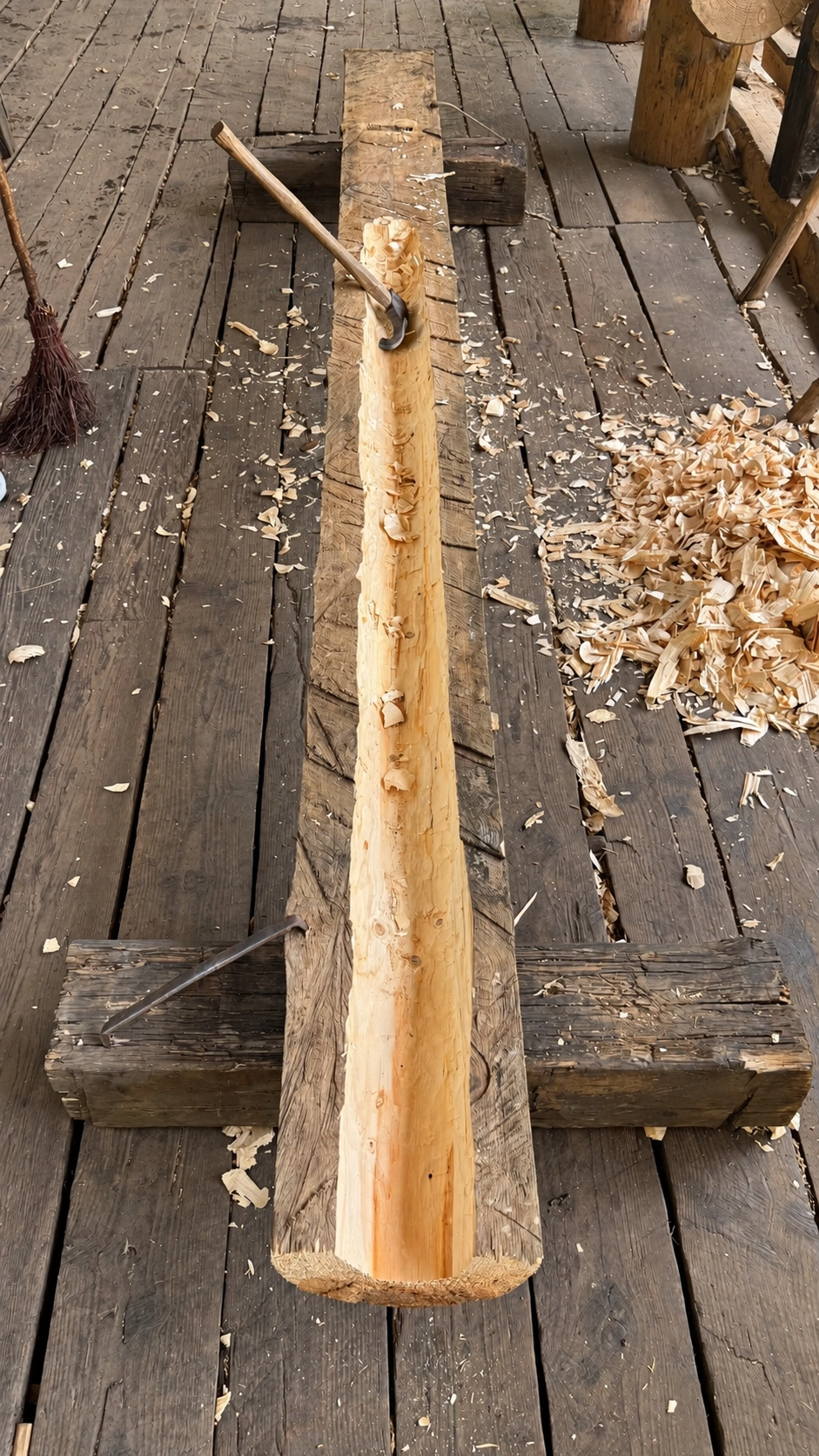
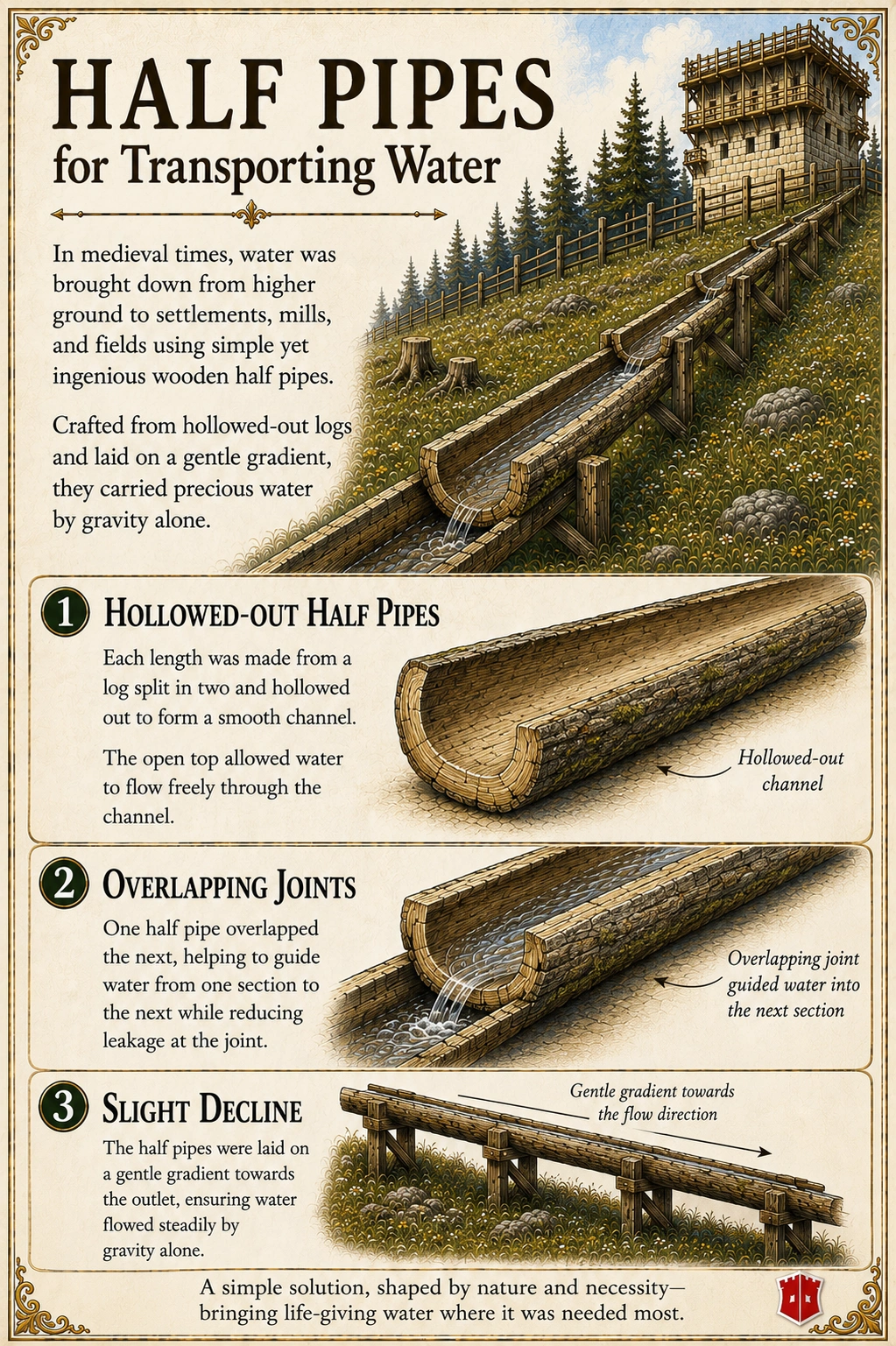
A medievalwater pipeline was created by felling trees, removing their bark, and hollowing them out to the core. The drill was guided horizontally with precision, and the tree trunk was moved on a wooden cart over wooden rails.
Drilling Then and Now
With modern drills, the continuous thread and the speed of rotation ensure that the shavings are transported out of the hole. However, in pre-industrial times, it was not yet possible to manufacture two-metre-long iron rods with a continuous drilling thread. As a result, drilling had to go deeper than the length of the thread, meaning that the drilling process had to be interrupted after just a few turns to first pull out the drill along with the shavings that had built up behind it and then to reposition it.
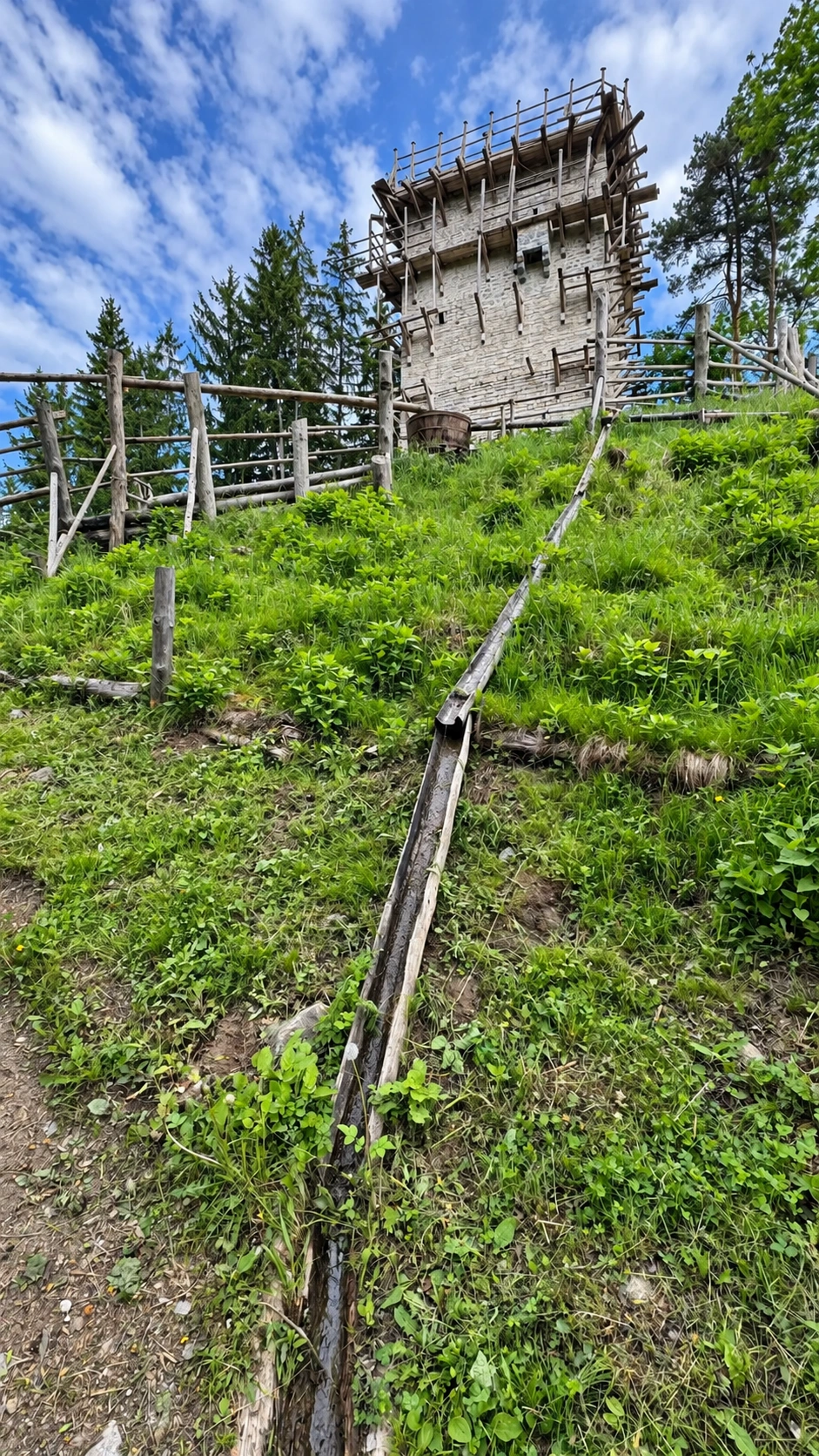
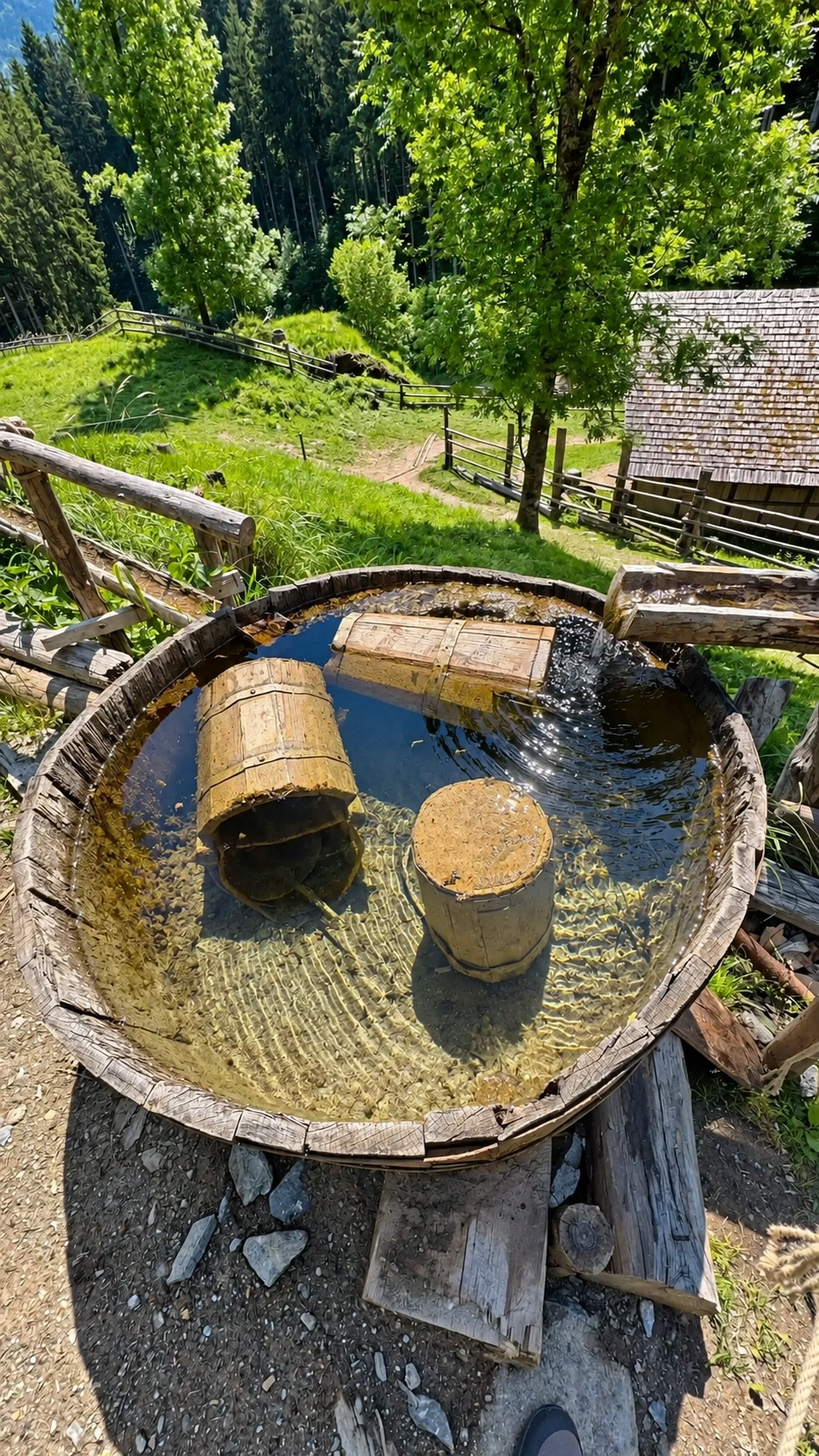
The construction site is supplied with service water from a spring, which was tapped by the Sisters of the Teutonic Order above the castle construction site and supplies water to the farmyard located in this area. The excess water is channelled to a replica Lourdes Grotto built at the end of the 19th century, and also directed to the construction site.
Over 450 metres of wooden water pipes have been laid, and they are regularly maintained to supply the masons (for mortar production), the blacksmiths (for quenching their workpieces), the carpenters (for soaking wooden handles), and ultimately the horses.
Water Supply in Medieval Castles
For hilltop castles, providing enough water was often a challenge in the Middle Ages, particularly during sieges. In addition to the water supply through pipe systems, as seen here at the castle site, rainwater and meltwater were collected in cisterns. Wells were also dug, using the available primitive tools, up to 150 metres into the rock to reach the groundwater level.
The Castle Cistern
The above-ground water pipeline was a constant risk factor for the castle inhabitants due to damage to the pipeline or contamination of the water supply. Cisterns were constructed to protect the interior of the castle complex.
In the future, a cistern will also be constructed within the Burgbau castle complex.