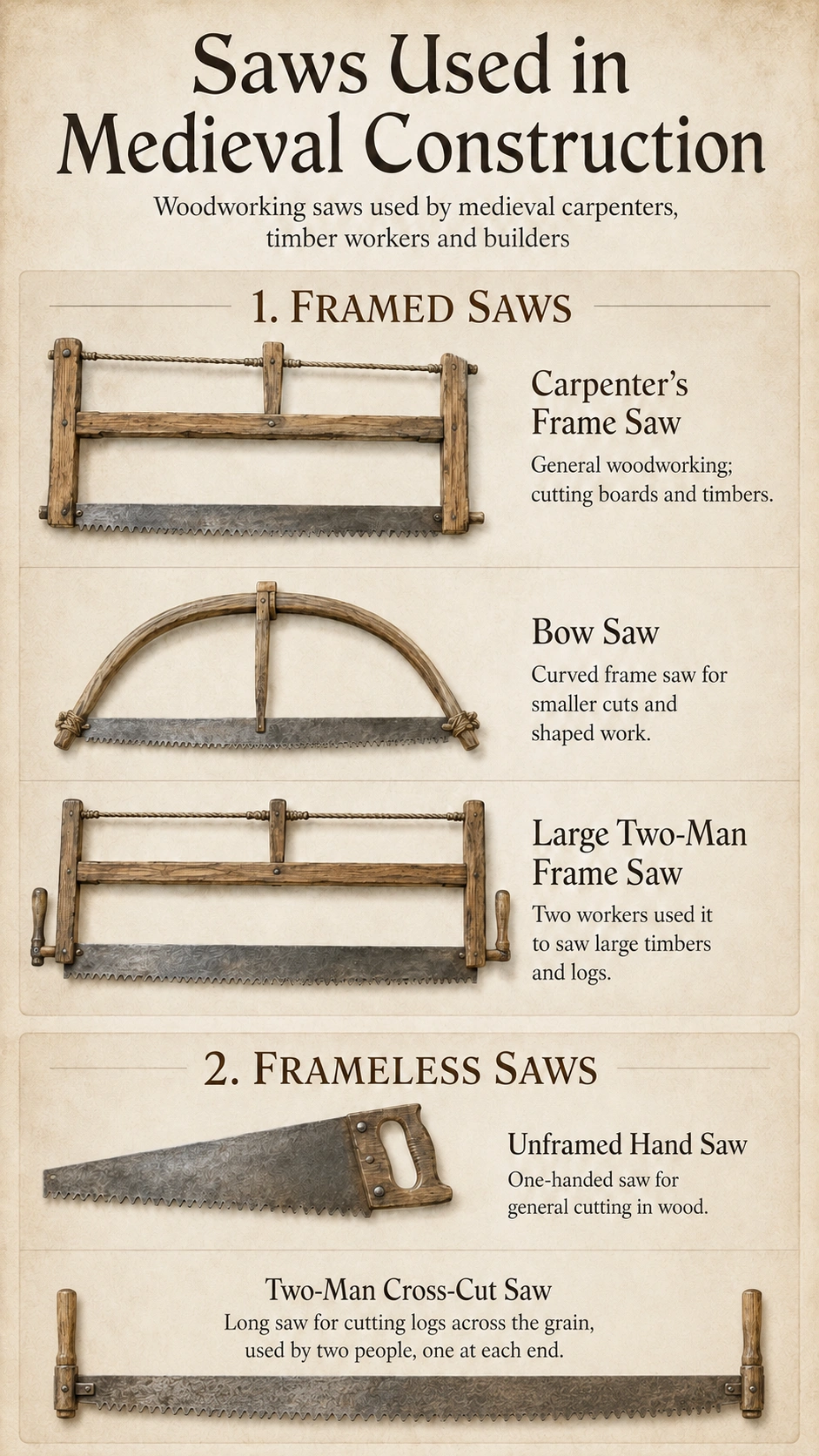
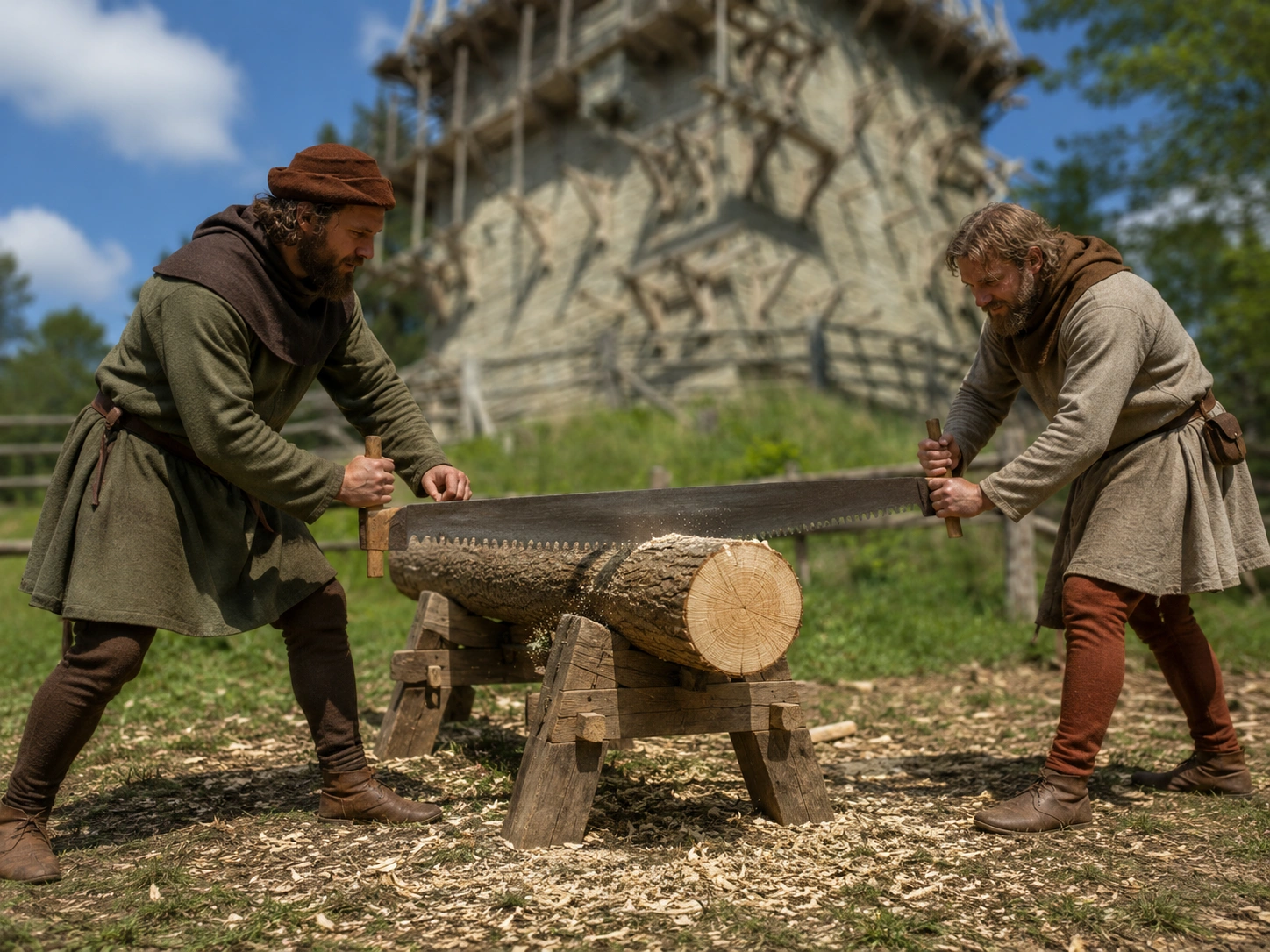
During the Middle Ages, saws were broadly divided into two main groups: frame saws and frameless saws. From these basic forms, a variety of specialised saws developed for different types of woodworking and construction work.
Frame Saws
Frame saws used a wooden frame to hold and stabilise the blade. Several important forms were commonly used:
Tensioned Frame Saw
In this type, the blade was stretched tightly within a rectangular wooden frame. The blade formed one of the long sides of the frame, with the teeth pointing downwards. The tension kept the blade straight and allowed more precise cutting.
Untensioned Frame Saw
Here, the blade was mounted centrally between the side beams of the frame at a right angle to the frame surface. These large saws were mainly used for cutting logs and heavy beams. They usually required a saw pit or a wooden saw rig so that the timber could be cut vertically or at an angle.
Such work was carried out by two sawyers: one standing above the log and the other below it. Together, they guided the long blade through the timber.
The two workers who operated a large medieval pit saw had different roles and working positions during the sawing process.
– The top sawyer (Aufschneider) stood on top of the timber. He guided the saw along the marked cutting line and ensured that the planks or beams were cut evenly and accurately. Because he controlled the direction of the cut, this position usually required greater experience and skill.
– The bottom sawyer (Obezahrer) worked below the timber, usually inside a saw pit or beneath a raised saw frame. His main task was to pull the saw downward during each stroke. This was the more physically demanding role, as wood dust and saw shavings constantly fell onto him while he worked.
Together, the two sawyers worked in rhythm, moving the long saw blade up and down through the timber.
The bow saw consisted of a narrow blade fixed to a curved iron bow. The blade formed the straight lower section of the semi-circular frame. This lighter saw was suitable for more controlled and curved cuts.
Frameless Saws
Frameless saws worked without a supporting wooden frame. Their blades were designed to remain stable through their own shape and tension.
Split Saws (Band Saws)
These large saws were operated by two or four workers. The blades measured approximately 1–2 metres in length and could reach up to 20 centimetres in width. Depending on the intended task, the cutting edge could be straight or slightly curved, with handles attached at both ends.
Because the blade was permanently kept under tension during use, no additional wooden frame was required.
Working Methods
Depending on their size and purpose, medieval saws could be operated by a single worker or by a team. Smaller saws were suitable for individual use, while the larger saws required two or even four people to work together when cutting heavy timber.
The narrative shows: Saw Frame → Preparation → Cutting → Pit-Sawing Process → Finished Beam → Comparison with the Original Log → Craftsman
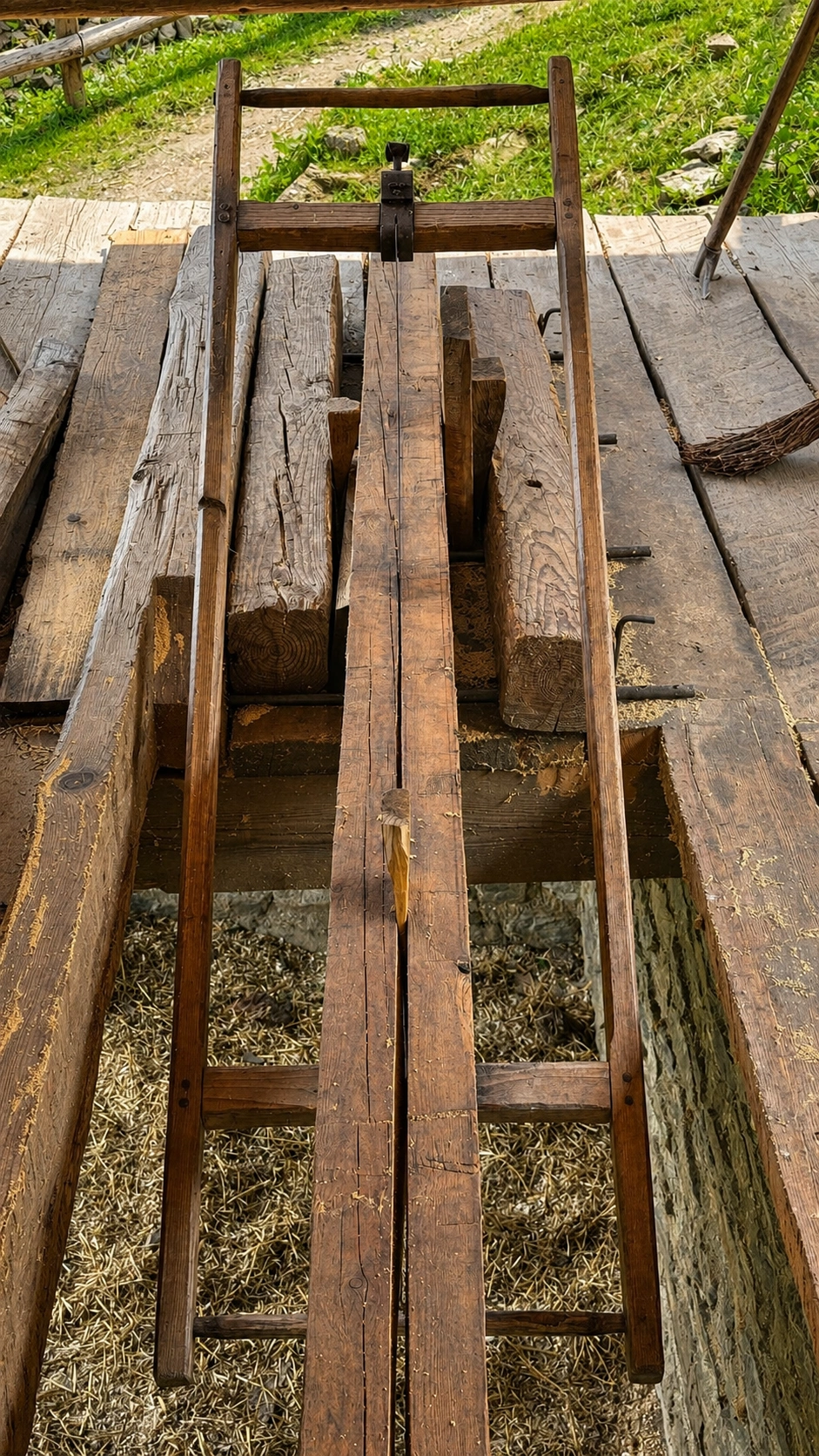
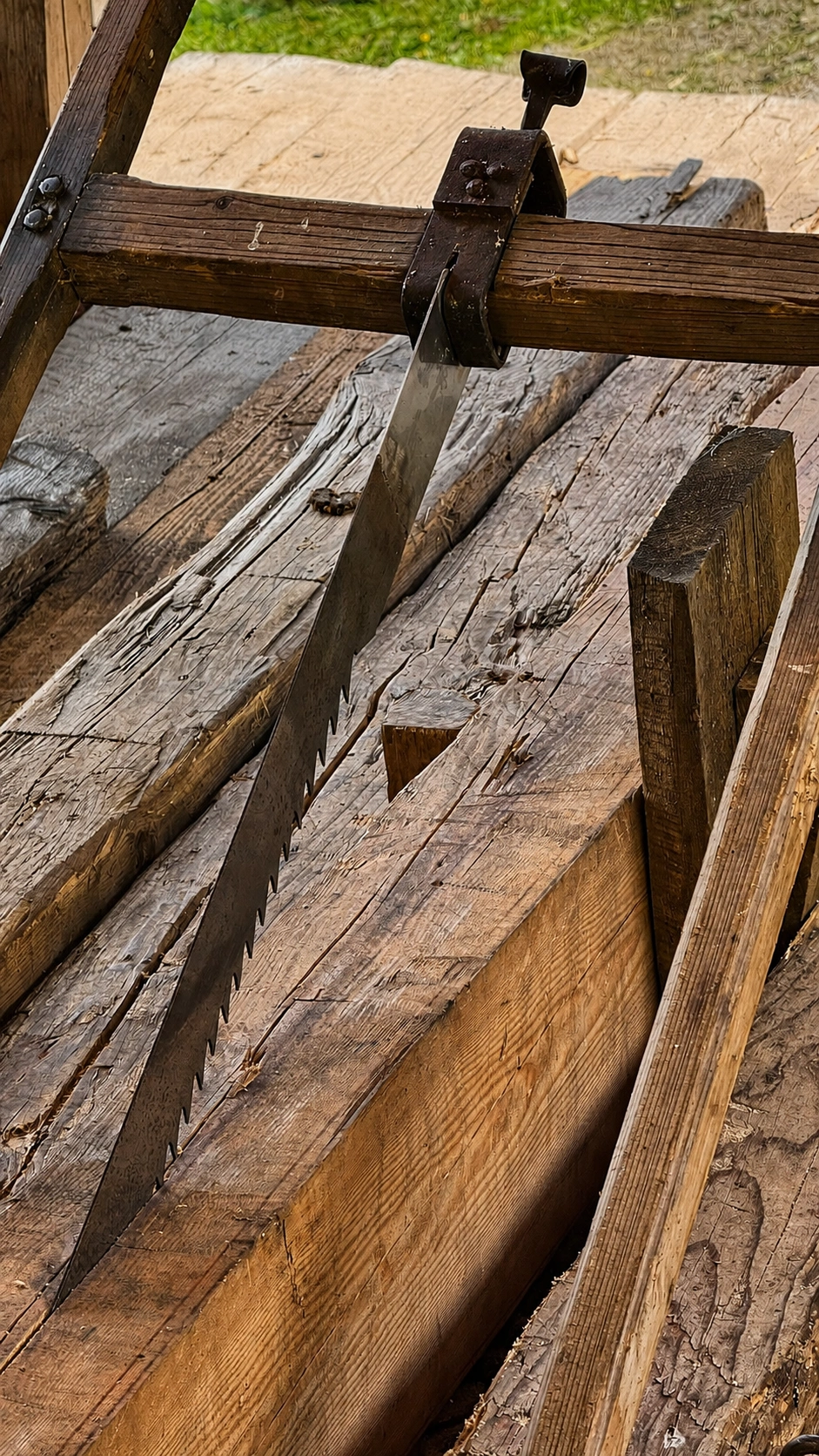
The timber is secured on a raised saw frame, allowing two workers to guide a long vertical saw through the wood.
Careful positioning ensures that each cut follows the marked line and produces a straight, usable beam.
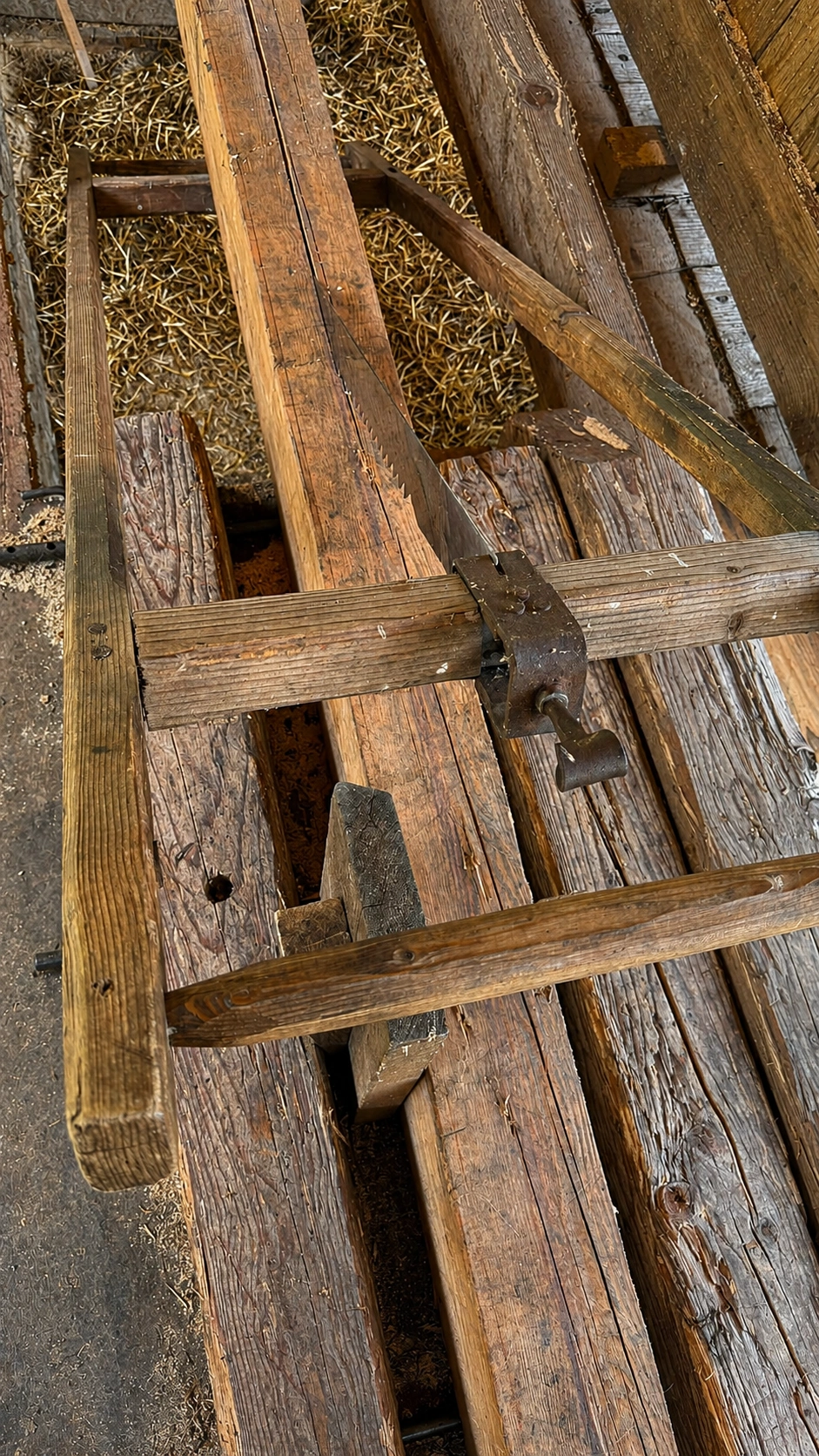
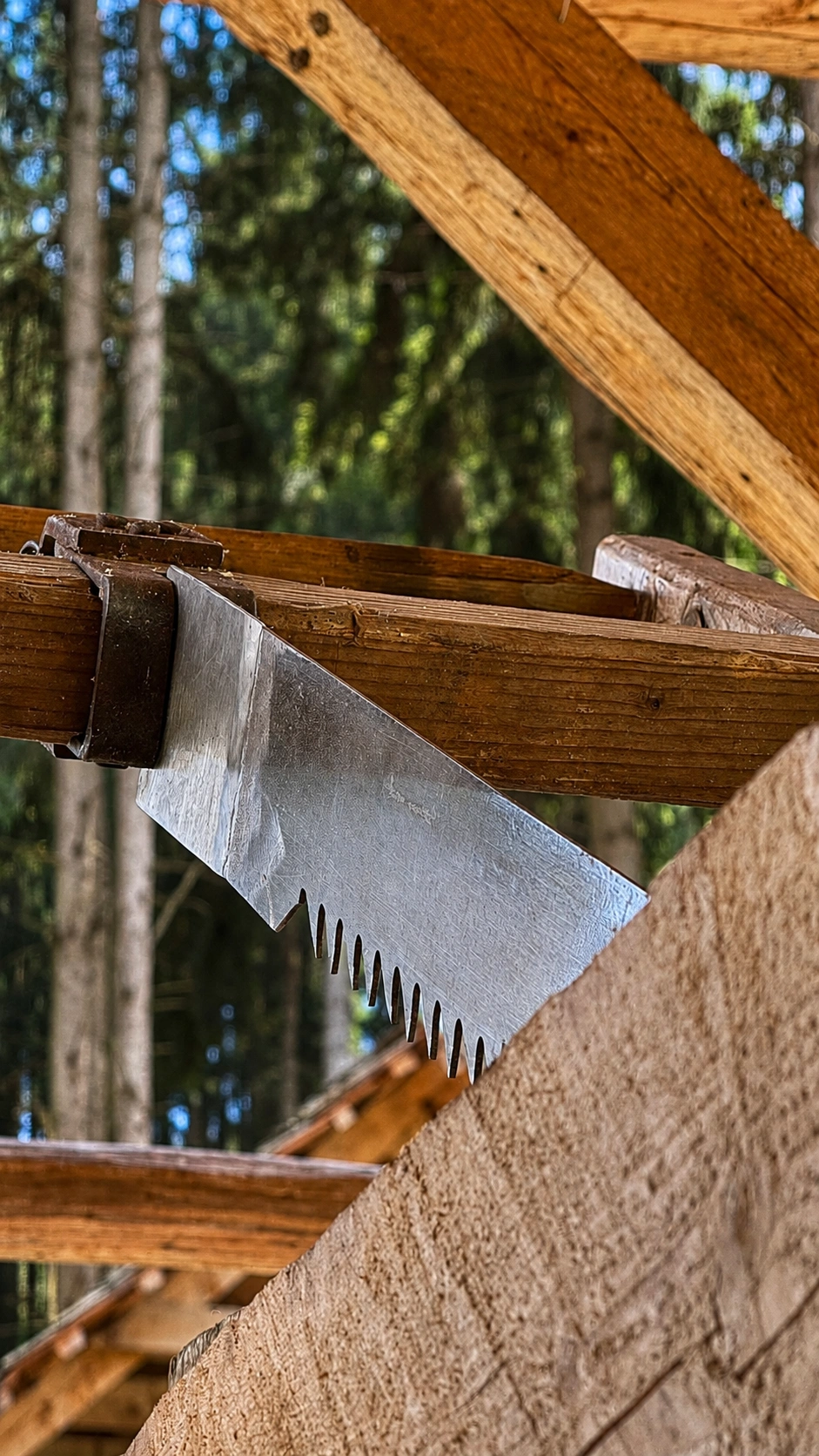
Viewed from above, the pit saw reveals the tightening screw that keeps the blade under tension during use.
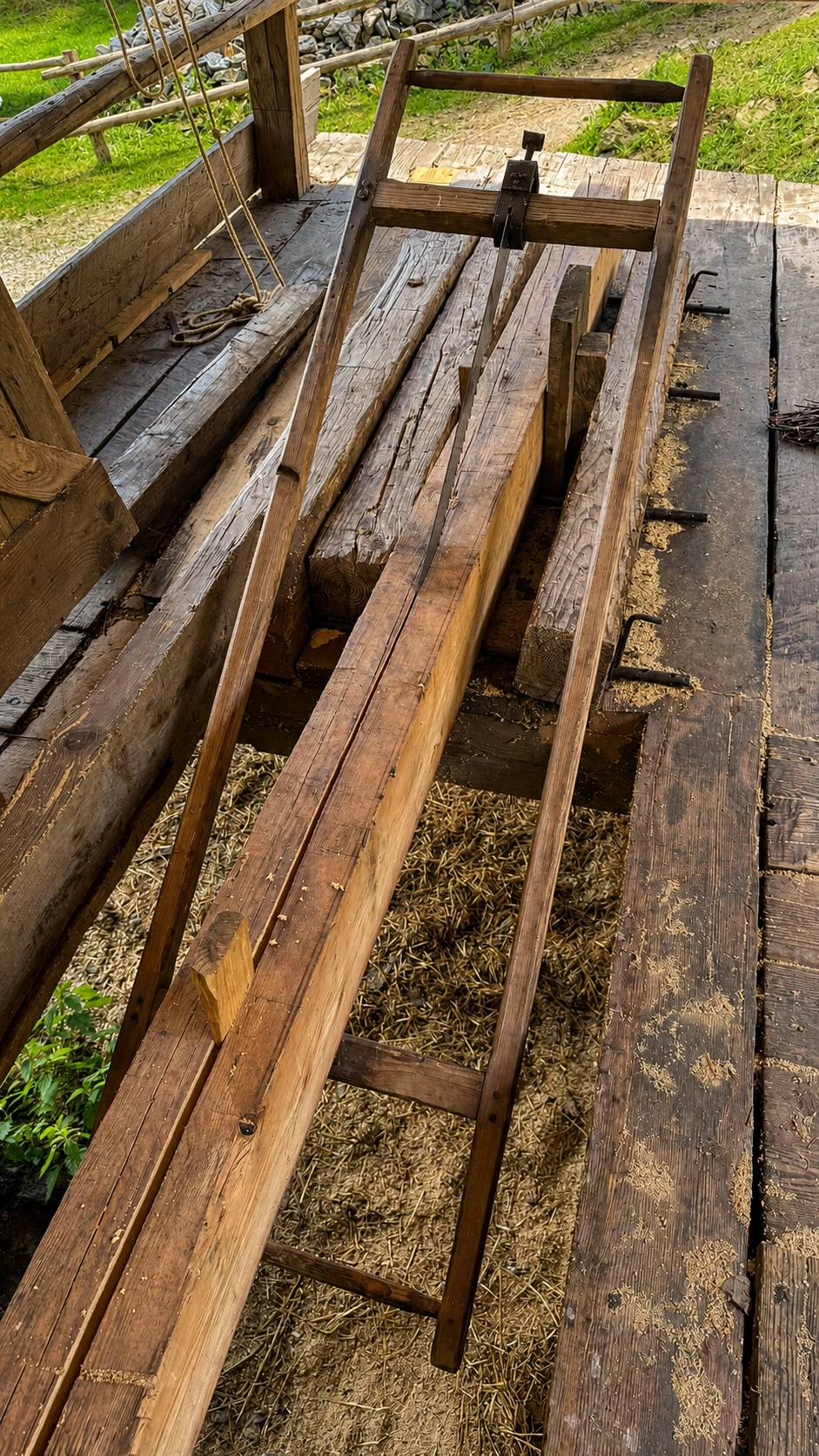
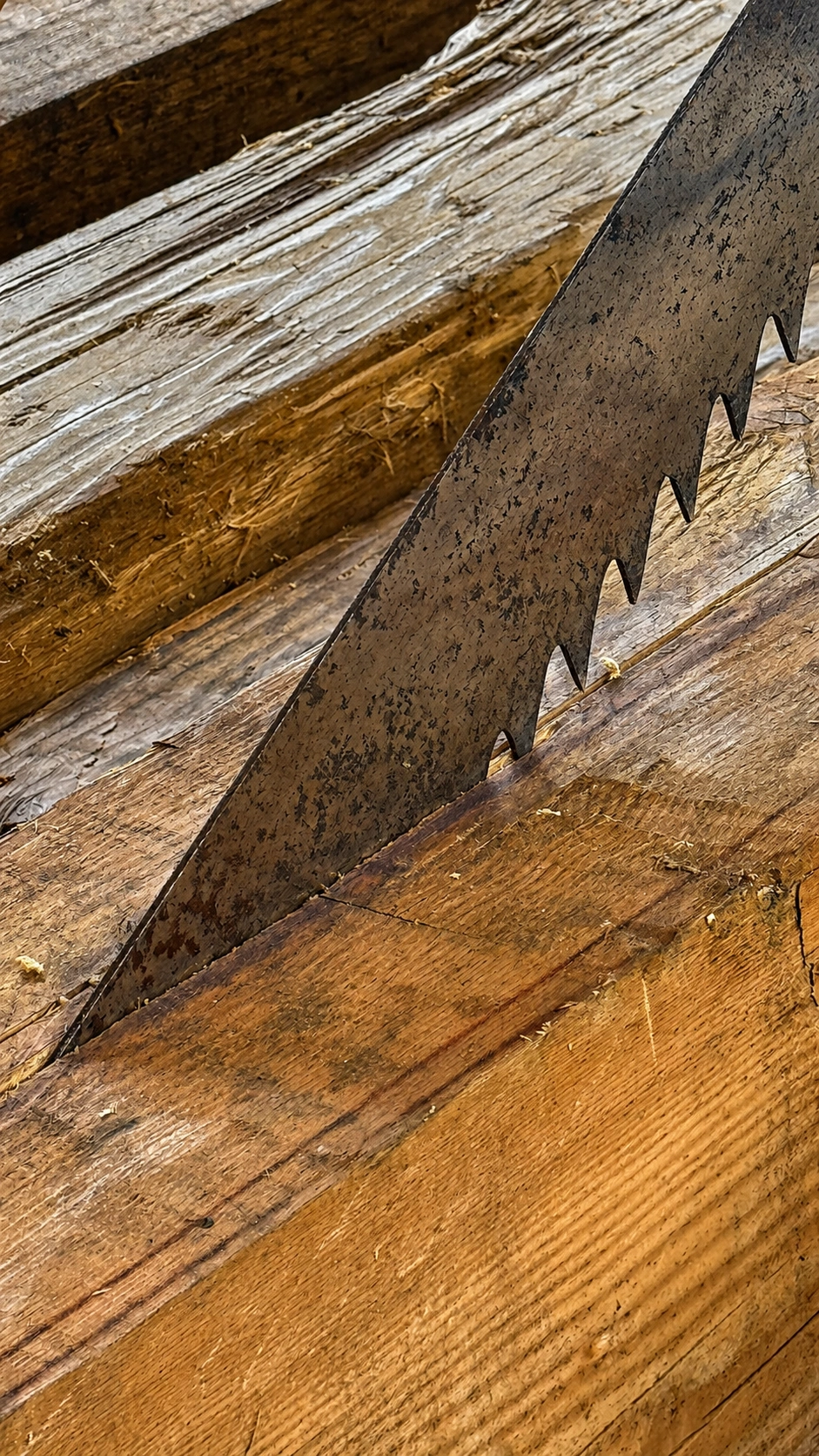
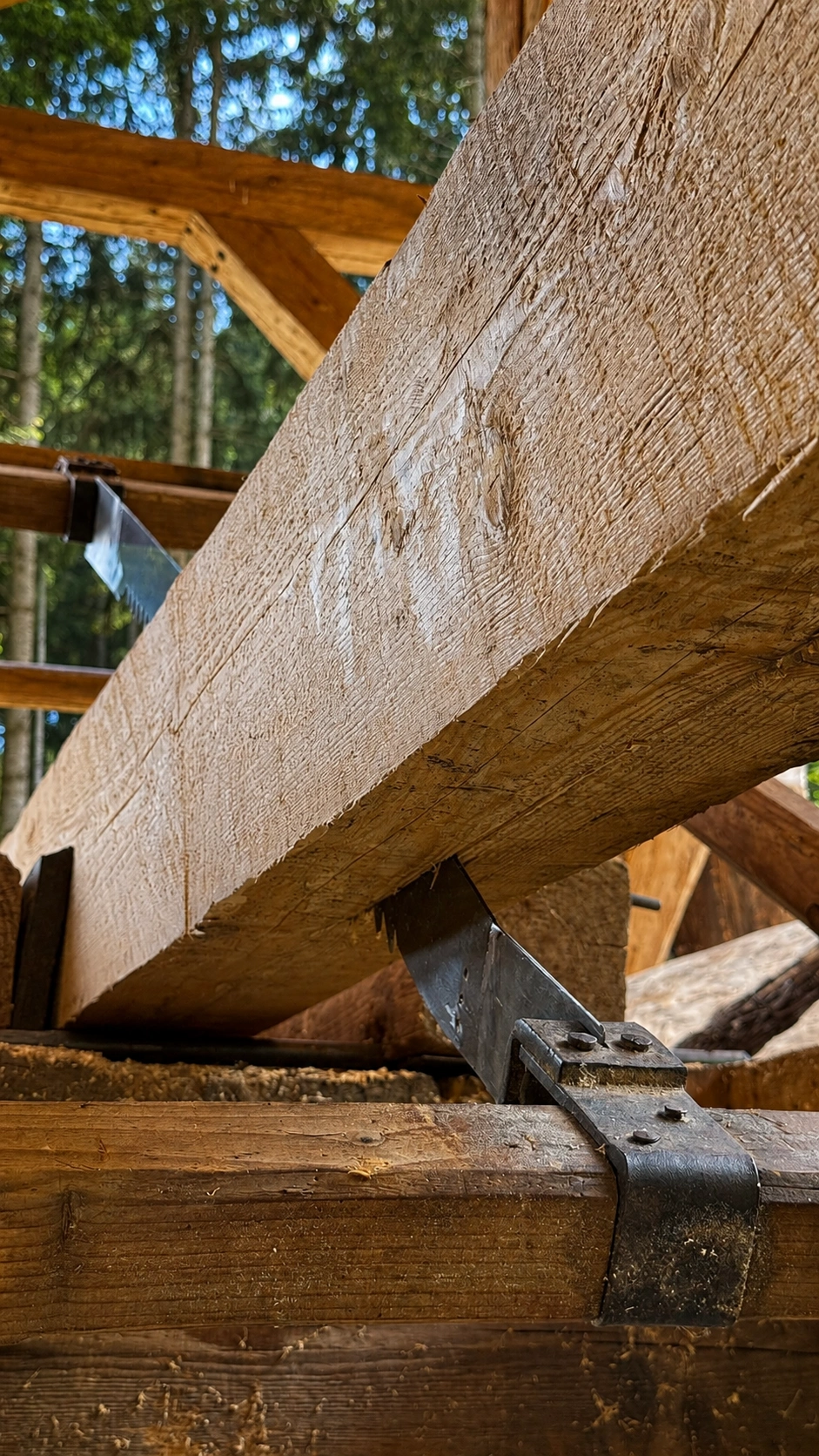
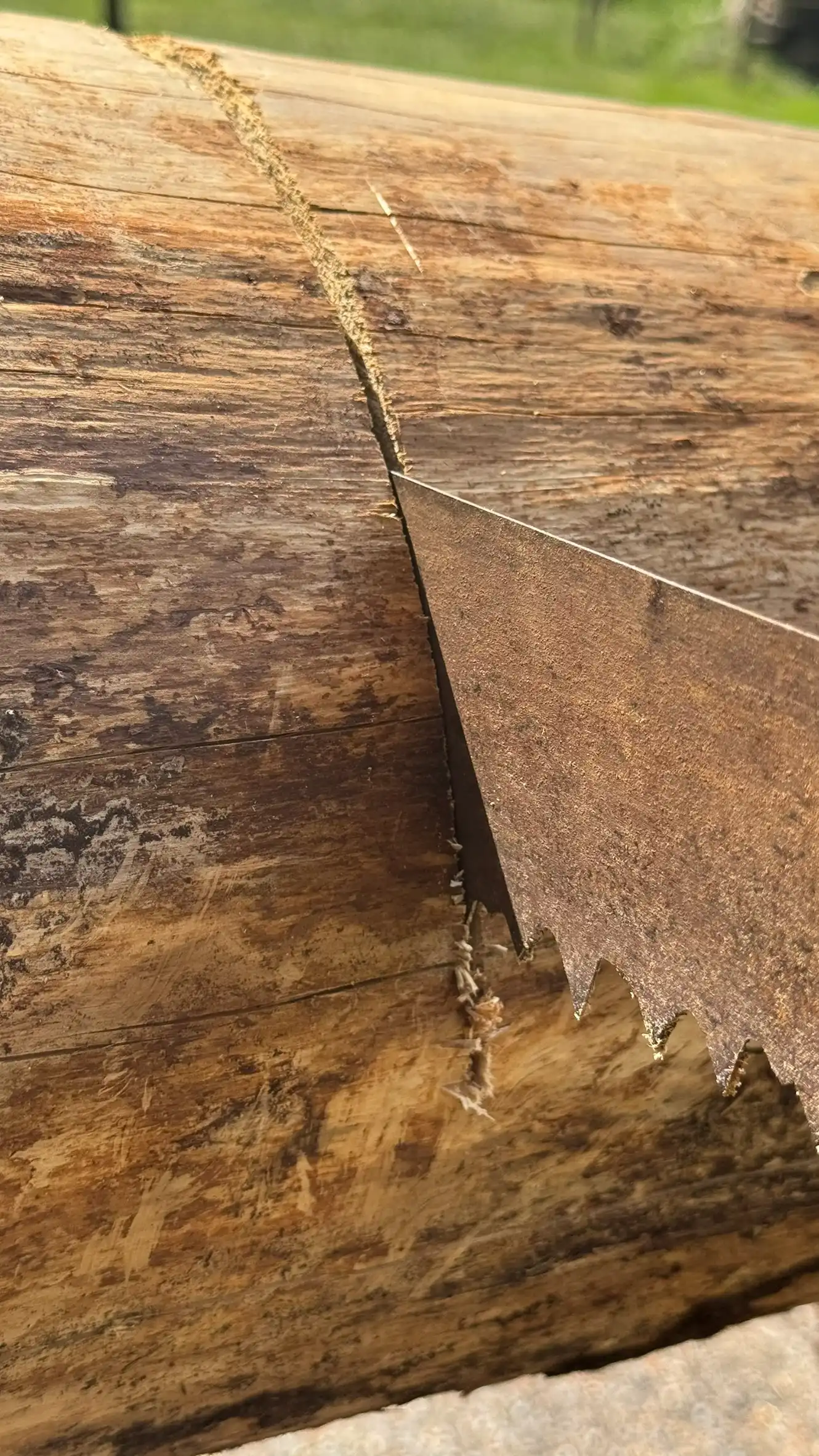
The long saw blade enters the timber exactly along the cutting line.
Large hand-forged teeth cut timber efficiently while maintaining control over the direction of the cut.
Two sawyers work in rhythm above and below the timber, driving the blade through the full depth of the wood.
The completed beam emerges with flat faces and straight edges, ready for use in tower construction.
Stroke by stroke, the saw follows the layout marks and results in a straight cut.
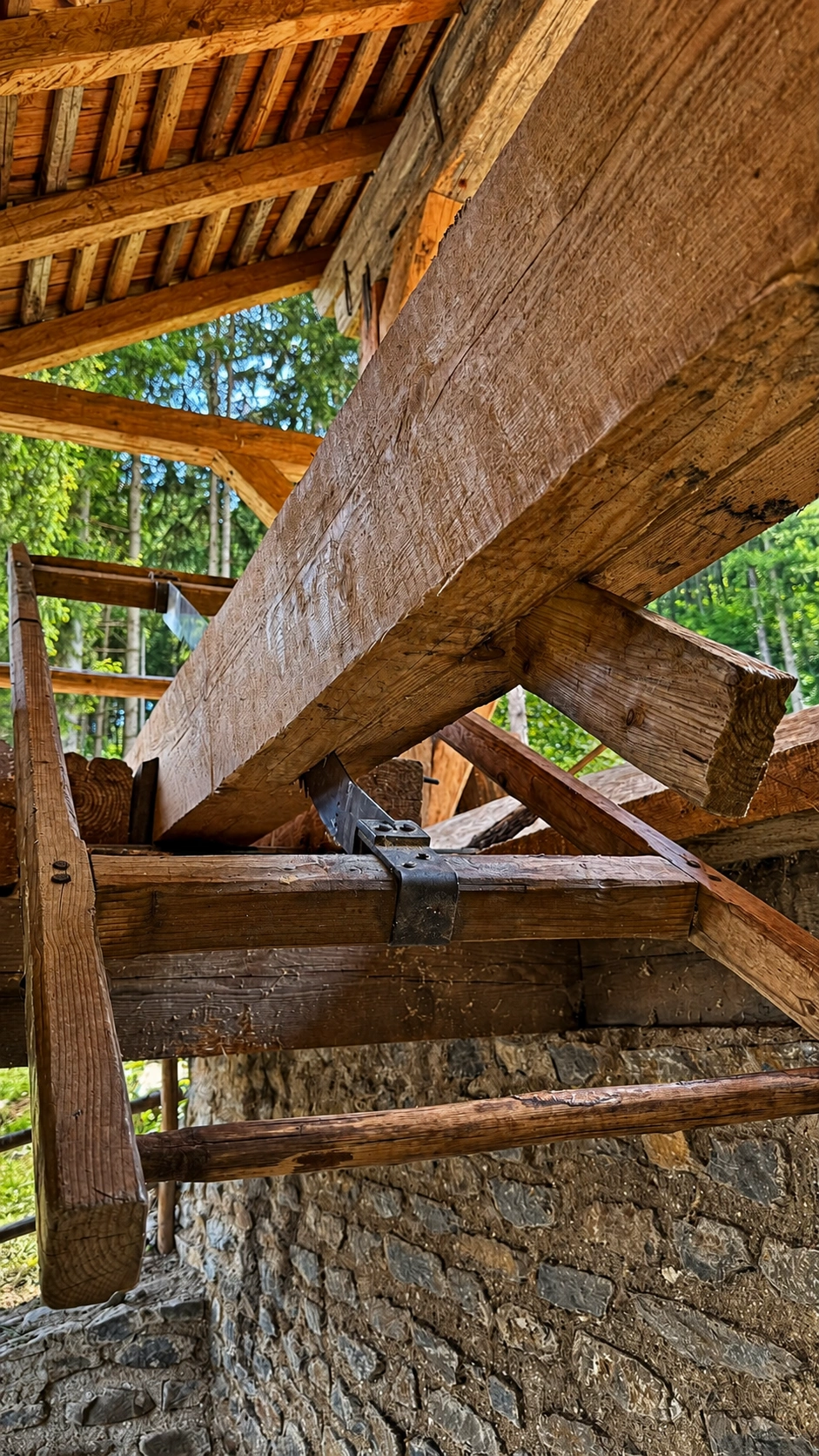
Viewed from below, the blade passes through the beam, illustrating the principle of medieval pit-sawing.
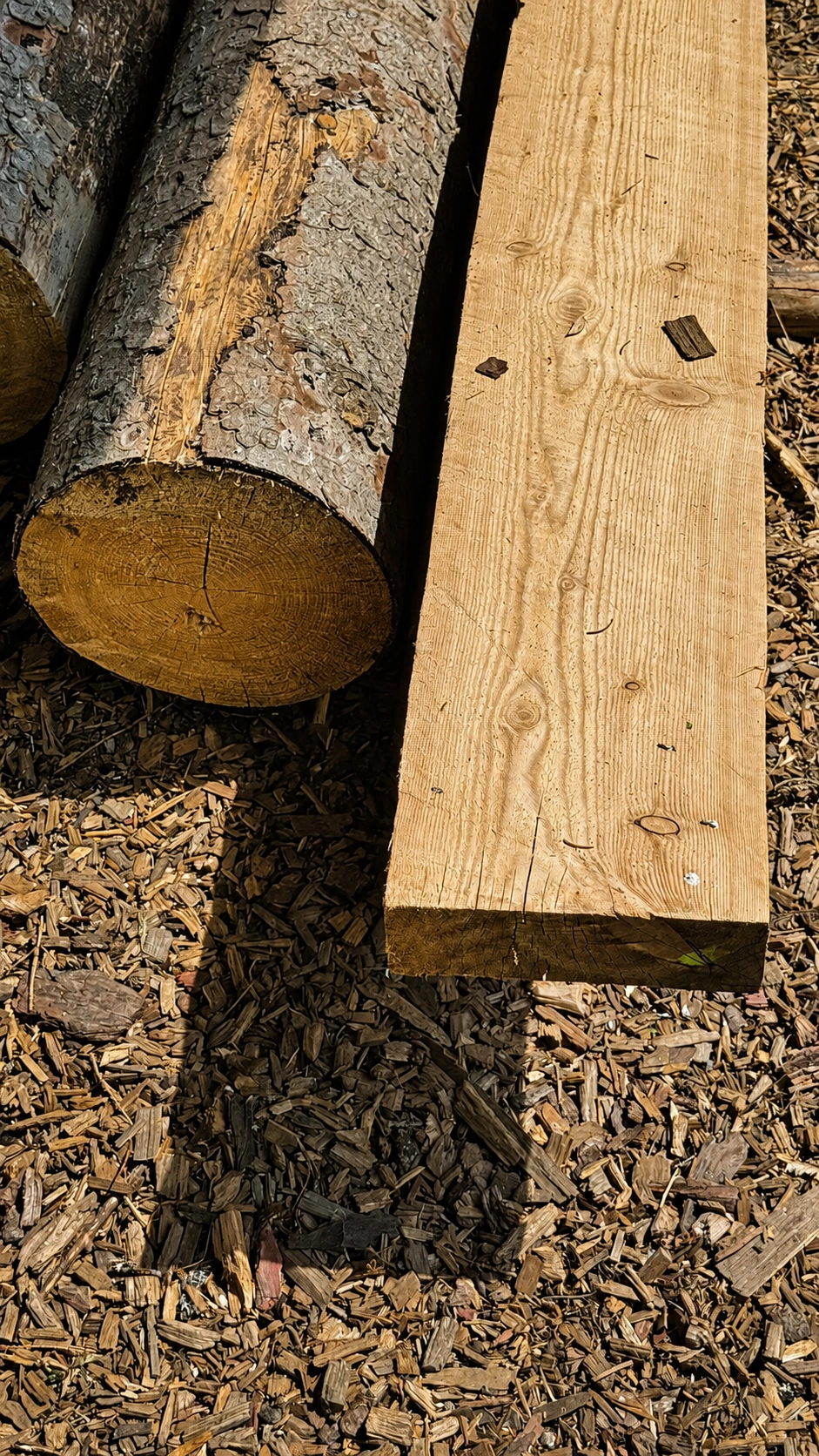
A comparison between the round log and the finished beam reveals the precision achieved through medieval sawing techniques.
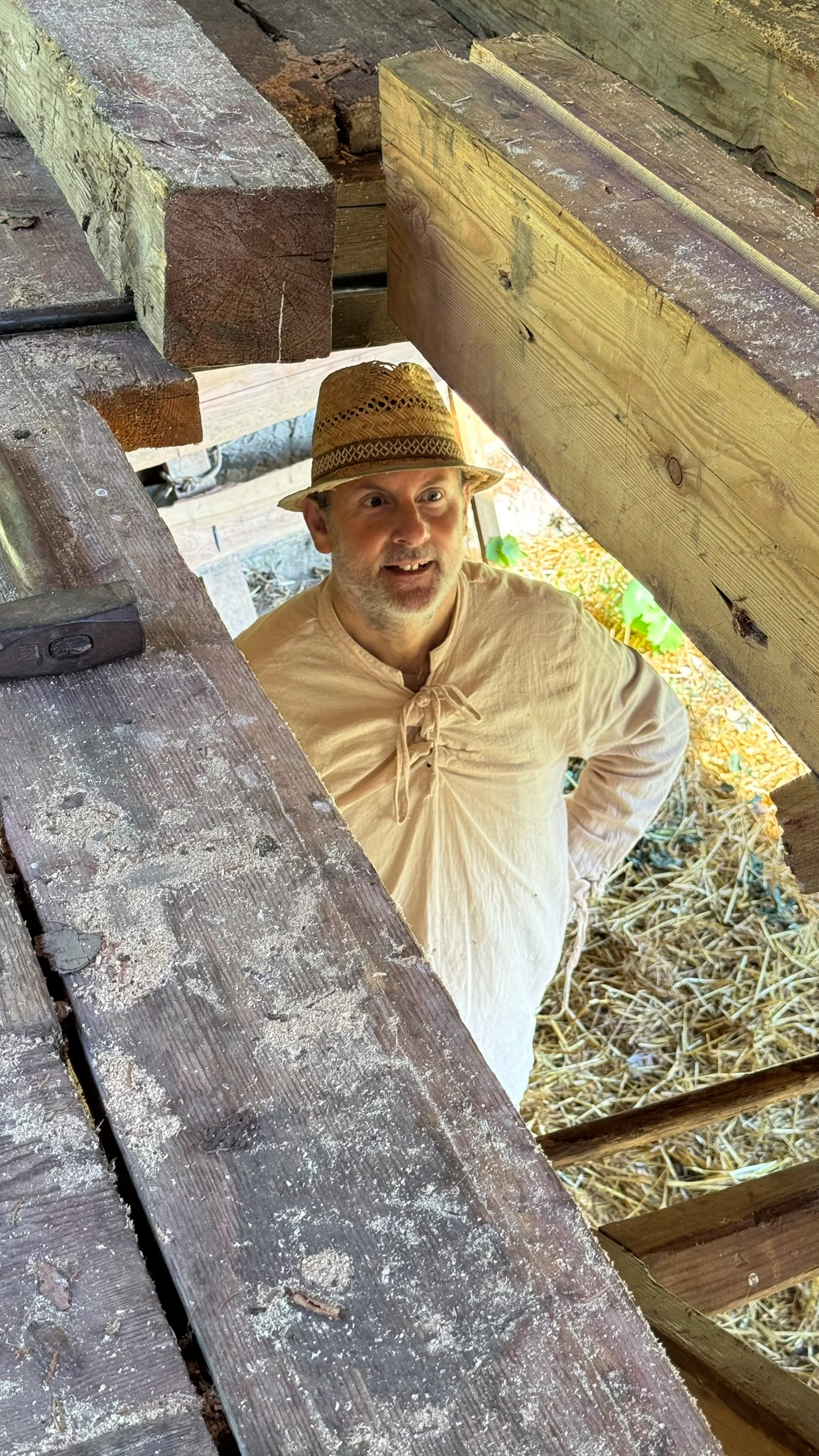
Behind every beam stand skilled craftsmen whose experience, strength and teamwork bring the tower to life.
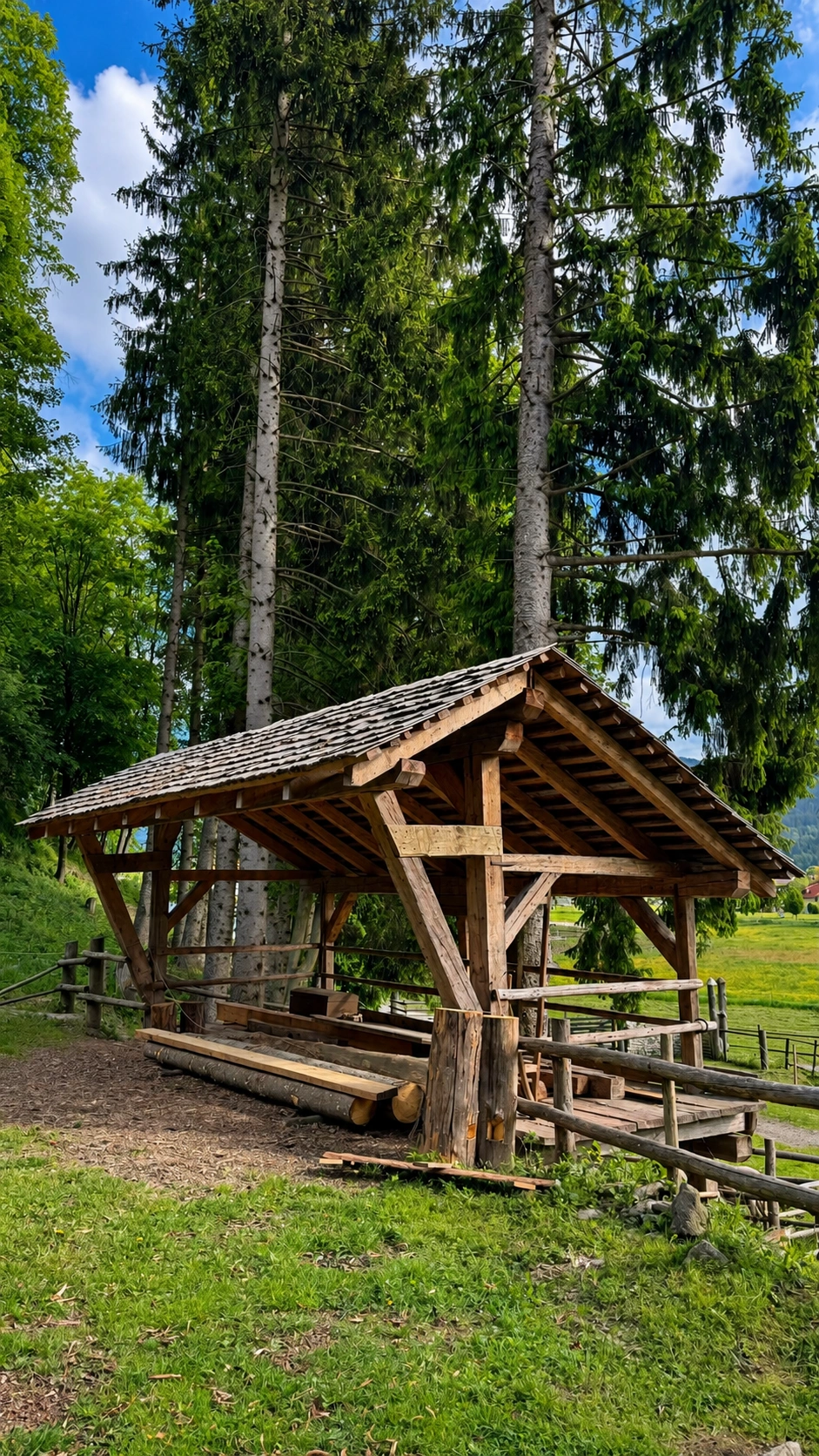
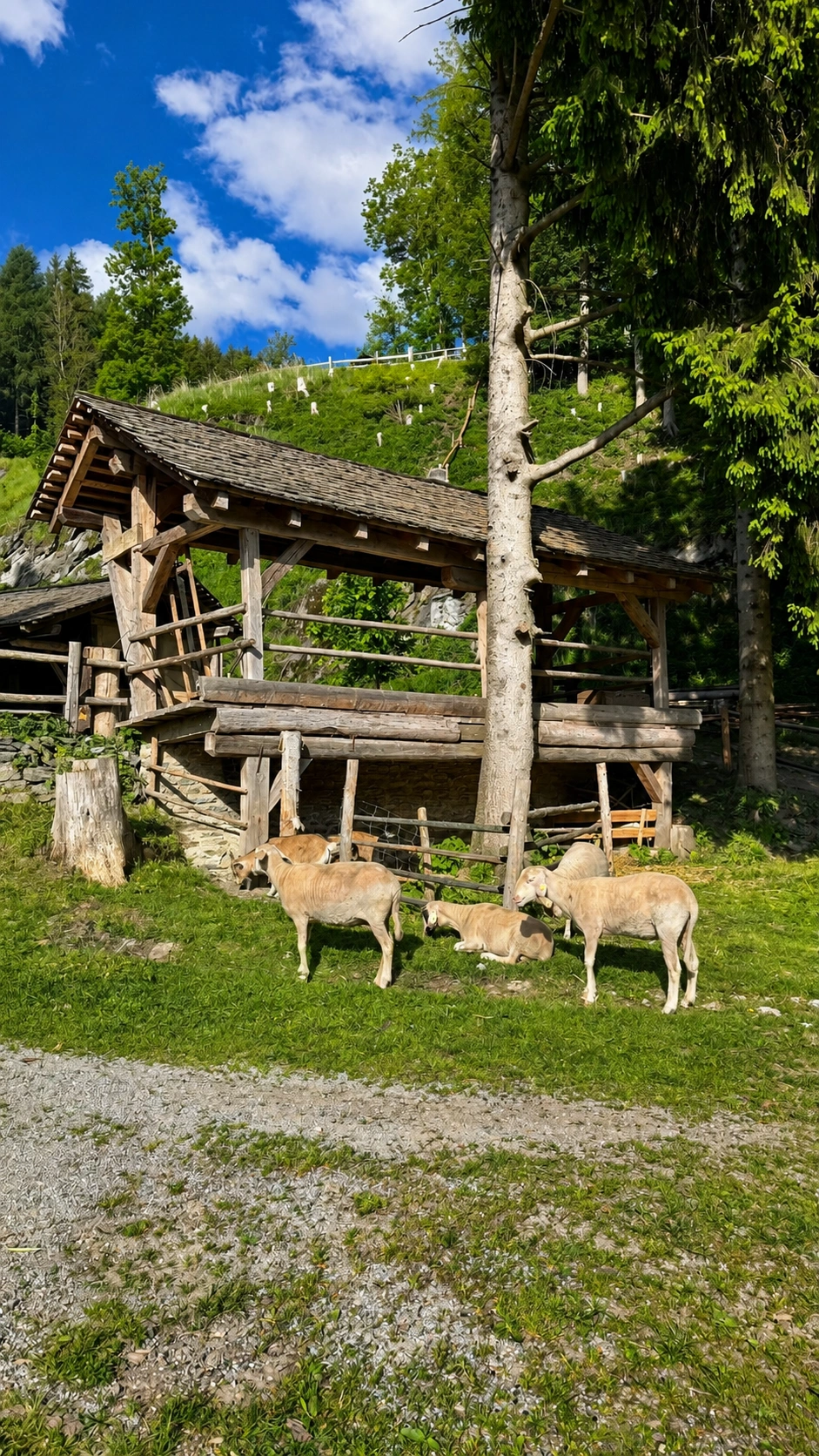
A view of the pit-saw shed in its landscape setting.
The upper level and the pit are separated by a platform. Free-roaming livestock grazing near the pit-saw shed.
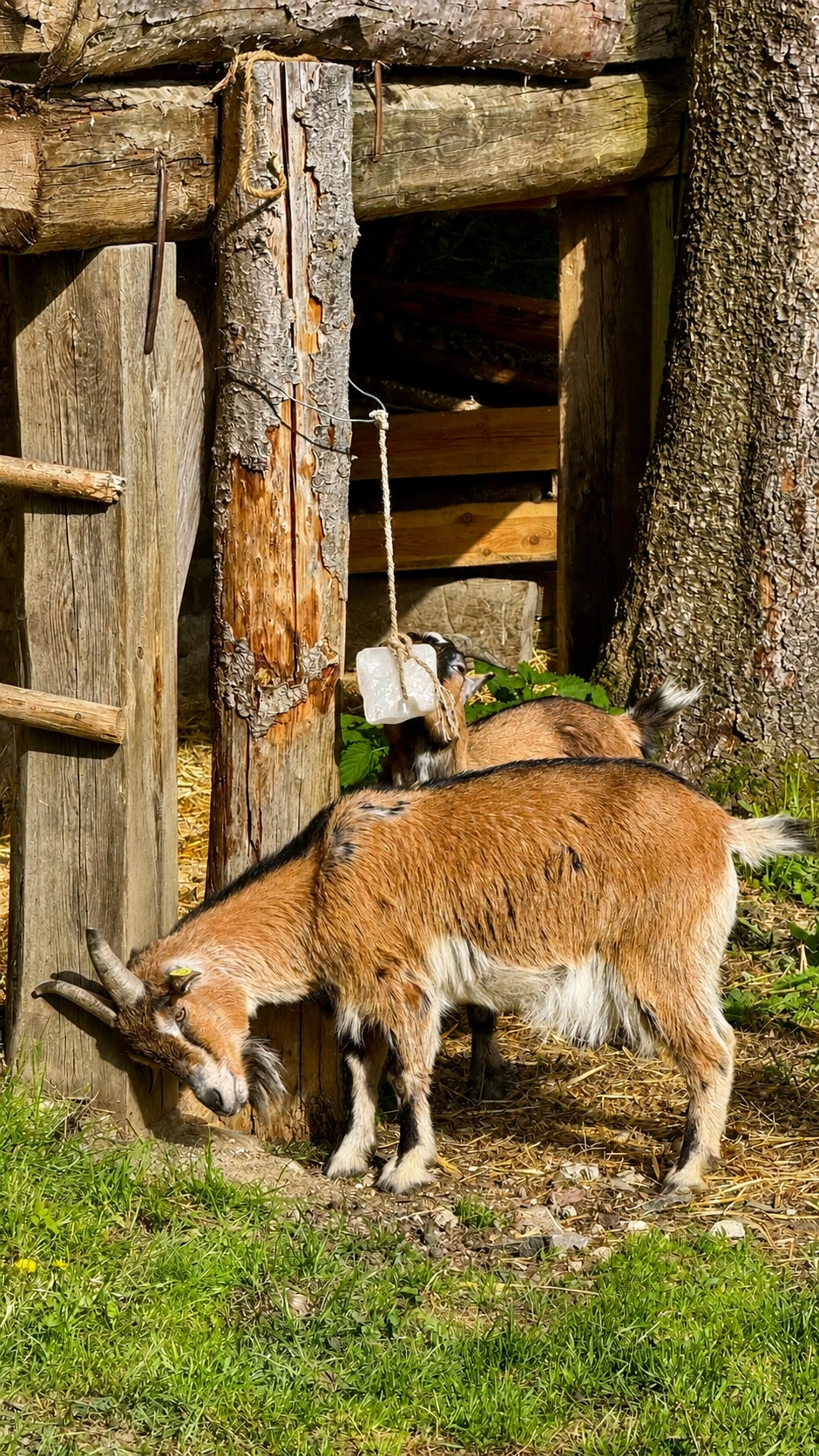
Free-roaming goats grazing near the supporting vertical members of the pit-saw-shed.
The narrative shows: Tool → Action → Workplace → Material
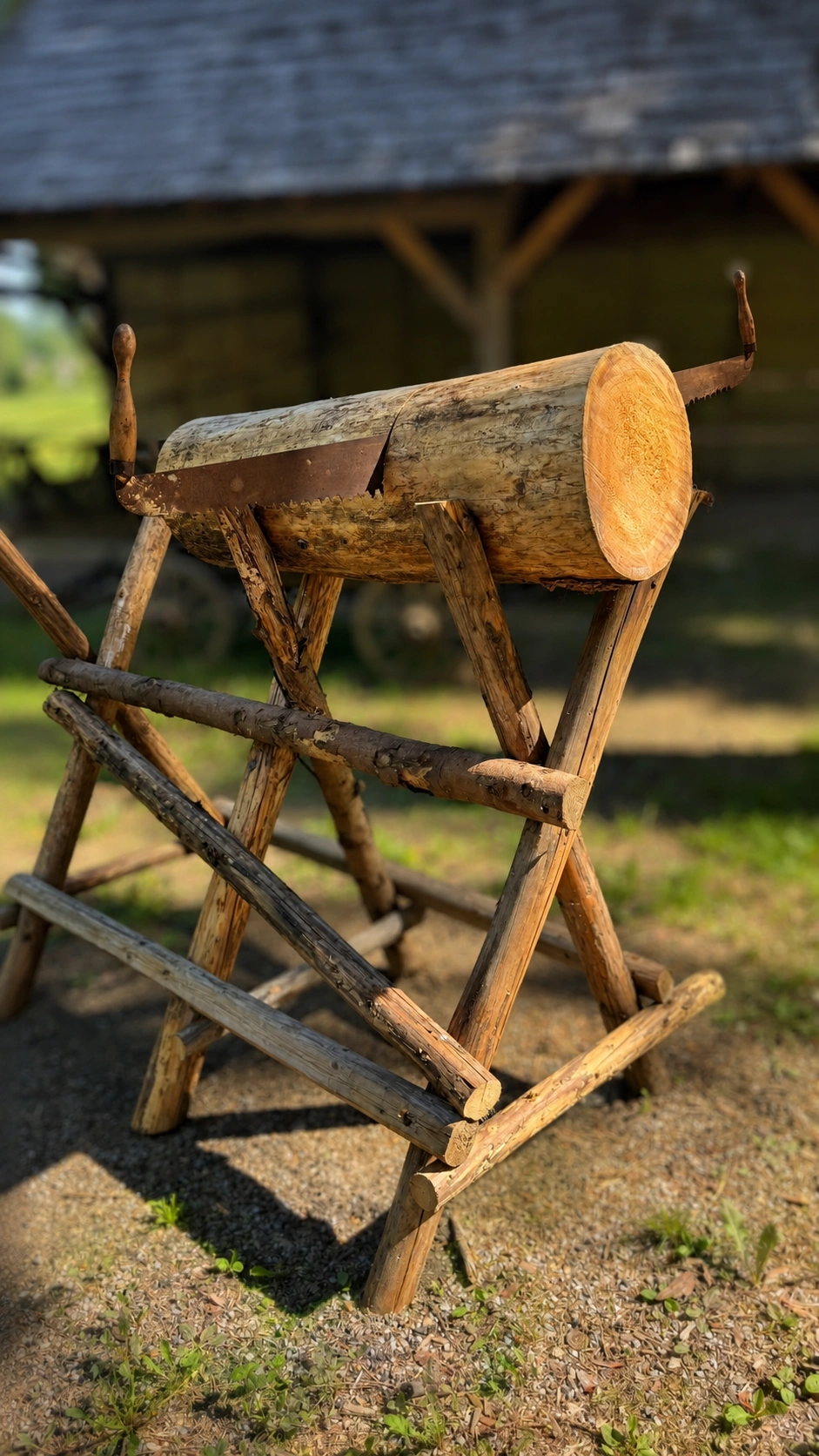
A cross-cut saw divides logs into manageable sections for further processing.
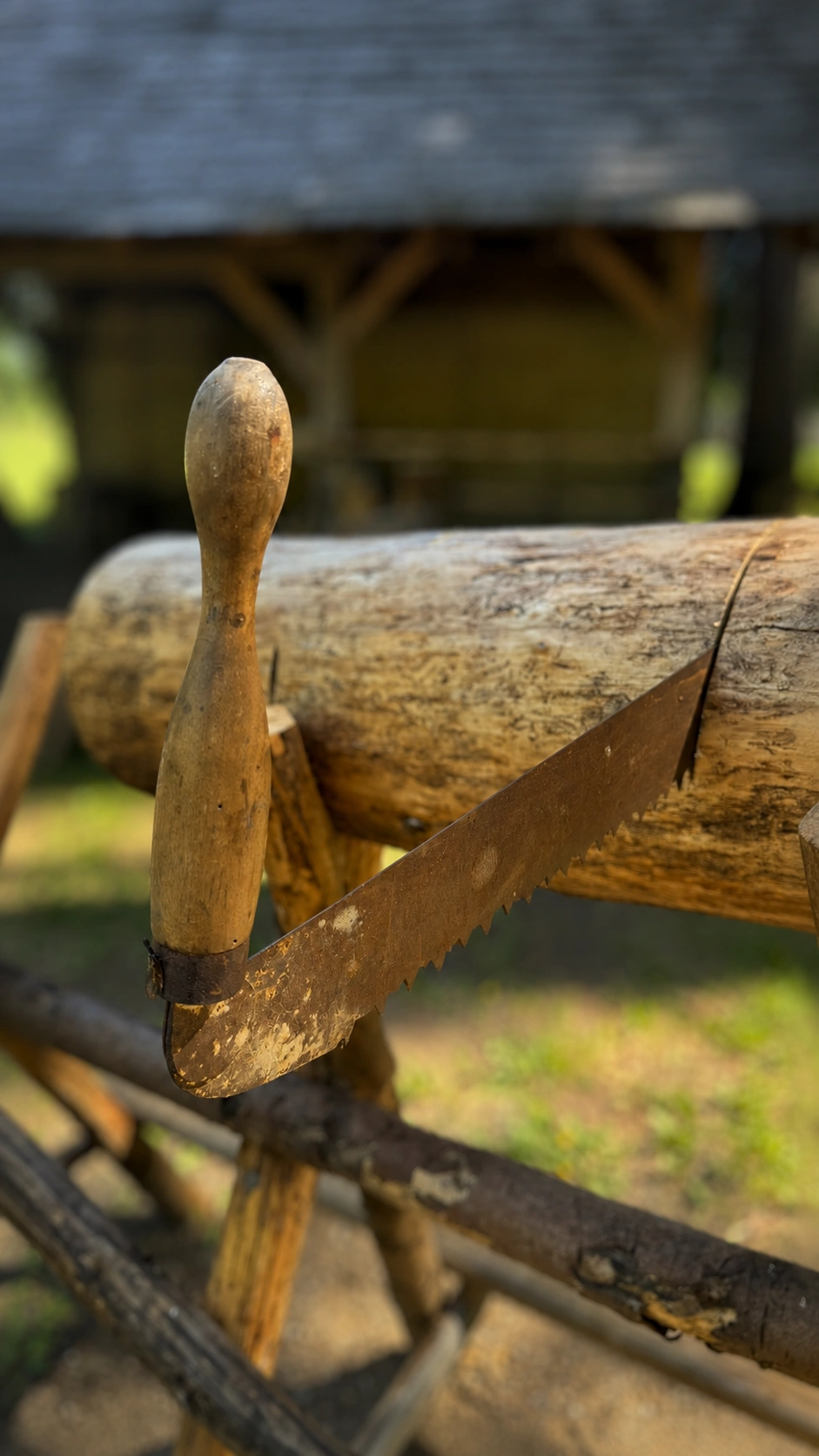
Close-up of the wooden handle and iron blade of a cross-cut saw.
Close-up of a cross-cut saw cutting through a log.
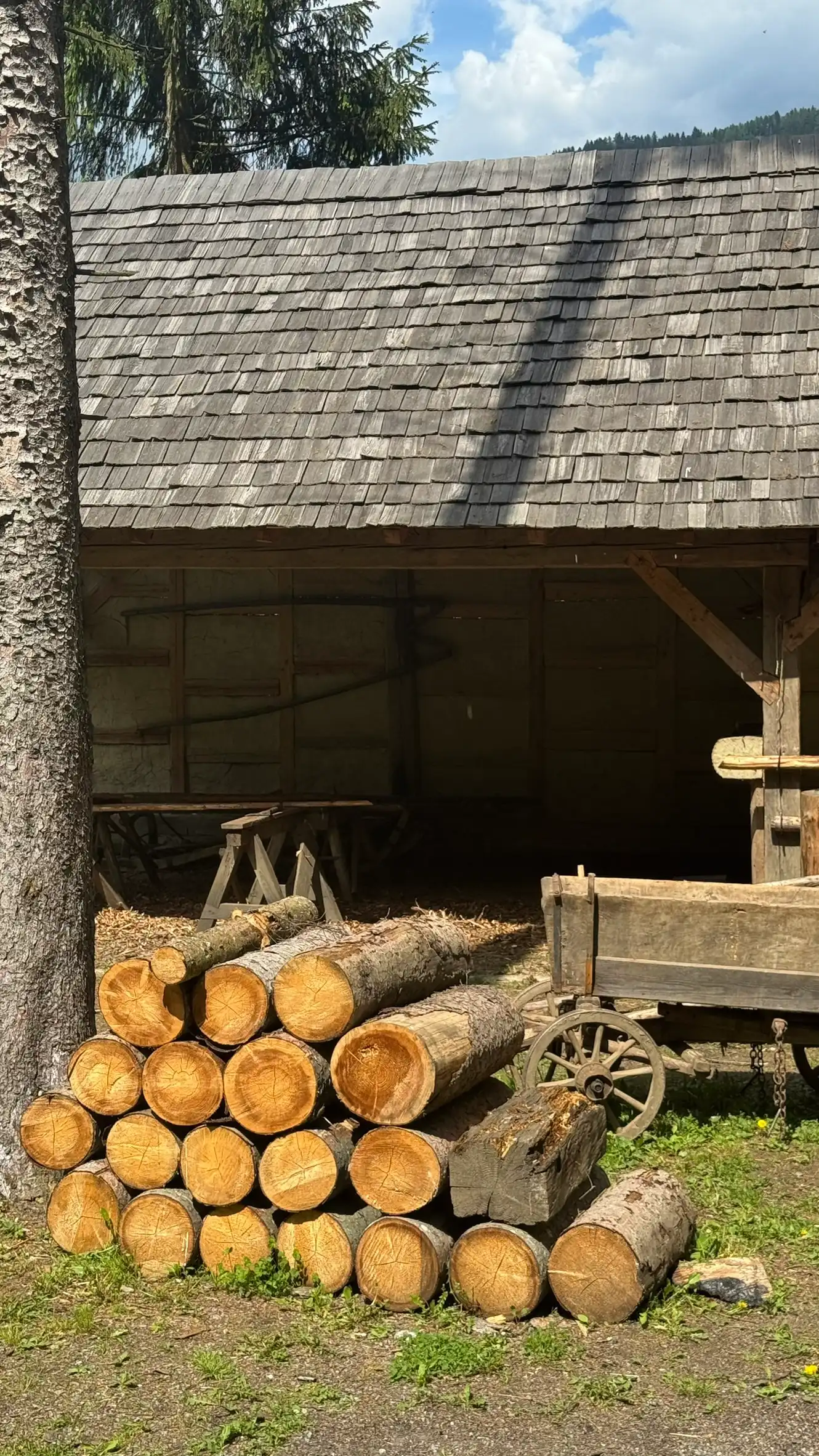
Timber processing area beside the shed
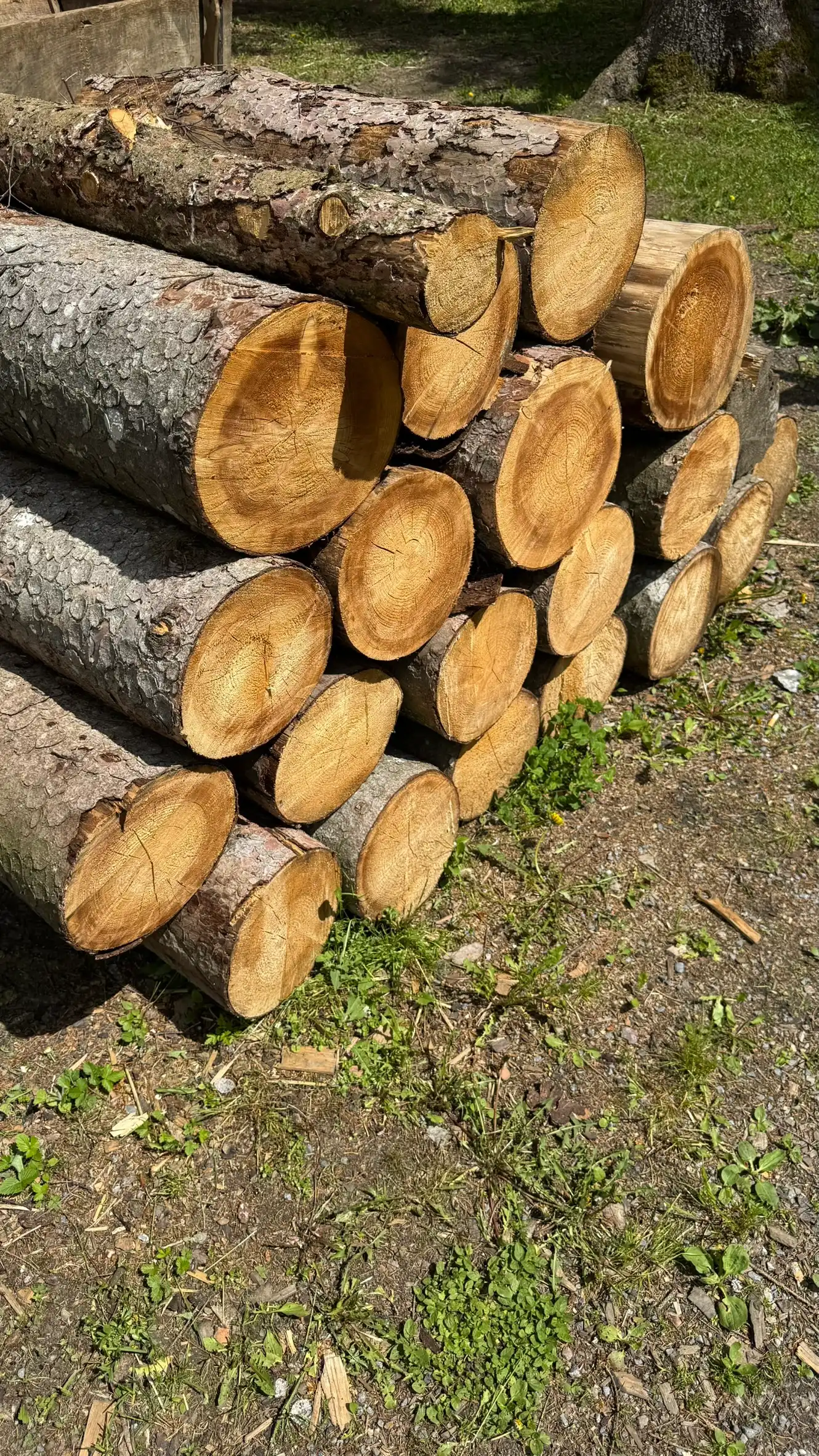
Stacked logs awaiting further processing
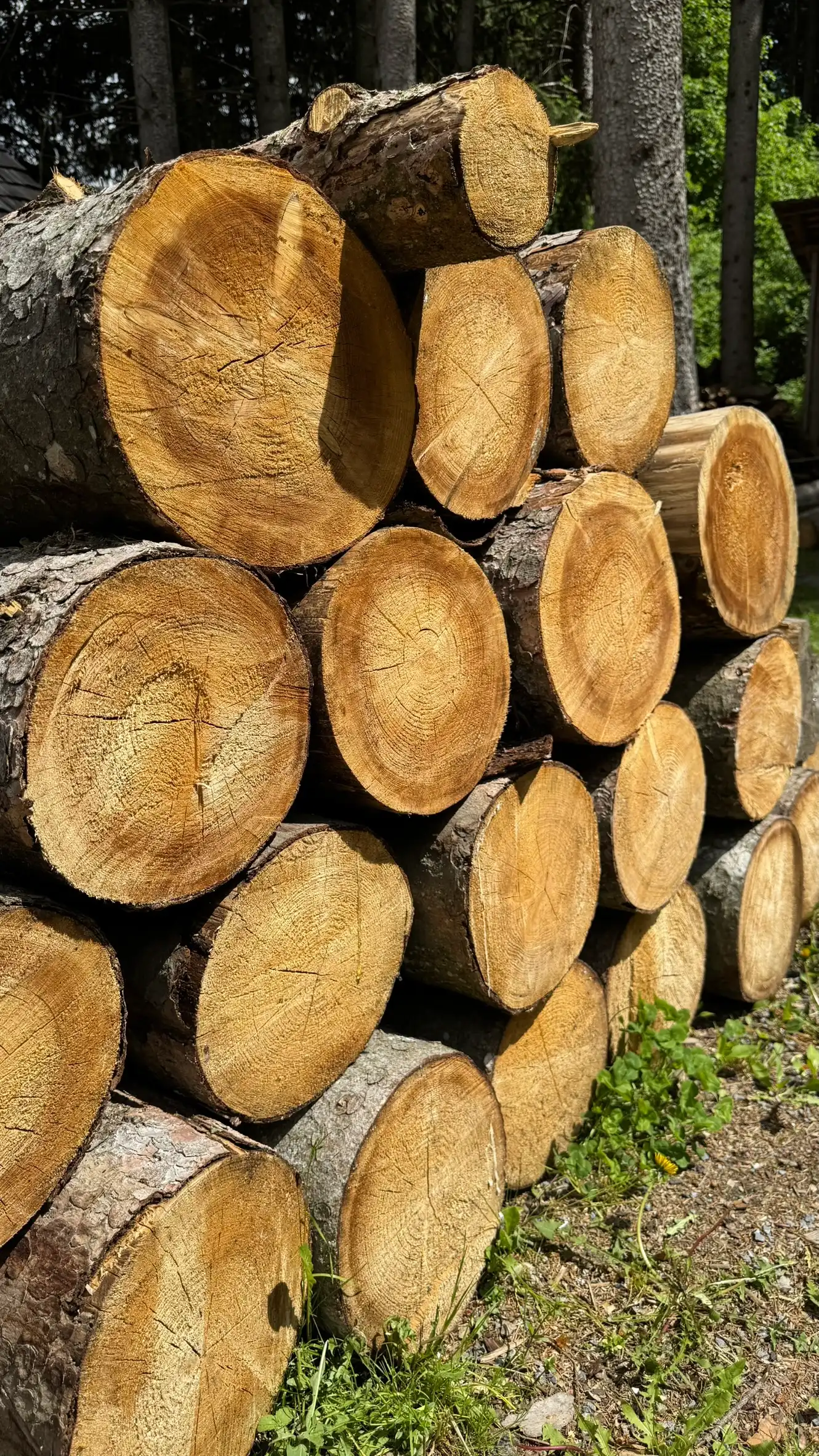
Builders select suitable logs according to size, quality and their intended structural purpose.
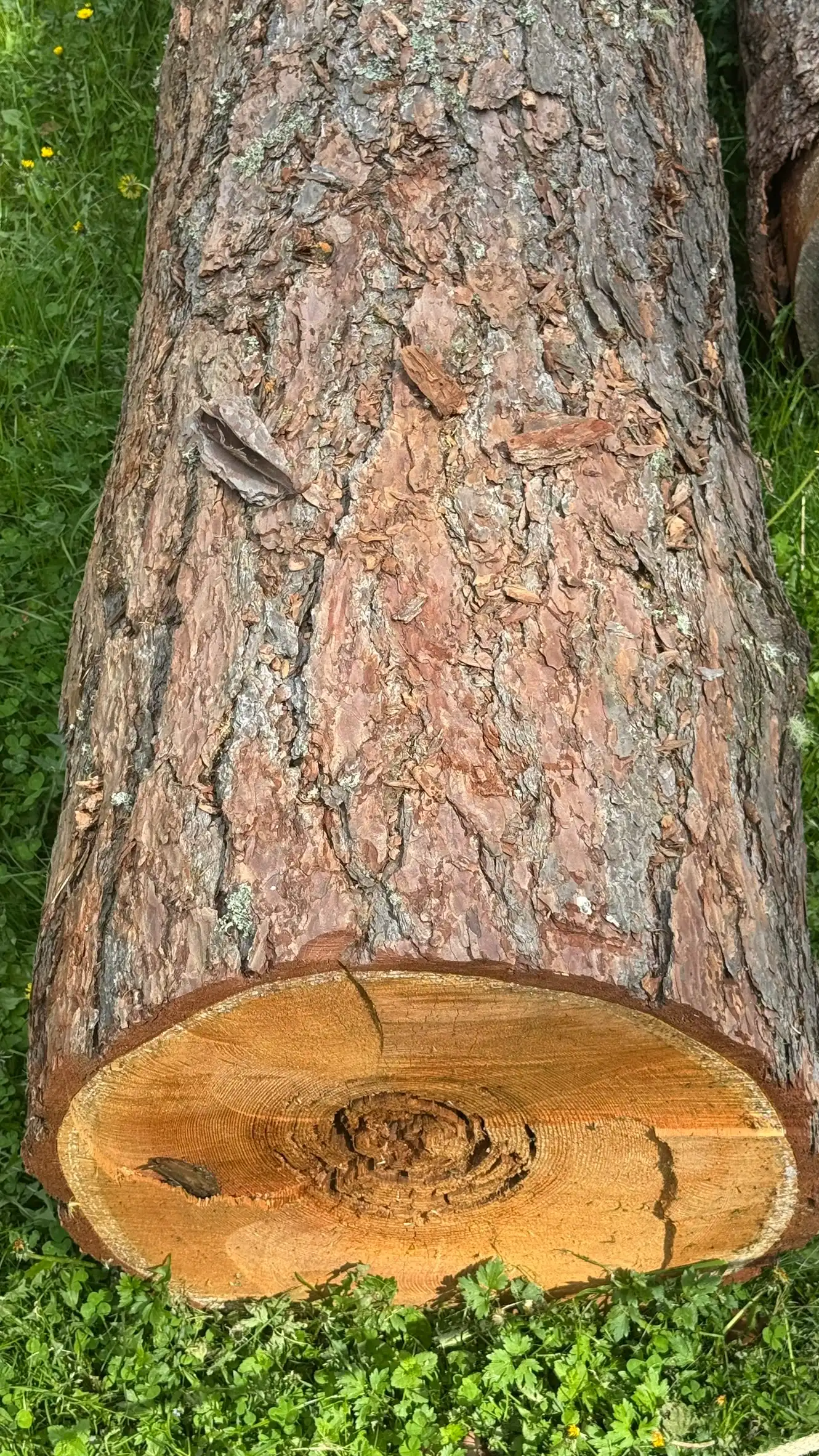
Log cross-section. Felled trunks supply the timber needed for the construction of the tower.
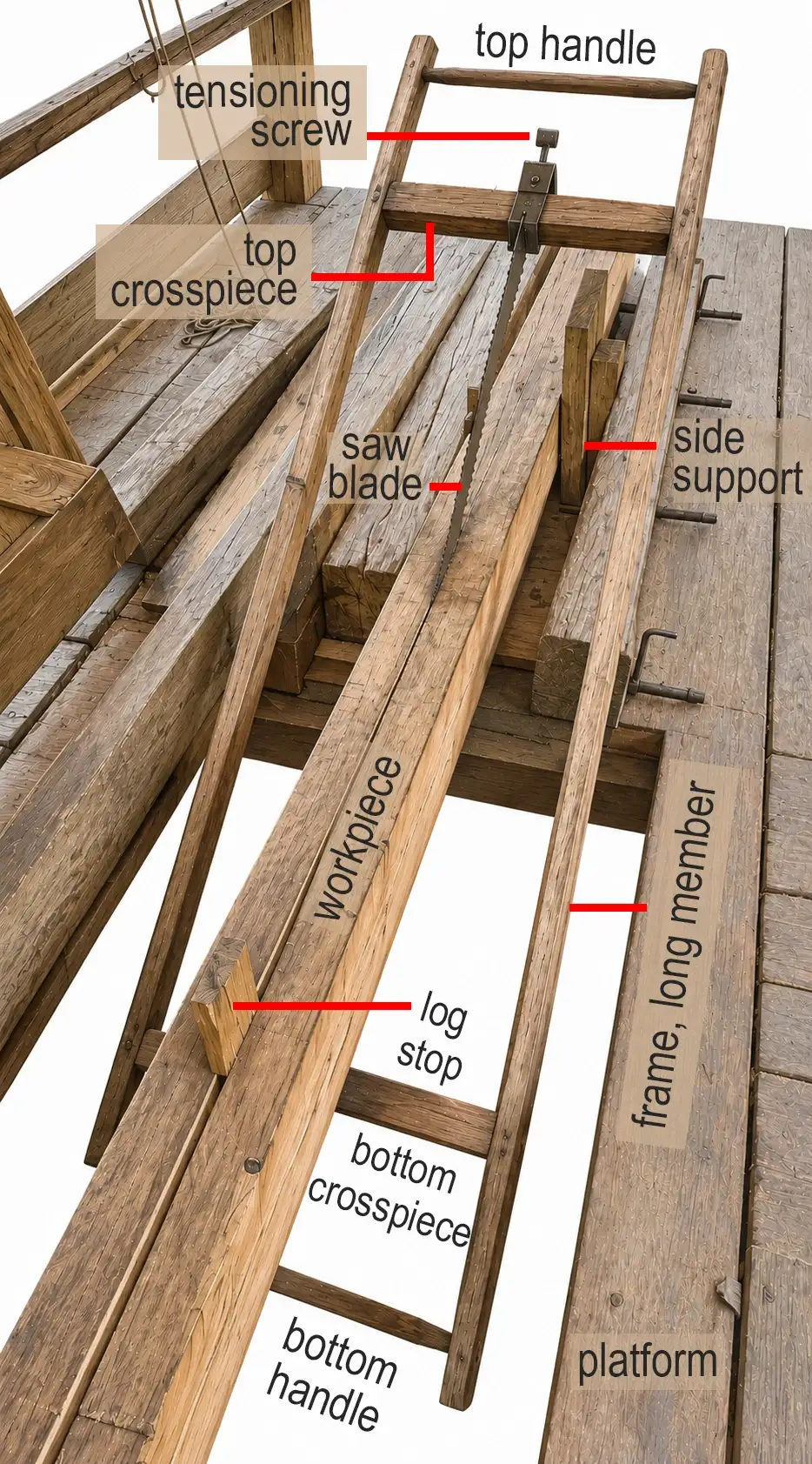
Elevated three-quarter view of a replica medieval pit-saw
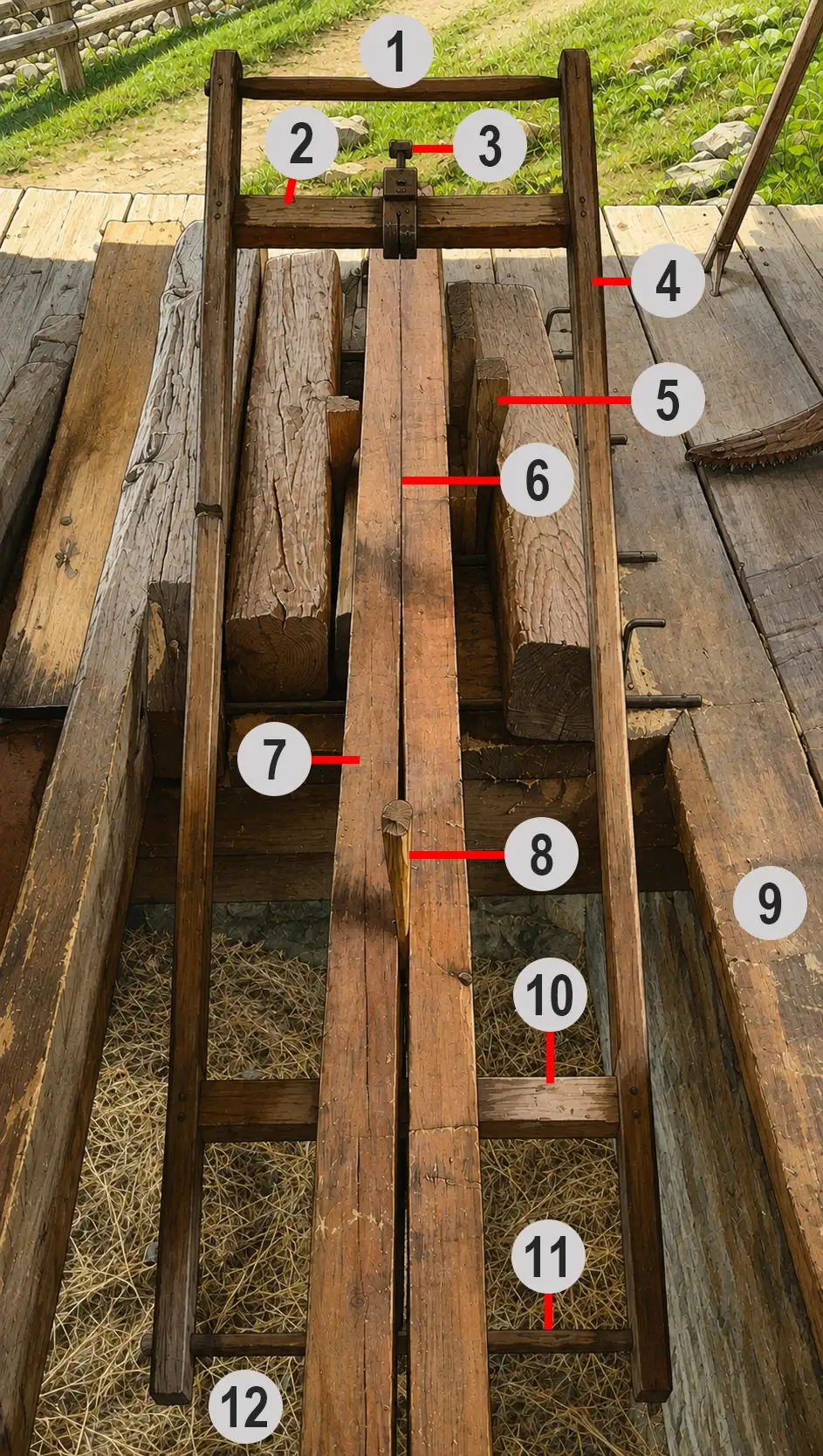
Erhöhte Frontalansicht einer mittelalterlichen Nachbildung einer Grubensäge
1 | top handle 2 | top crosspiece 3 | tensioning screw 4 | frame, long member 5 | fixed side support 6 | saw blade 7 | workpiece (log) 8 | adjustable log stop 9 | platform 10 | bottom crosspiece 11 | bottom handle 12 | pit
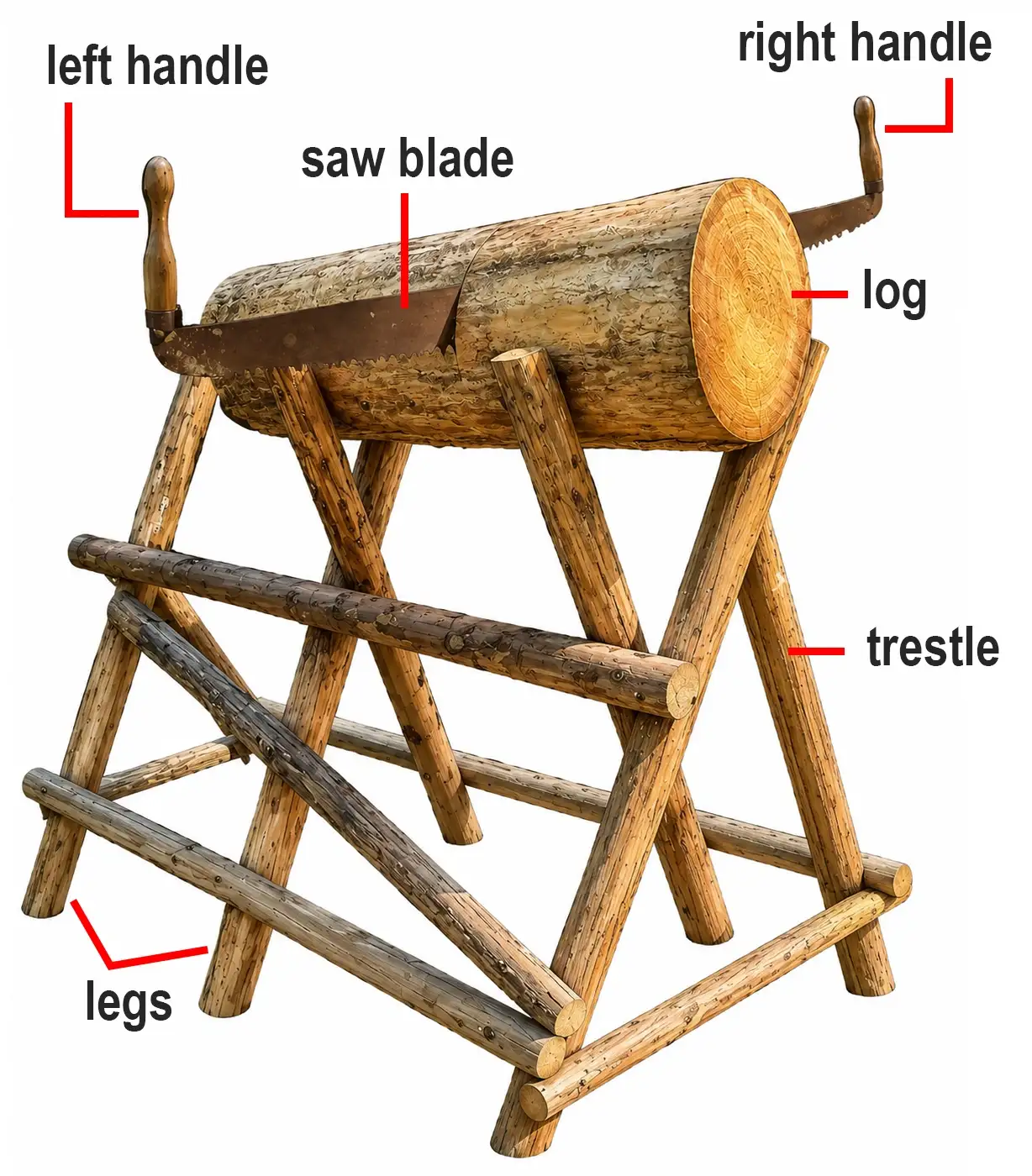
Three-quarter view of a replica medieval cross-cut saw, log and trestle