Curtain Wall or Ring Wall Surrounding a Residential Tower
In medieval Carinthia, many residential towers were enclosed by a curtain wall – a continuous stone boundary forming a protected perimeter around the core buildings.
Form and Construction
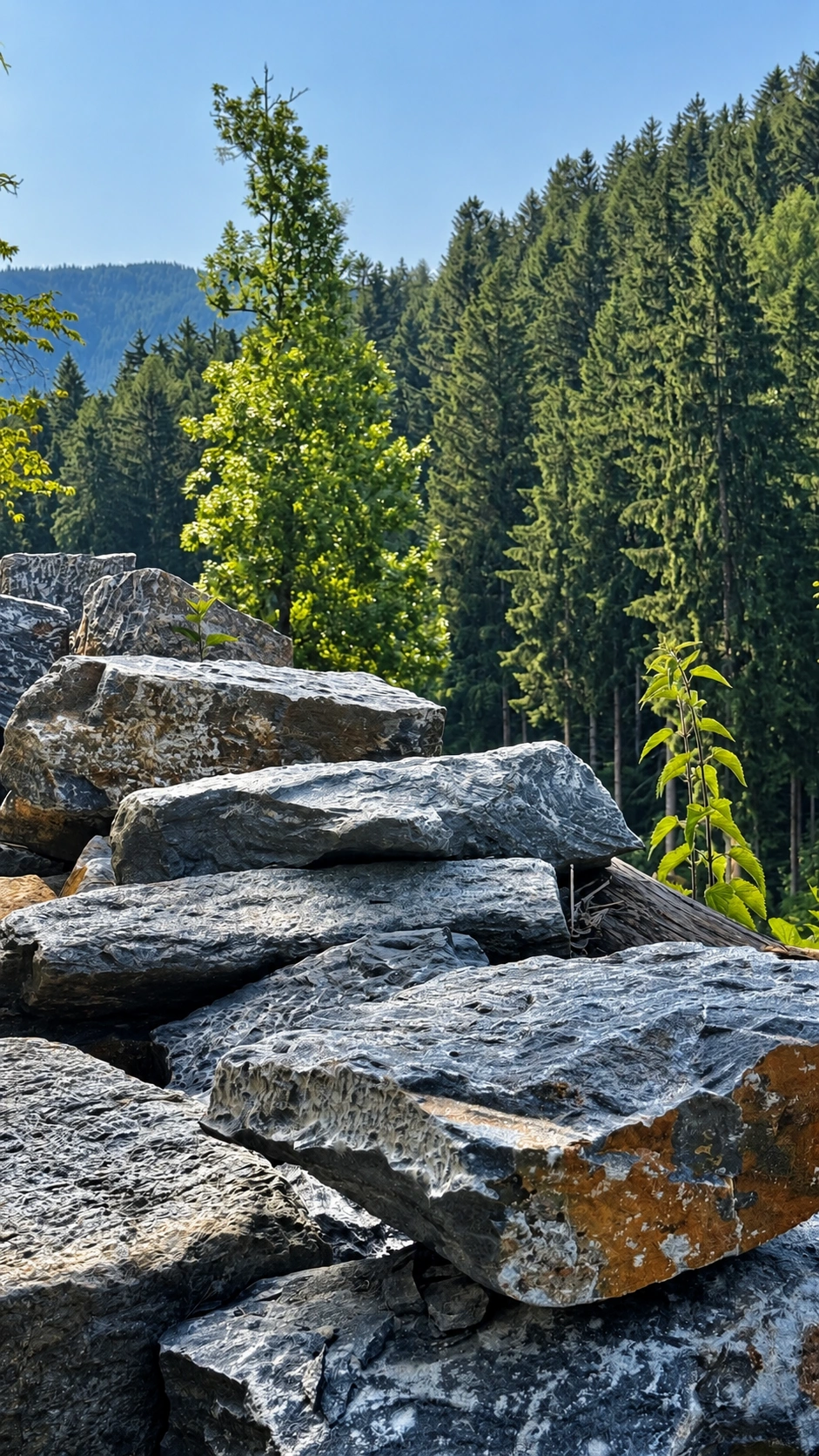
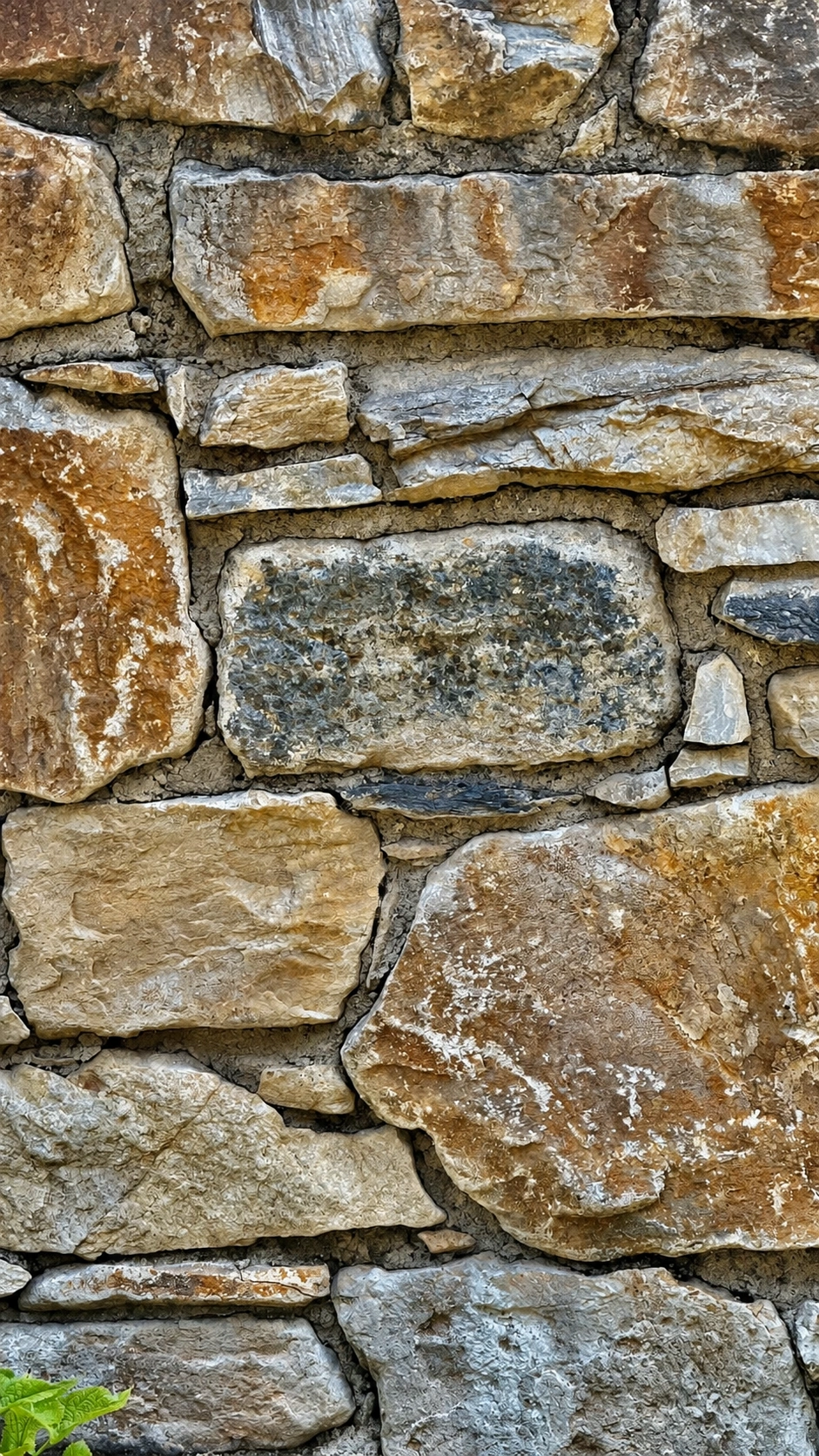
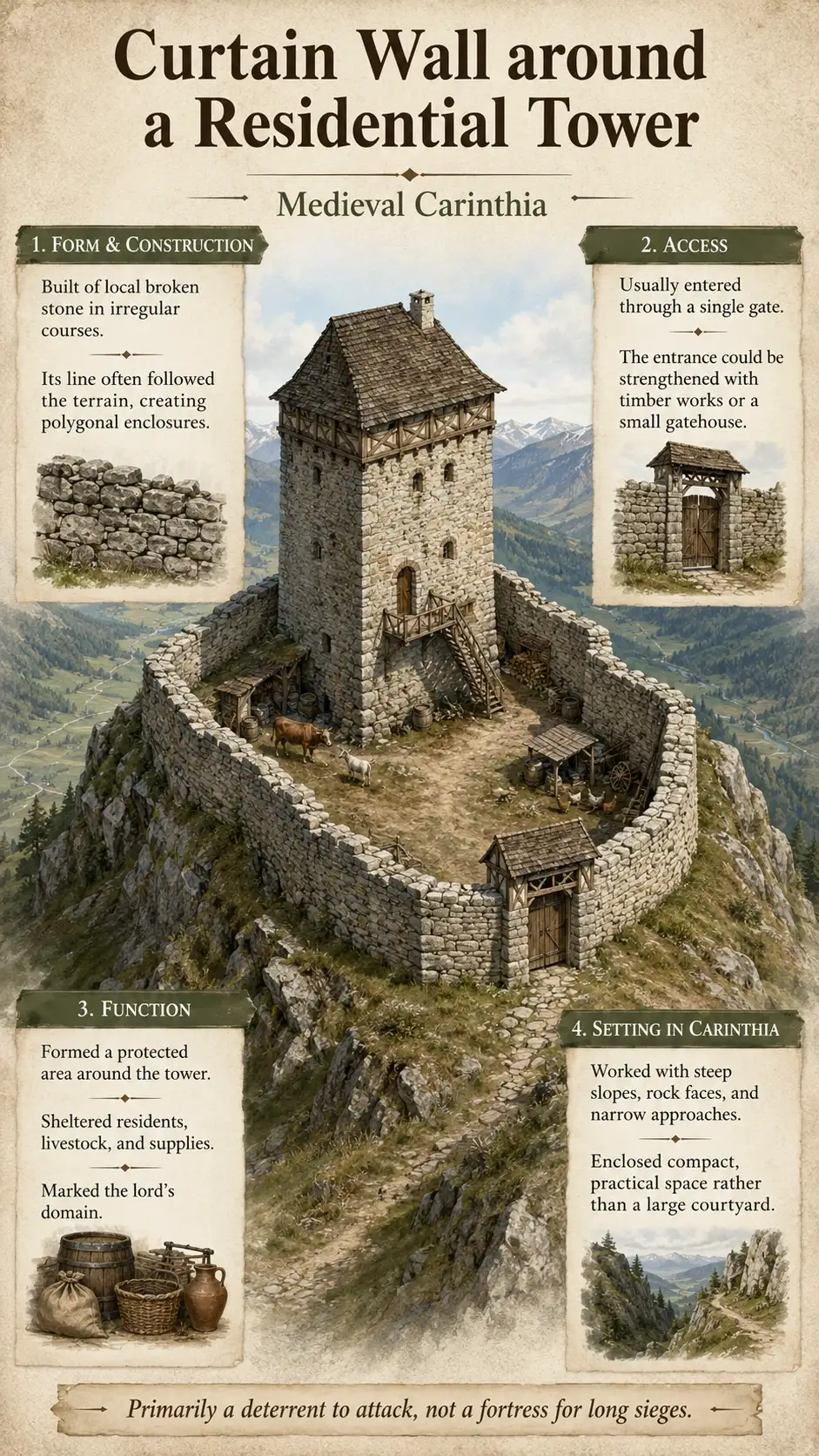
Curtain walls were built from locally quarried stone, laid in irregular courses and closely adapted to the terrain.
On hilltops or ridges, their line often followed natural contours, creating uneven, angular enclosures.
Their height and thickness varied, but they were primarily intended to deter attack rather than withstand prolonged siege.
Access was usually limited to a single gated entrance, sometimes reinforced with timber structures or a small gatehouse.
Function
The residential tower stood within a marked enclosure created by the curtain wall.
The wall served several purposes. It formed a defensive barrier, protected inhabitants, livestock, and provisions, and helped organise the daily life of the household.
It also expressed authority by clearly marking the controlled space of a lordly residence.
Setting
In Carinthia’s mountainous landscape, curtain walls functioned in conjunction withnatural defences – steep slopes, rock faces, and narrow access routes.
Rather than enclosing large courtyards, they typically defined compact, efficiently used spaces, reflecting the practical needs and limited resources of smaller noble seats.
Large, unworked stone blocks lying near the intended curtain wall site
Finished curtain wall built from locally quarried stone laid in irregular courses
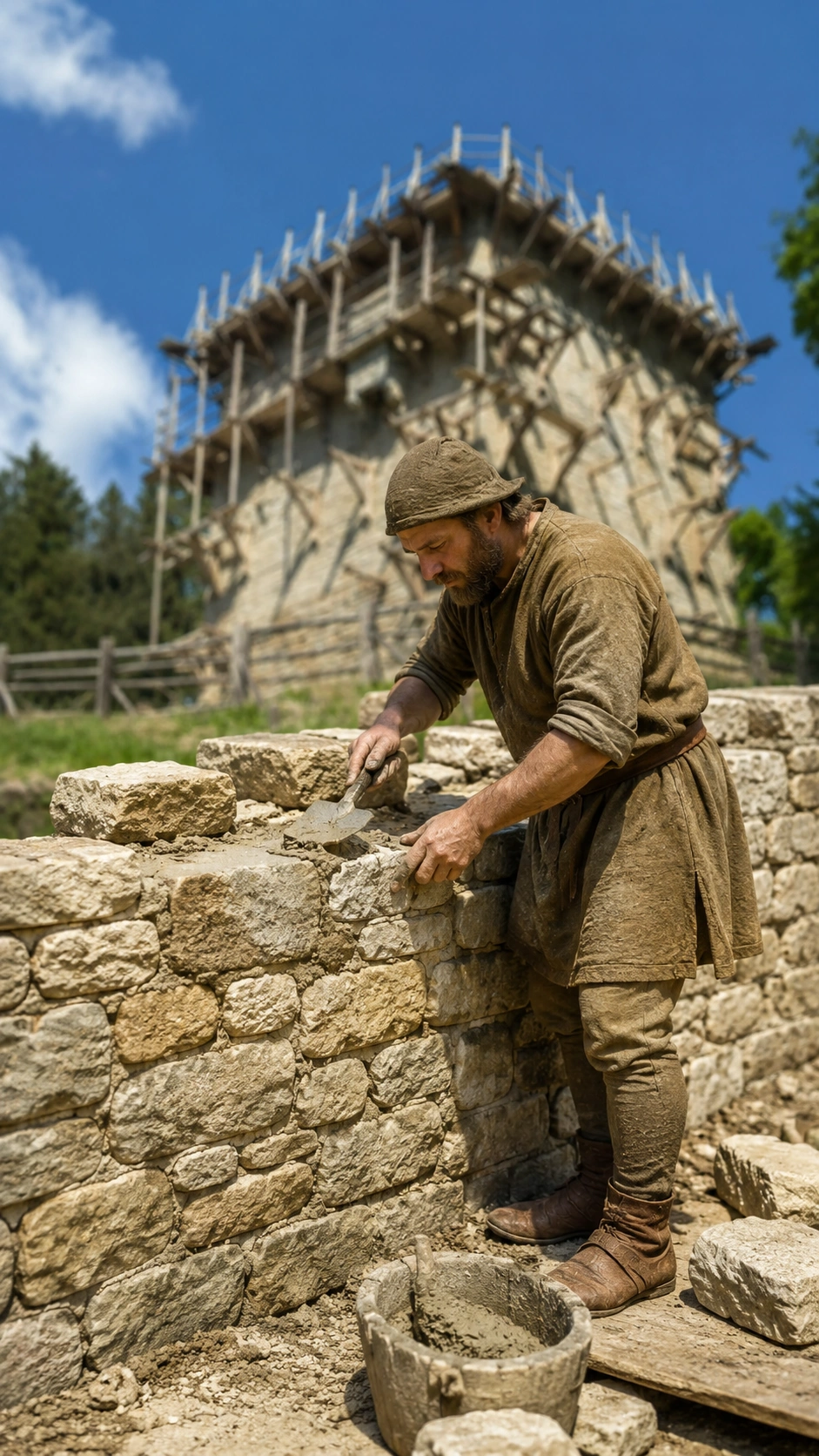
Medieval mason constructing an encircling wall around a residential tower. Interpretative illustration.
Infographic based on interpretative illustrations.