At the Burgbau castle construction site, a gravel cart, a stone cart and a timber cart are in use.
The development of the horse collar in the 9th century significantly enhanced the draught performance (pulling power) of horses and other odd-toed ungulates.
Before the invention of the horse collar, heavily-loaded wagons were drawn by oxen. However, oxen were not suitable for steep paths. As the path on the construction site is steep, horse-drawn carts are preferred.
The carts are two-axled vehicles and feature a turntable steering system, which became widespread in the 13th century. As was customary in the 13th century, the wheels are fitted with a one-piece iron tyre. This tyre is heated and then pressed hot onto the spoked wheel. As it cools, the tyre contracts and fits tightly around the felloes. This reduces rim wear and stabilises the entire wheel structure.
The stone cart delivers approximately 350 kg of rubble uphill.
The gravel cart is loaded with around 40 shovels of gravel.
Long squared timbers (up to 8 m) are transported using a long-load cart, which is designed so that its longitudinal axis can be adjusted.
A wheelbarrow is used to transport light materials.
Replicas of medieval carts transport stone, gravel and timber.
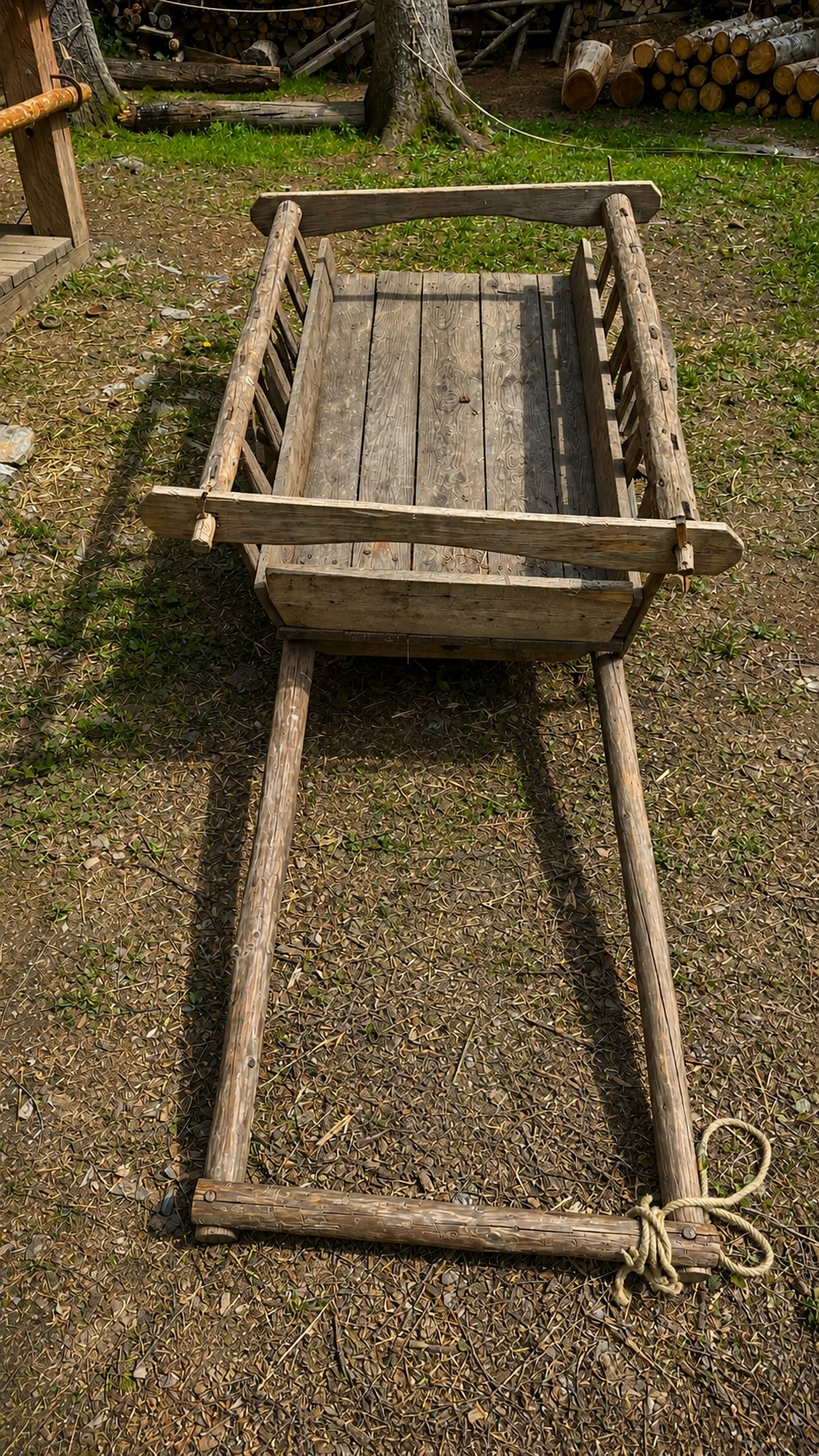
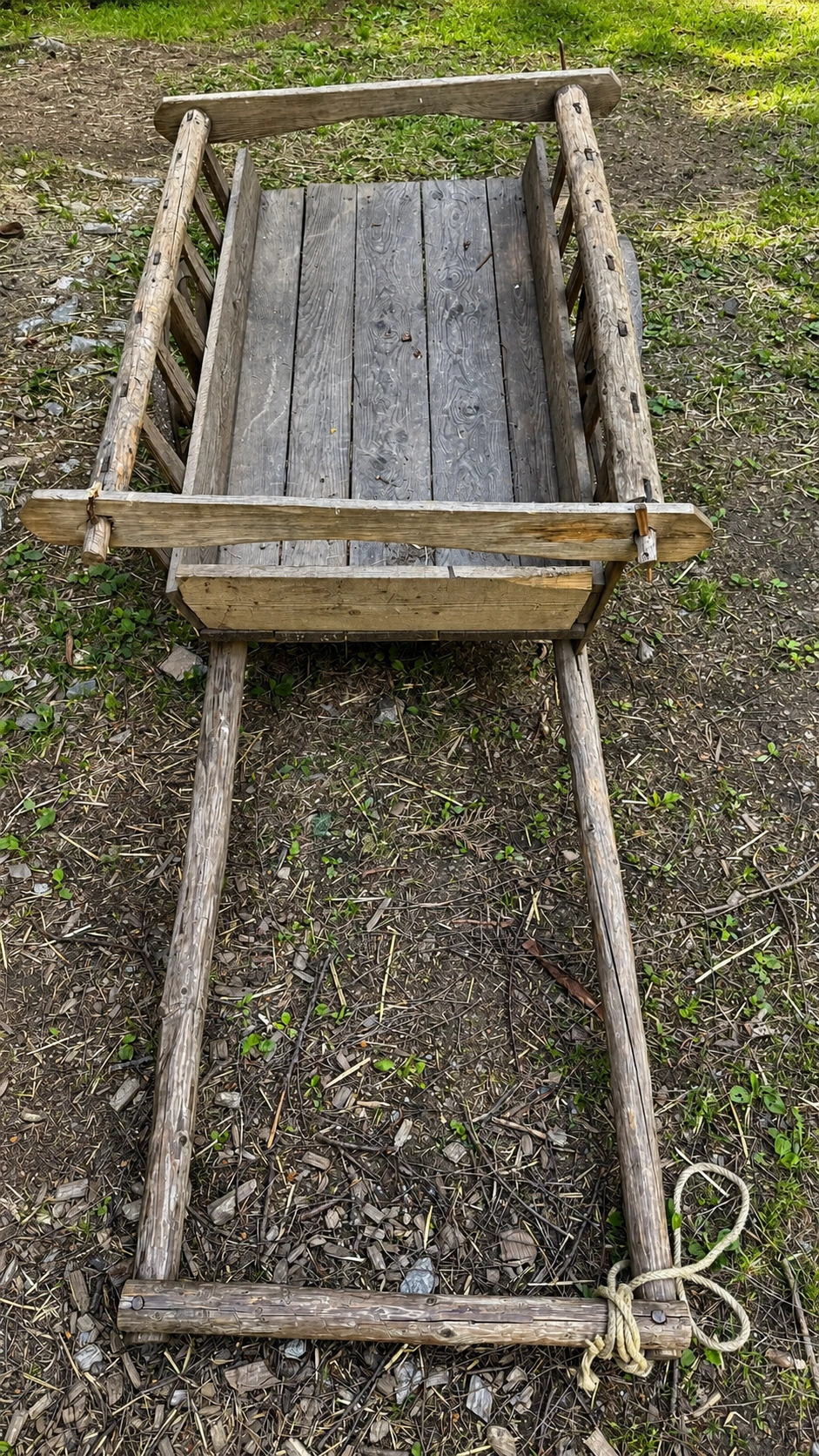
A wooden cart with slatted sides and long pulling shafts enables workers to move heavy loads.
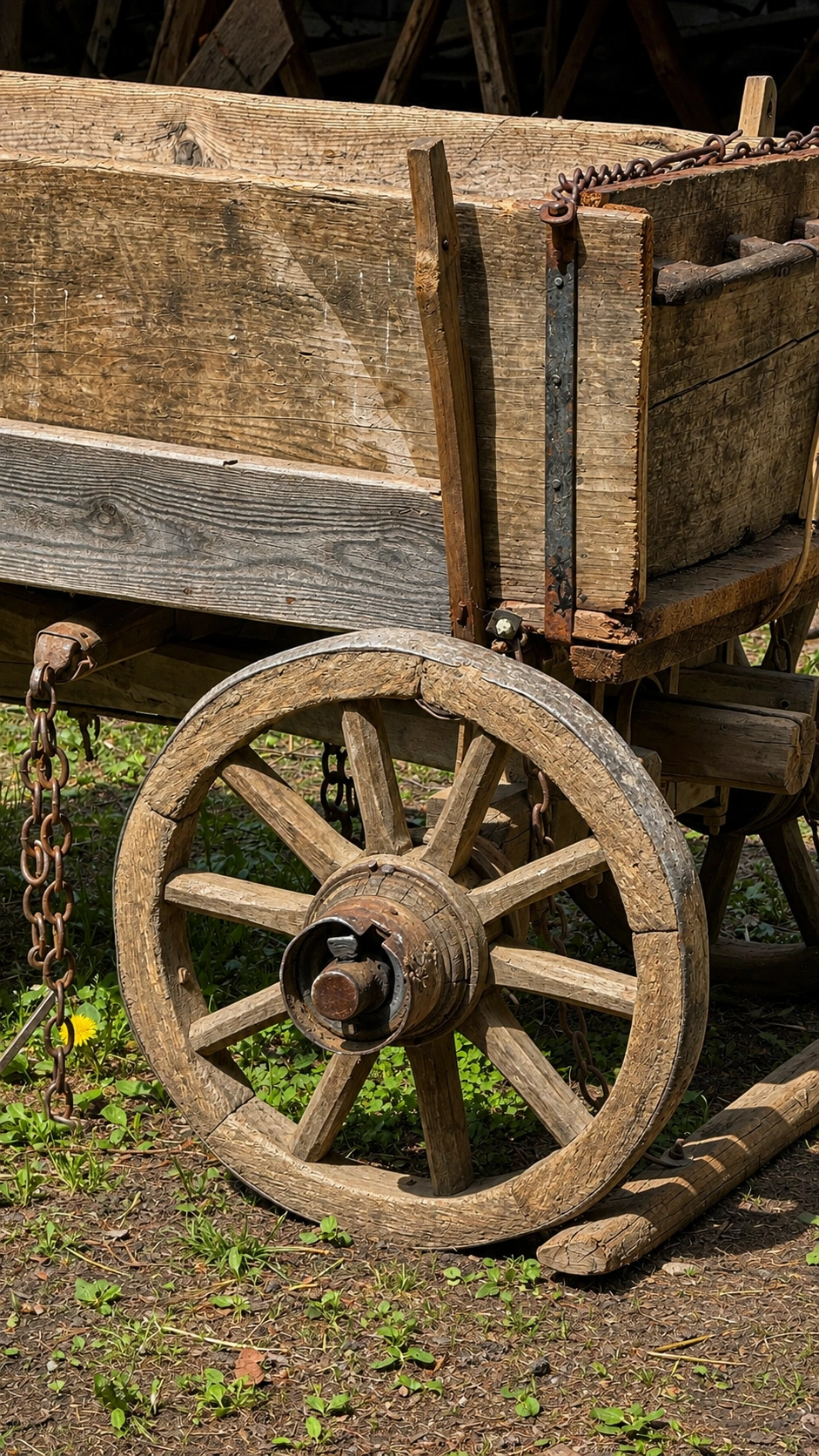
Spoked wheels with hot-fitted iron tyres improve durability.
Plank-built cart body with slatted sides and long pulling shafts
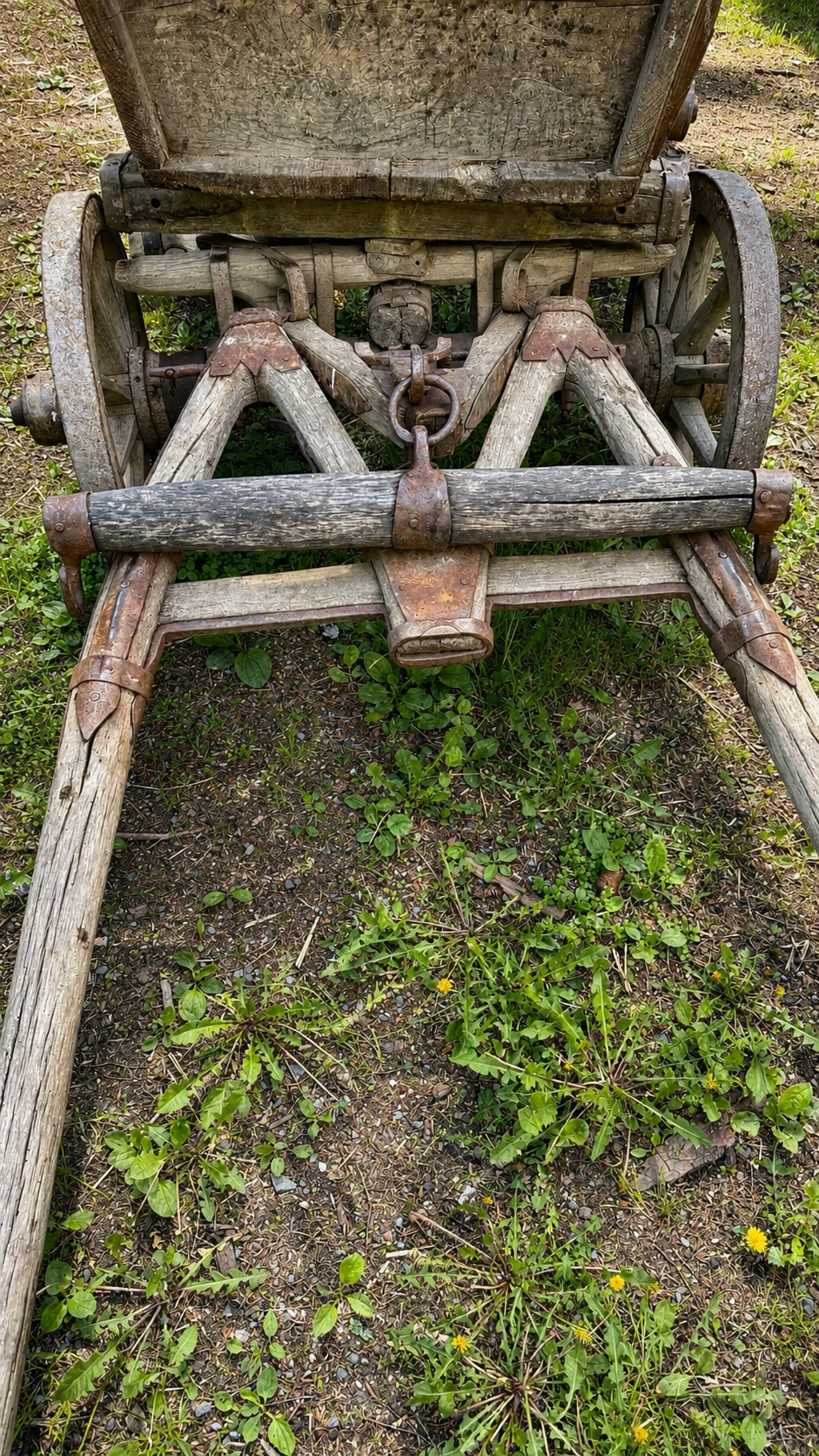
A pivoting front axle helps the cart negotiate steep and winding construction paths.
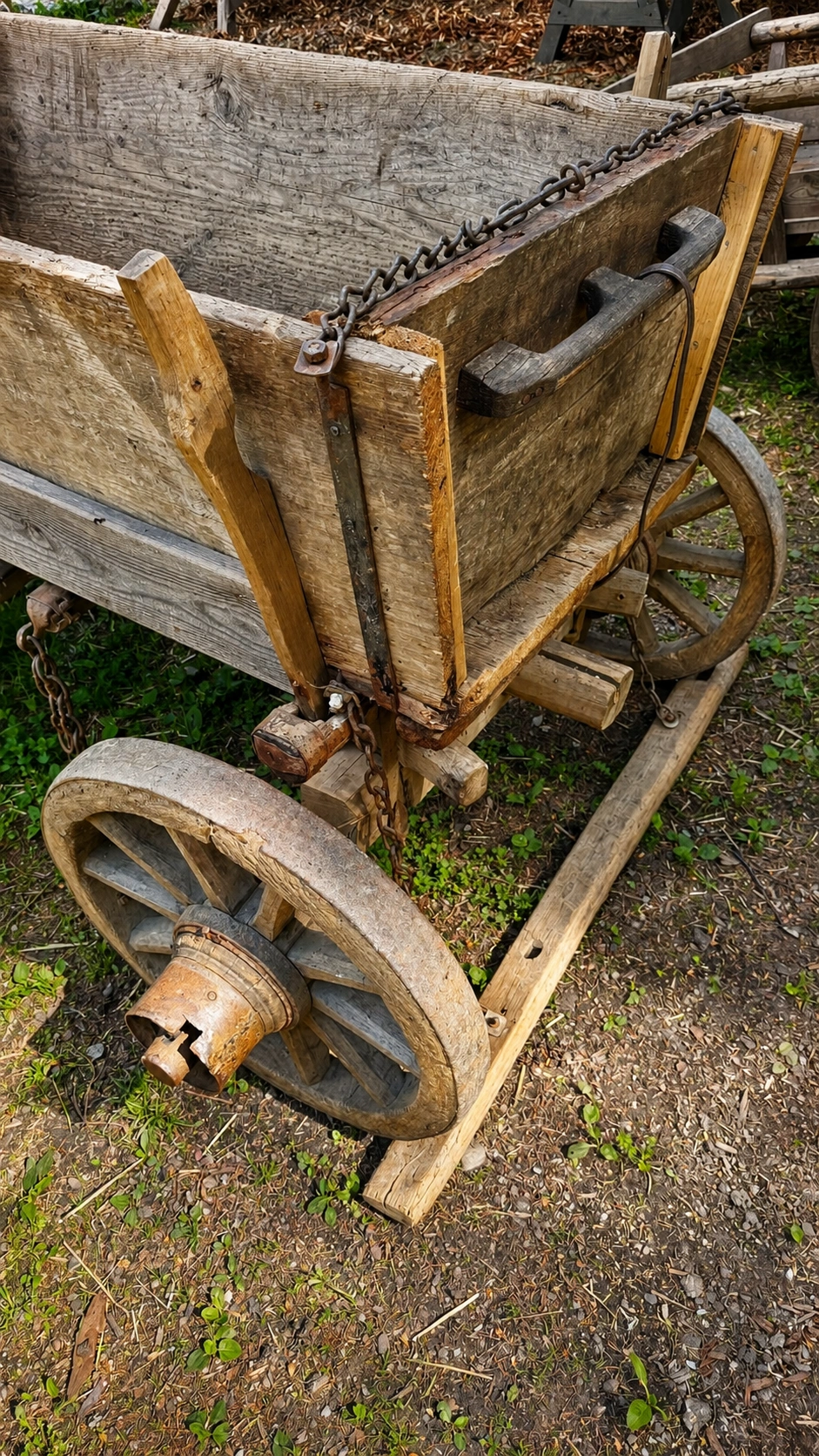
Iron fittings strengthen the tailgate and help secure heavy loads during transport.
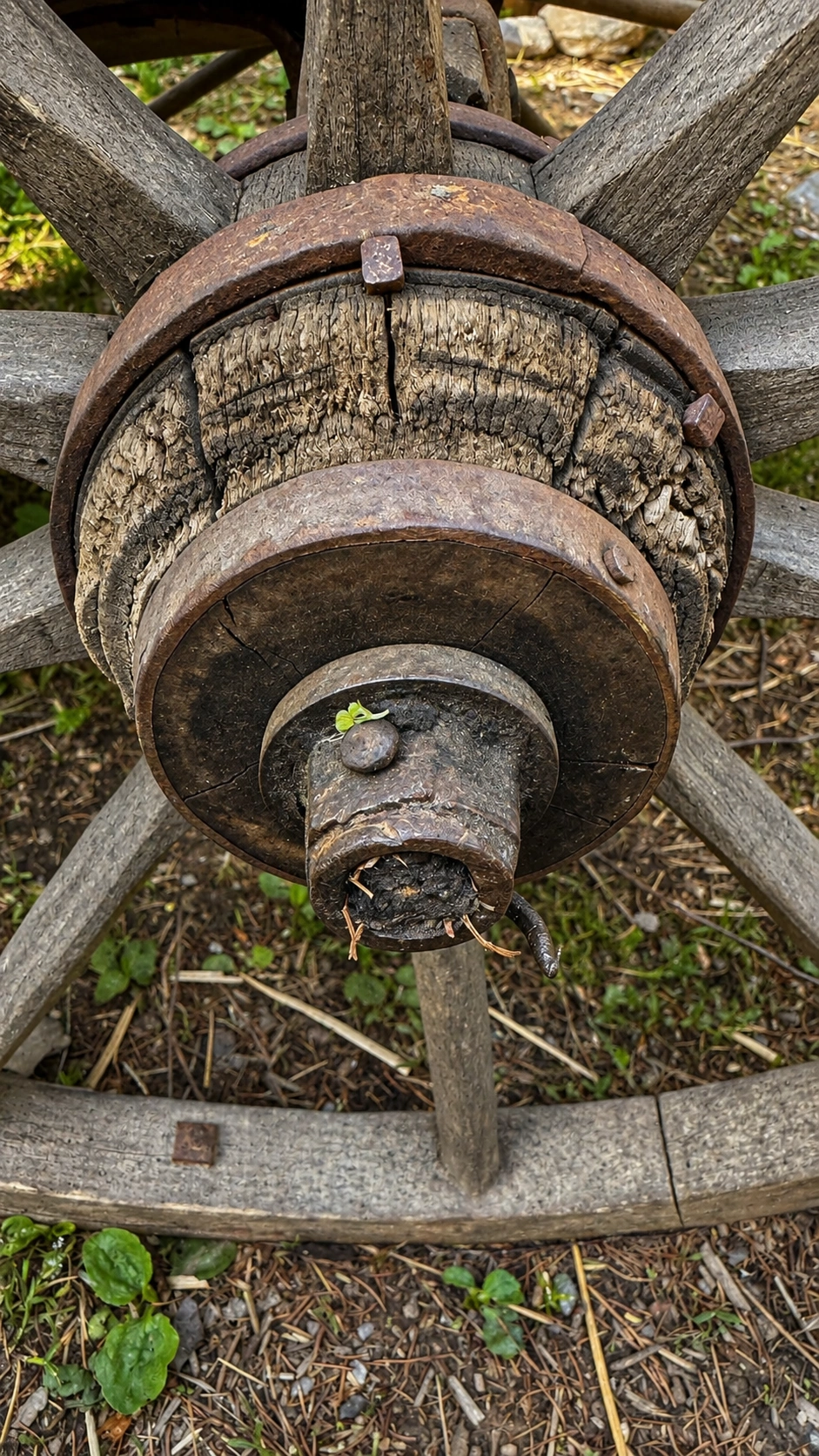
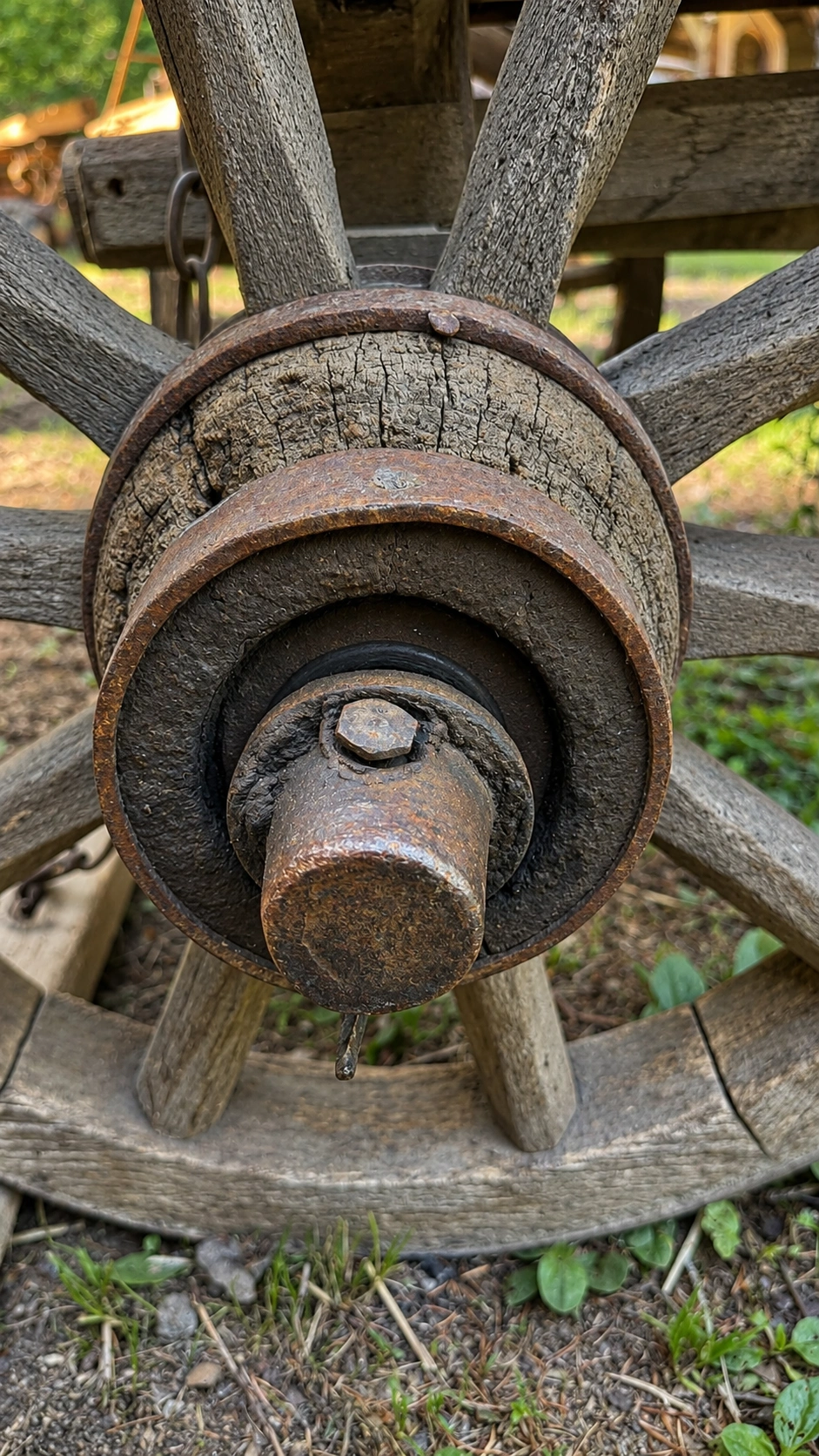
Spoked wheels and iron-reinforced hubs withstand the demands of daily construction work.
Iron bands protect the wheel hub from splitting under load and improve long-term durability.
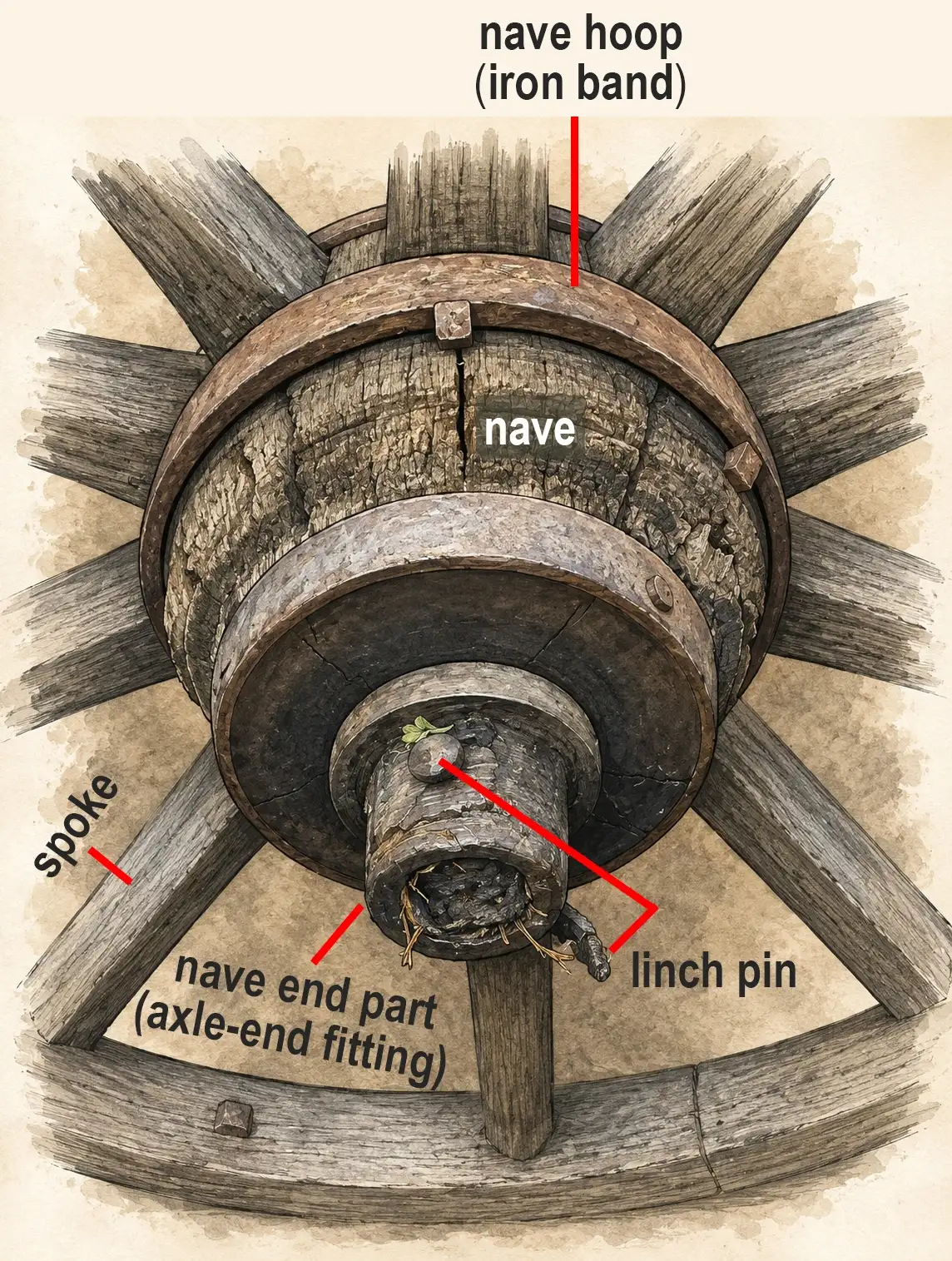
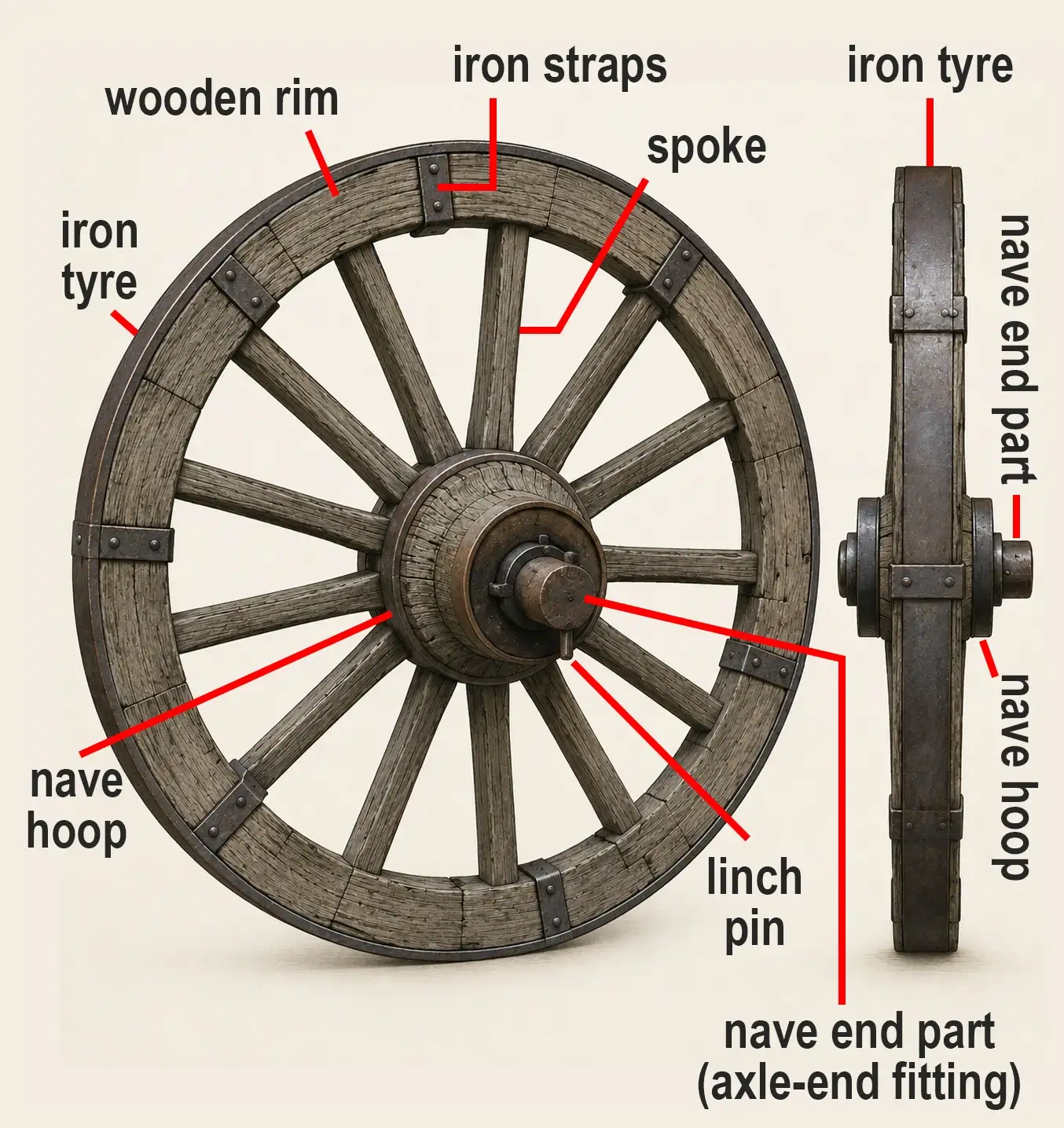
Parts of a Medieval Cart Wheel
Nave Hoops (Iron Bands) Iron bands that reinforce the nave and prevent it from splitting.
Nave Central wooden block into which the spokes are fitted and through which the axle passes.
Spokes Wooden members that transfer weight and forces between the hub and the rim.
Linch Pin Retaining pin that prevents the wheel from sliding off the axle.
Nave End Part (Axle-End Fitting) Iron reinforcement at the outer end of the hub where the wheel rotates on the axle.
Parts of a Medieval Cart Wheel
Iron Tyre Hot-fitted iron band that protects the wheel from wear and holds the wheel tightly together.
Wooden Rim Circular outer part of the wheel formed from curved wooden segments (felloes); supports the iron tyre and connects the spokes.
Iron Straps Forged metal bands fixed around the wooden rim, hold the curved rim segments securely together, and prevent the wood from splitting under heavy loads.
Spokes Wooden members that transfer weight and forces between the hub and the rim.
Nave Hoops (Iron Bands) Iron bands that reinforce the nave and prevent it from splitting.
Nave End Part (Axle-End Fitting) Iron reinforcement at the outer end of the hub where the wheel rotates on the axle.
Linch Pin Retaining pin that prevents the wheel from sliding off the axle.
Nave Central wooden block into which the spokes are fitted and through which the axle passes.
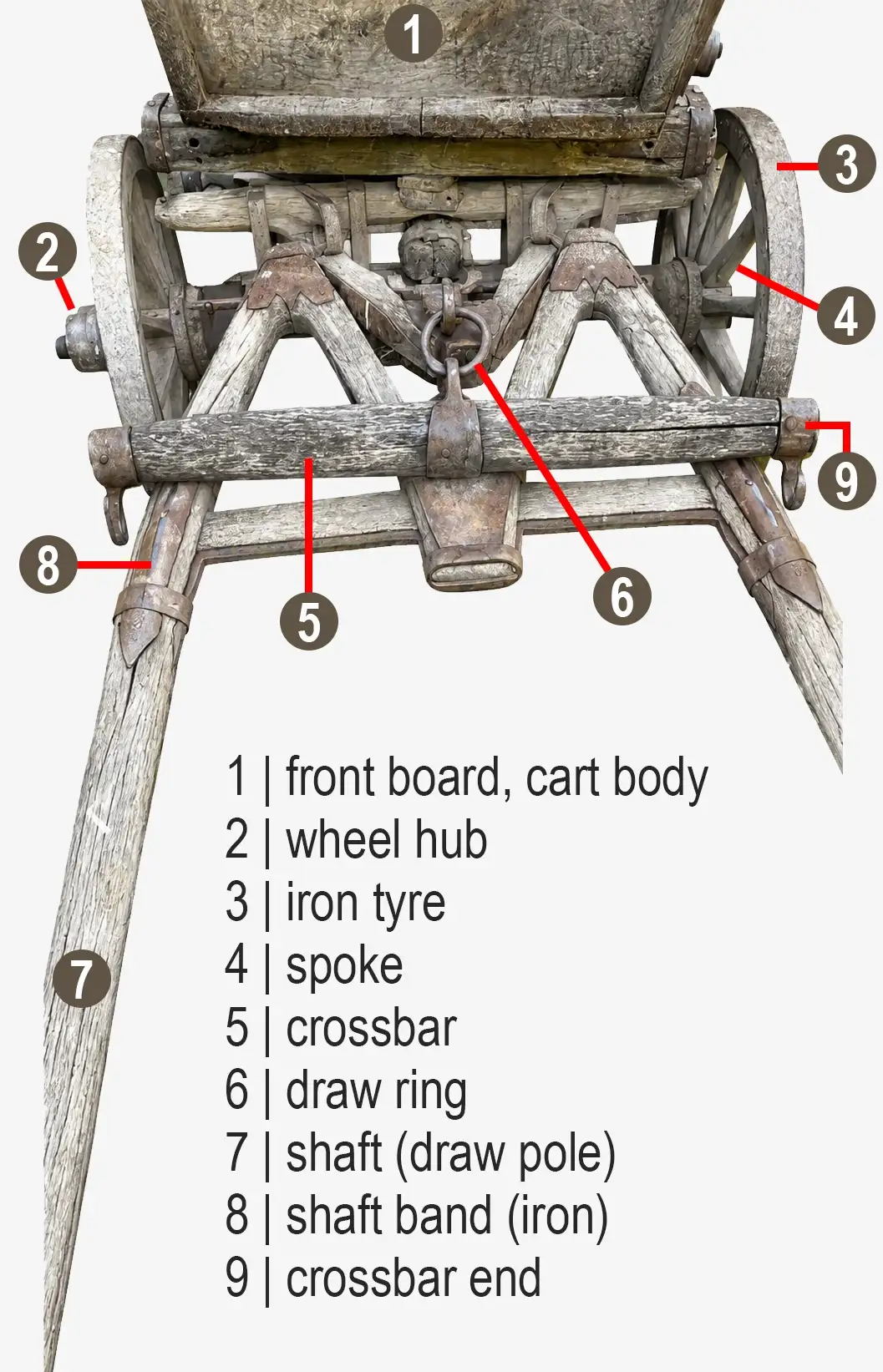
Front Assembly of a Medieval Transport Cart
Front Board, Cart Body Wooden front board that forms the front wall of the cart body and helps to retain the load.
Wheel Hub Central part of the wheel through which the axle passes and to which the spokes are fitted.
Iron Tyre Iron band that is fitted around the wheel rim to protect it from wear.
Spoke Wooden member that connects the hub to the wheel rim and helps to transmit the load.
Crossbar Transverse beam that links the shafts and helps to stabilise the front assembly.
Draw Ring Iron ring that provides the attachment point for the draught arrangement.
Shafts (Draw Poles) The pair of wooden shafts guide the draught animal and transmit the pulling force to the cart.
Shaft Band(Iron) An iron strap that reinforces the shaft and protects it from wear and splitting.
Crossbar End End fitting of the crossbar that provides an attachment point for chains or other fittings.
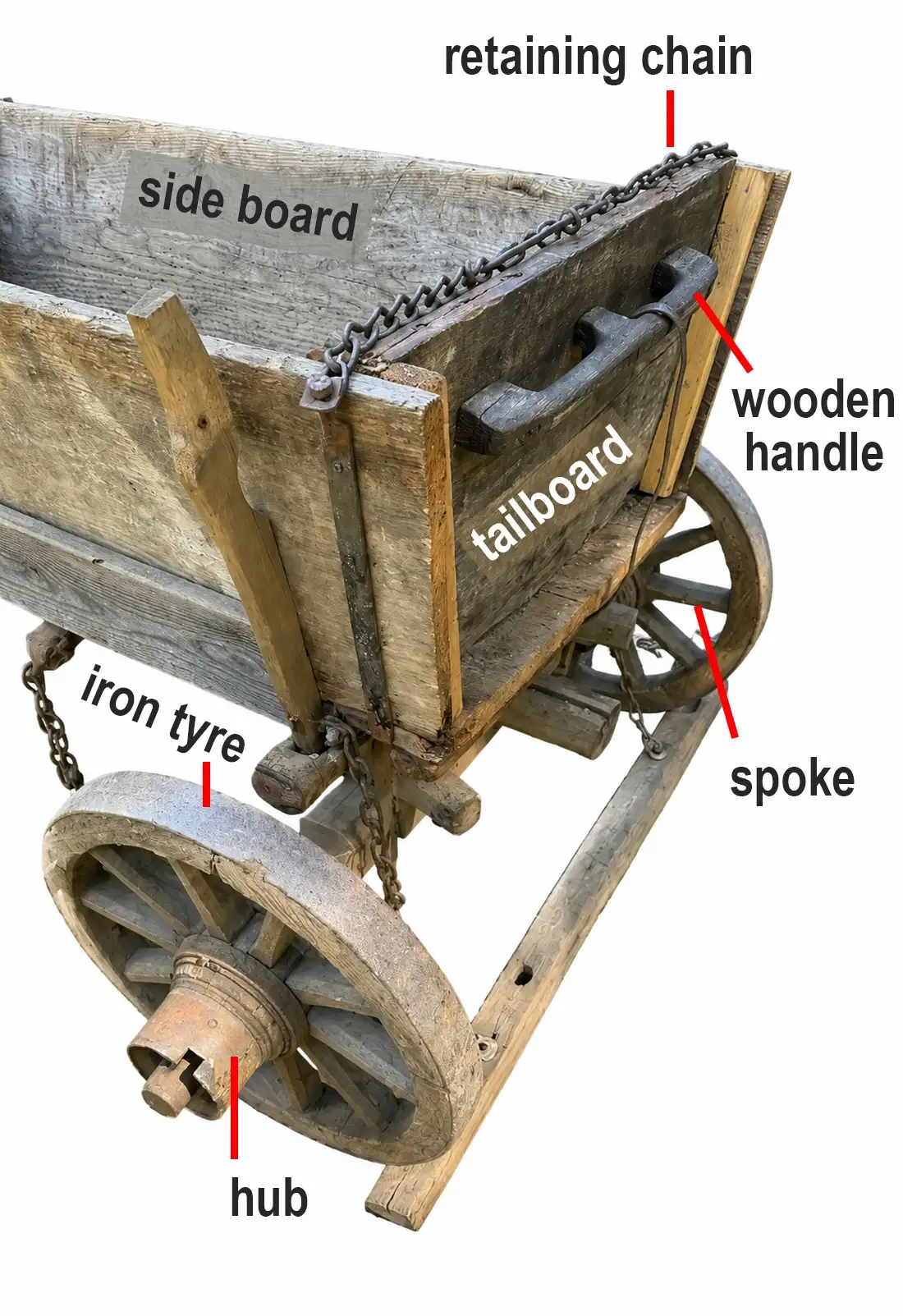
The Rear Components of a Medieval Wooden Cart
Retaining Chain Chain used to secure the tailboard and prevent it from opening unintentionally.
Side Board Wooden side panel that helps to retain the load carried in the cart.
Wooden Handle Wooden handle used to open or close the tailboard.
Tailboard Rear board of the cart that retains the load and can be lowered for loading or unloading.
Spokes Wooden members that connect the hub to the wheel rim and help in transferring the load.
Iron Tyre Iron band fitted around the wheel rim to protect the wheel from wear and strengthen its structure.
Hub Central part of the wheel through which the axle passes and to which the spokes are attached.
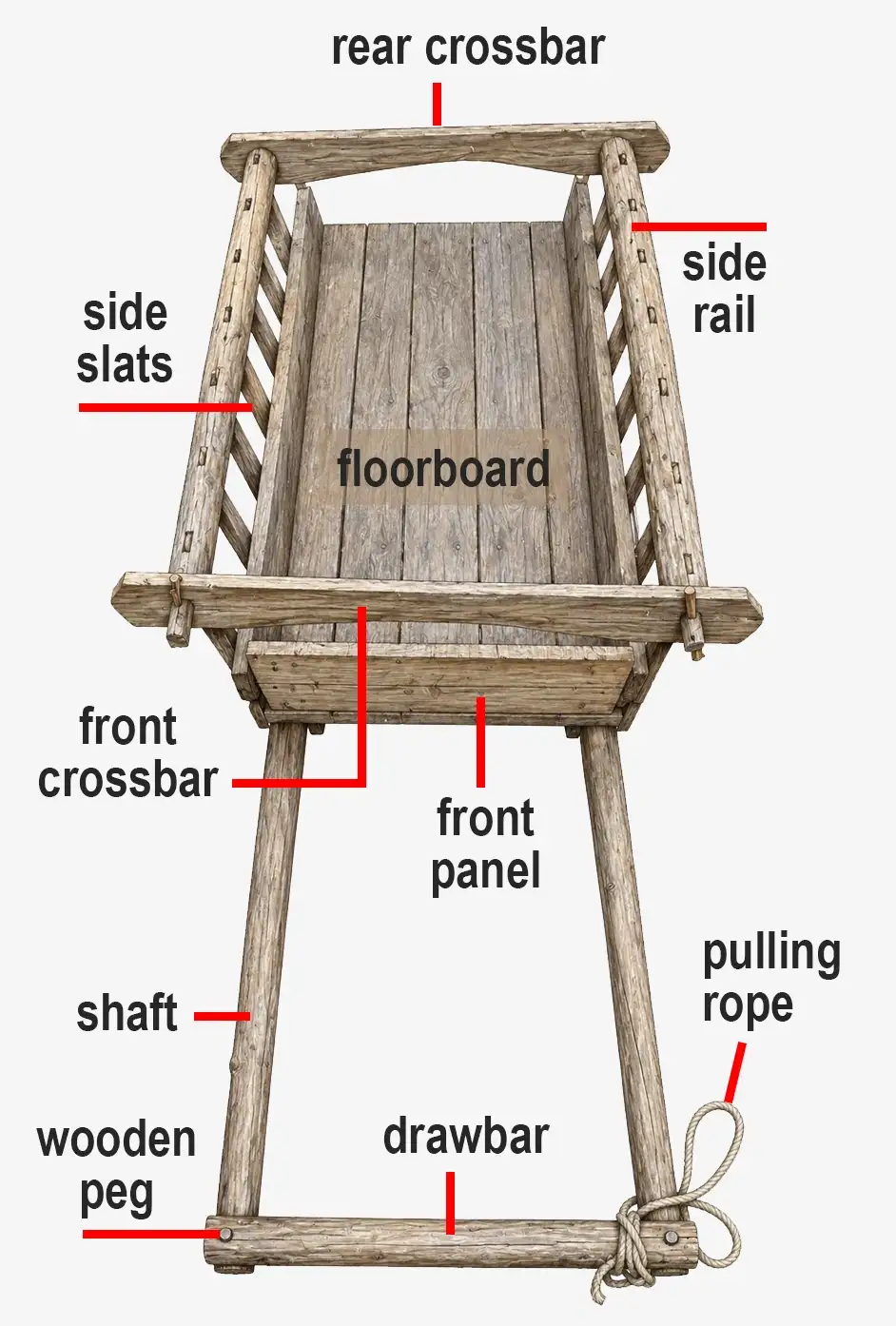
The Wooden Parts of a Medieval Cart
Rear Crossbar Crossbar at the rear of the cart that strengthens and stabilises the frame.
Side Rail Longitudinal timber attached to the crossbars that keeps the slats in place.
Side Slats Wooden slats on the sides of the cart that prevent the goods from falling out.
Floorboards Wooden boards forming the floor of the cart on which the load is carried.
Front Crossbar Crossbar at the front of the cart that strengthens and stabilises the frame.
Front Panel Front vertical board of the cart body that prevents the load from sliding forward.
Shaft Long pole used to pull or push the cart.
Pulling Rope Rope used for pulling the cart by hand or for attaching it to a draught animal.
Drawbar Transverse bar at the end of the shaft that provides an attachment point for hitching an animal or securing a rope.
Wooden Peg Wooden pin used to secure joints and prevent parts from coming apart.