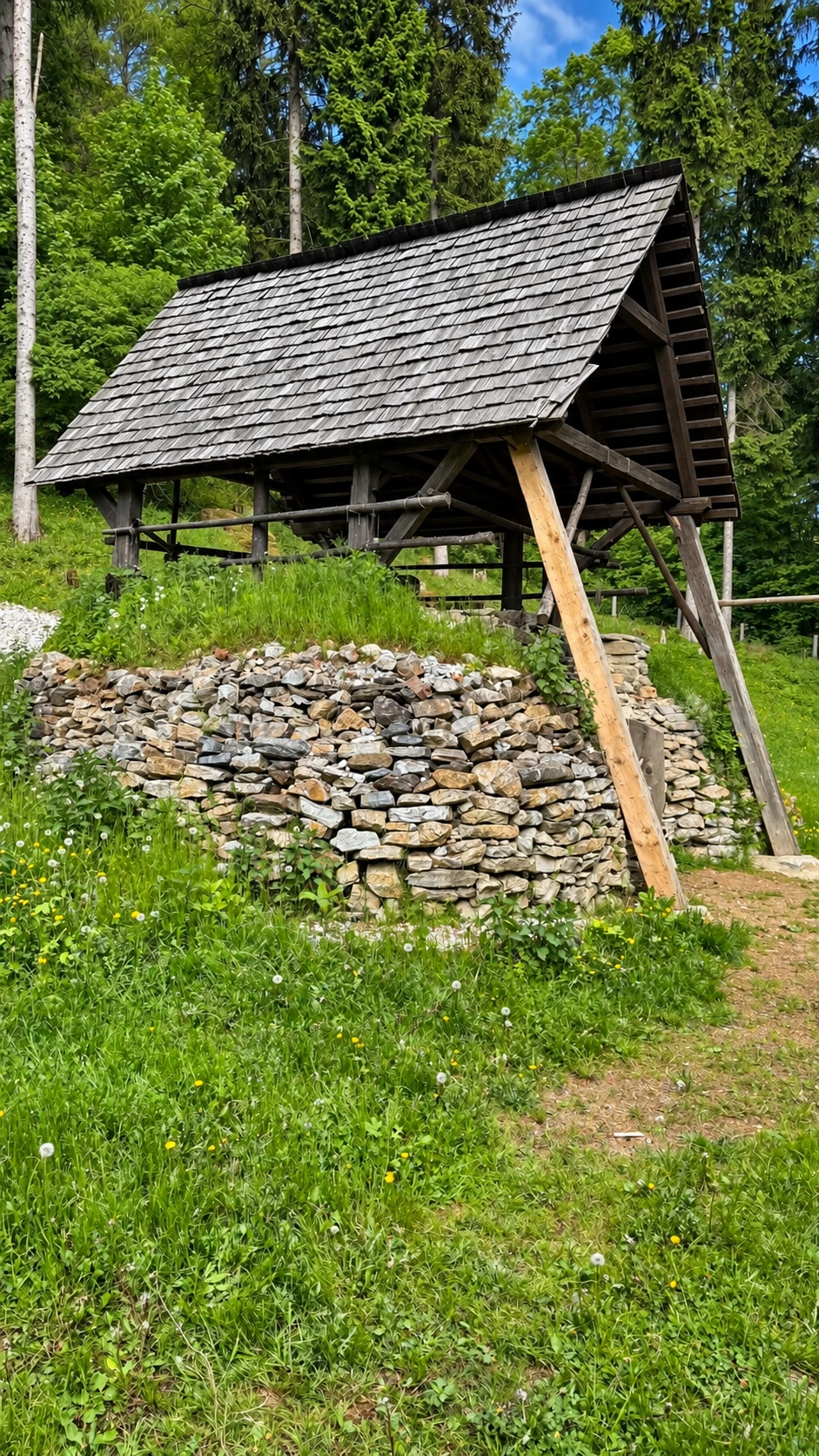
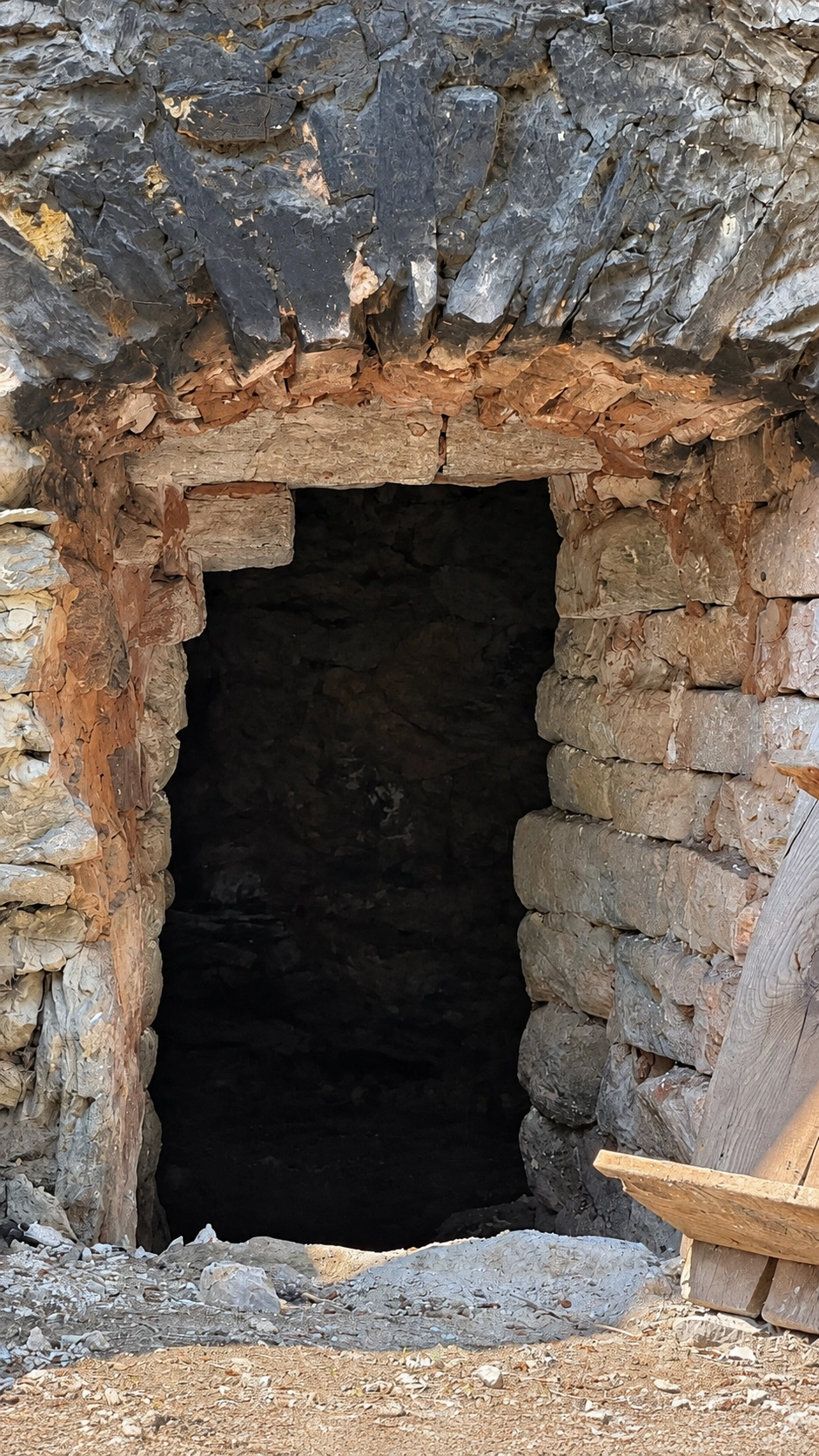
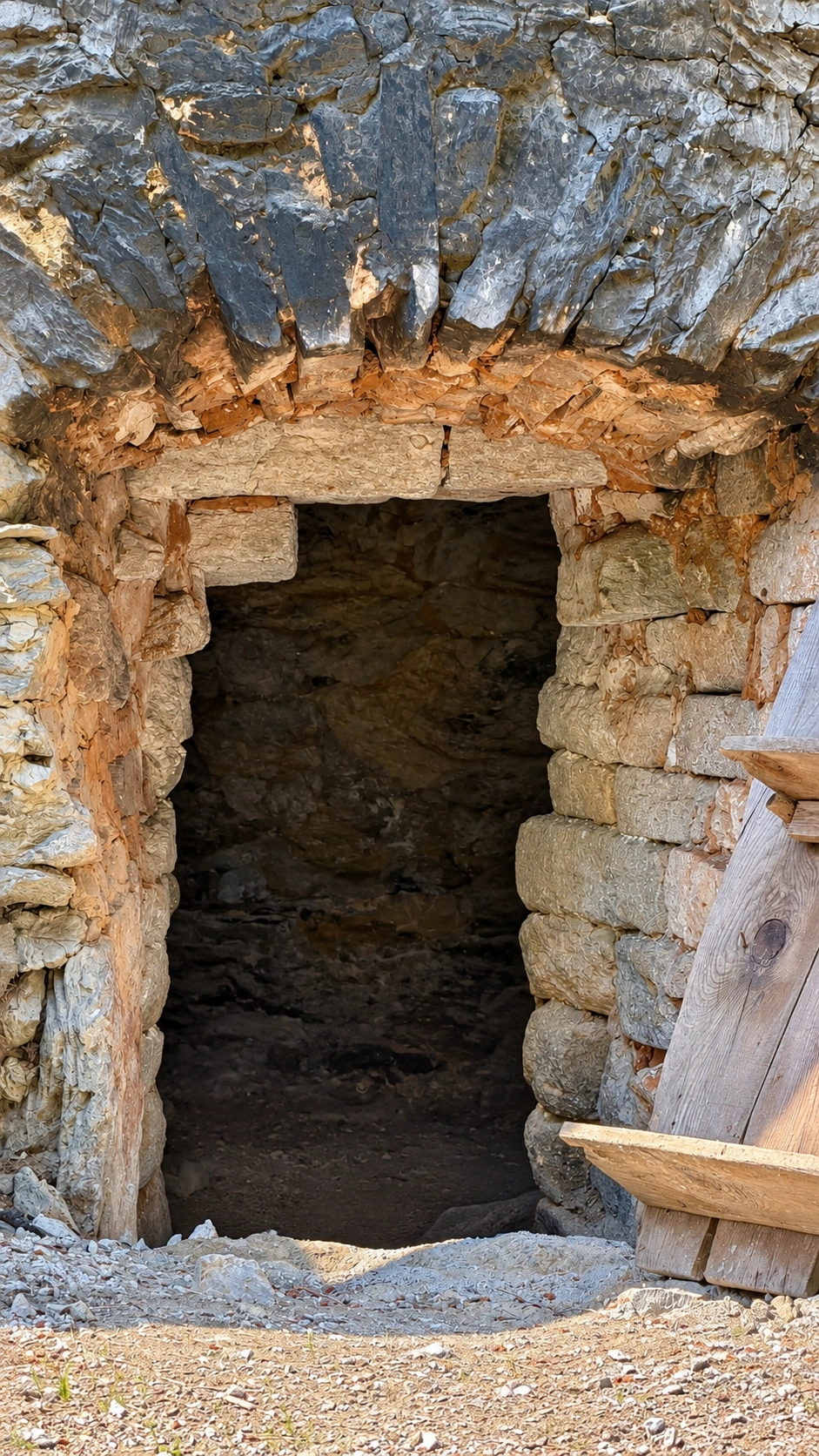
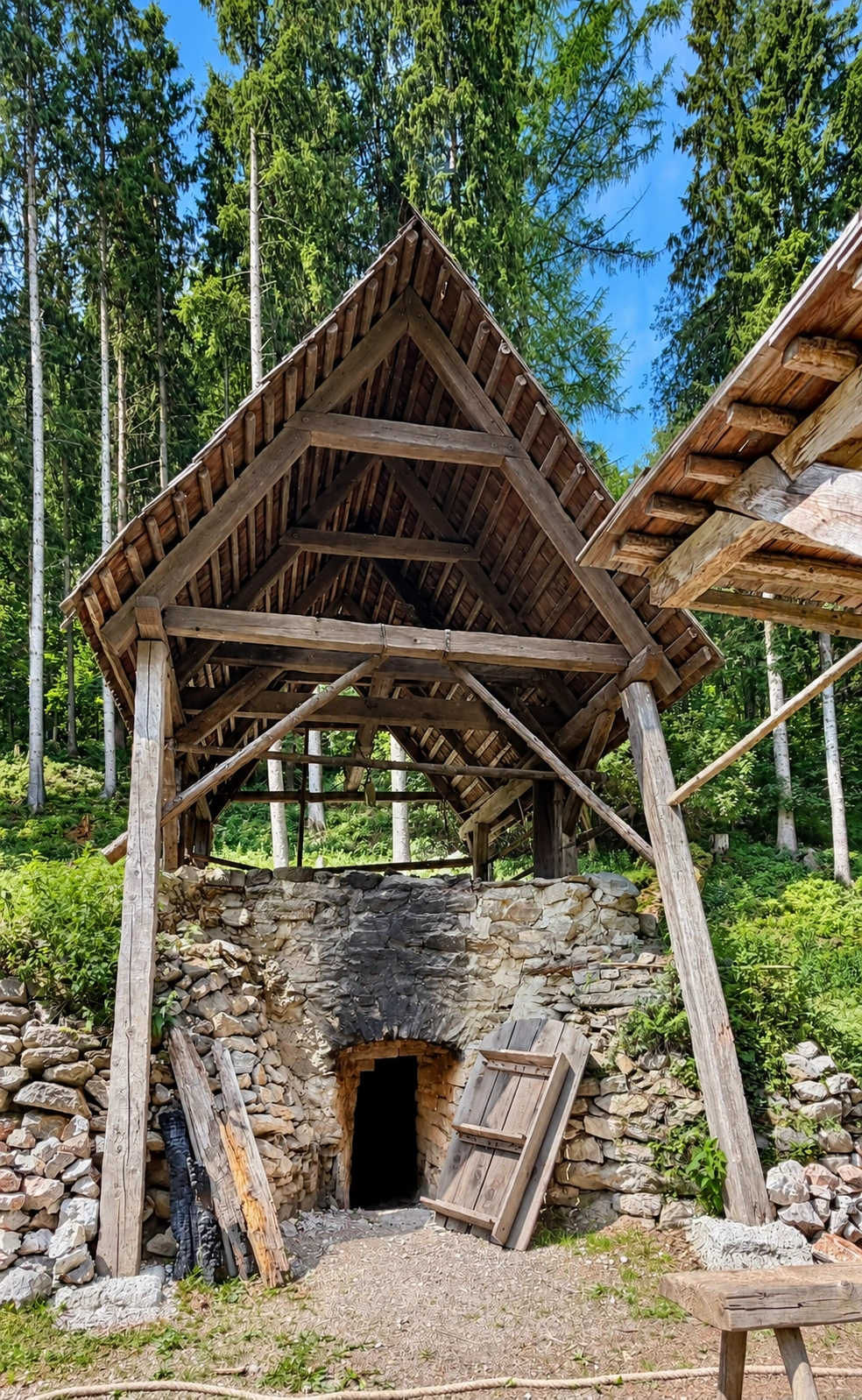
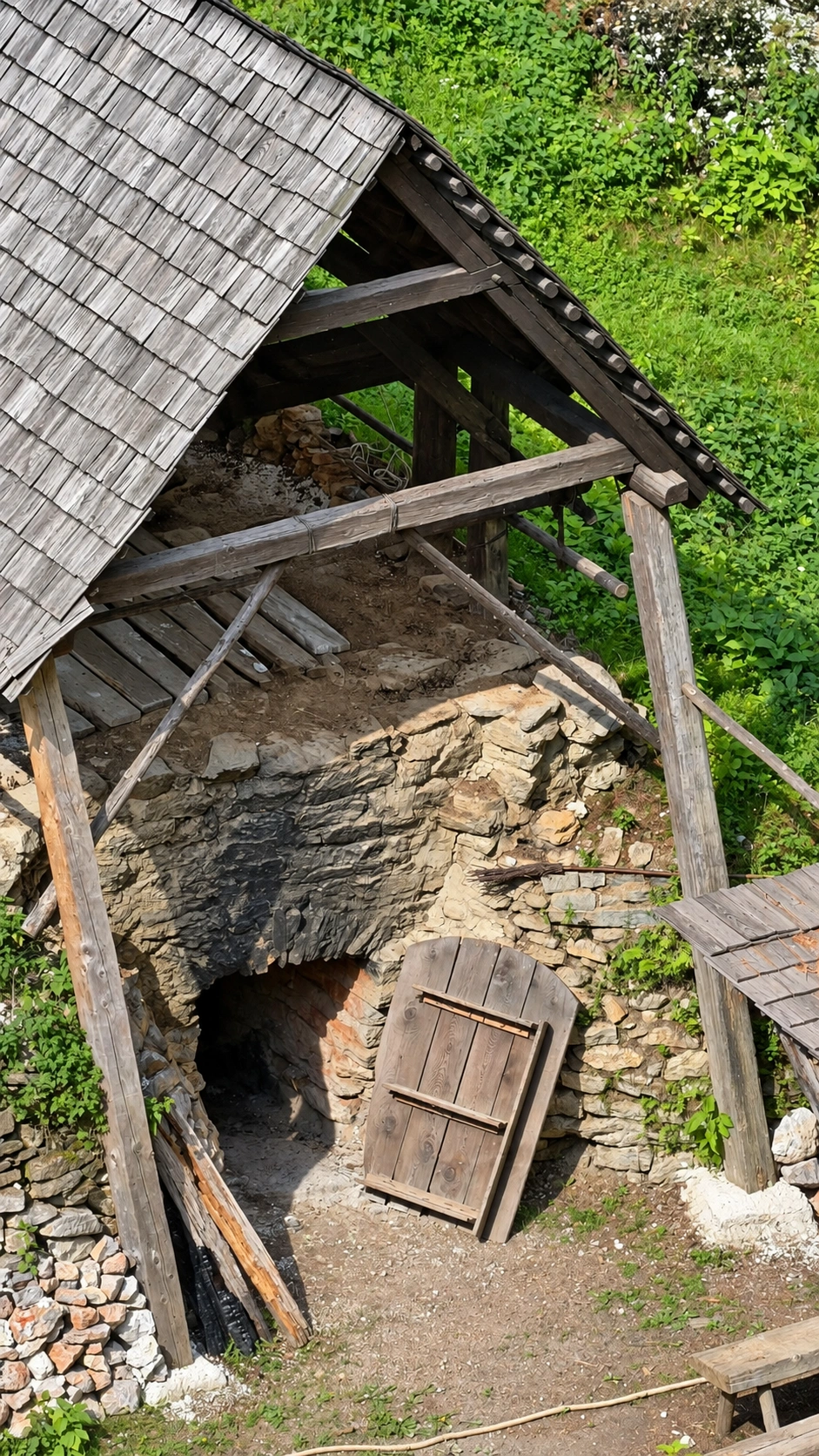
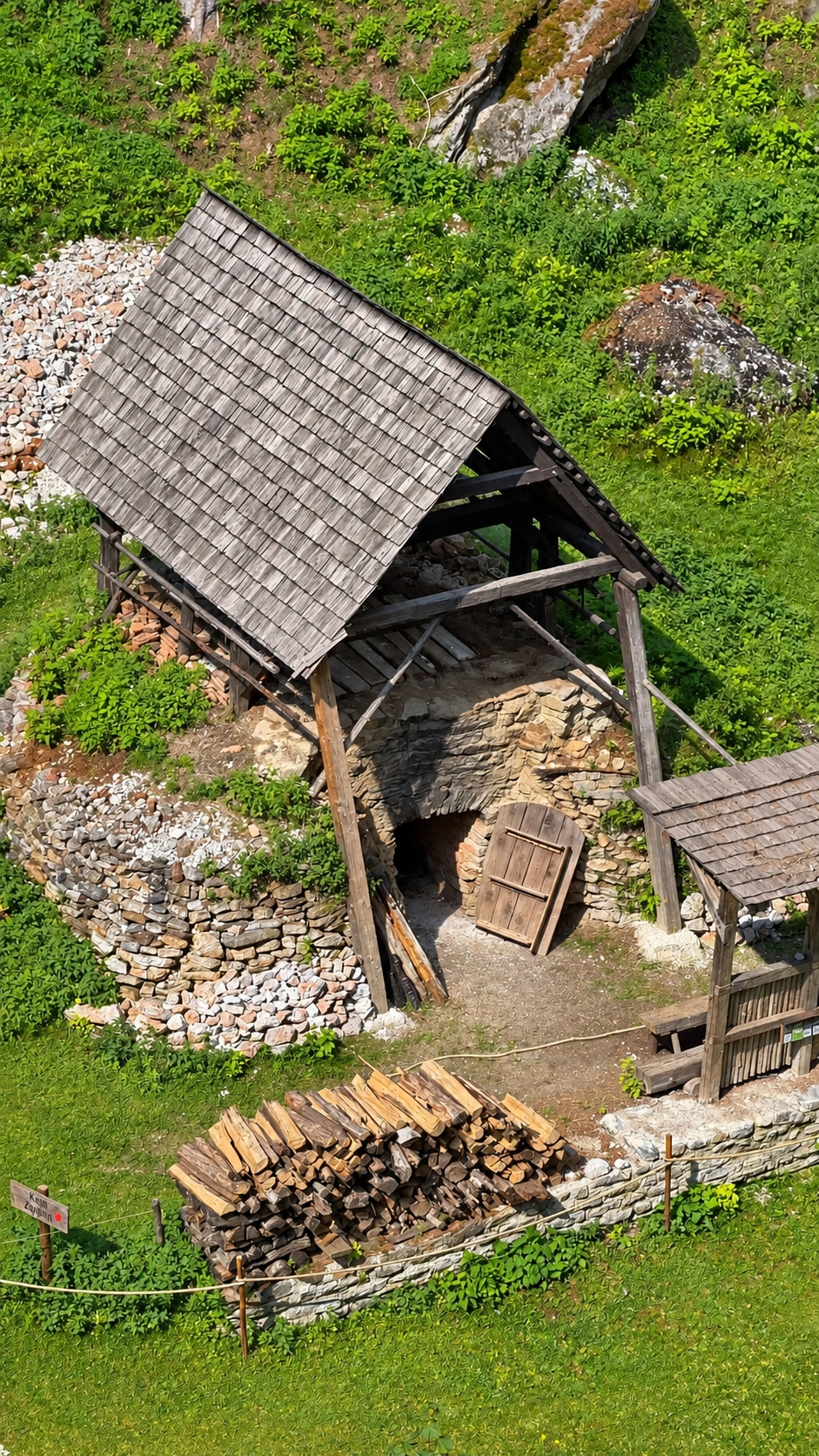
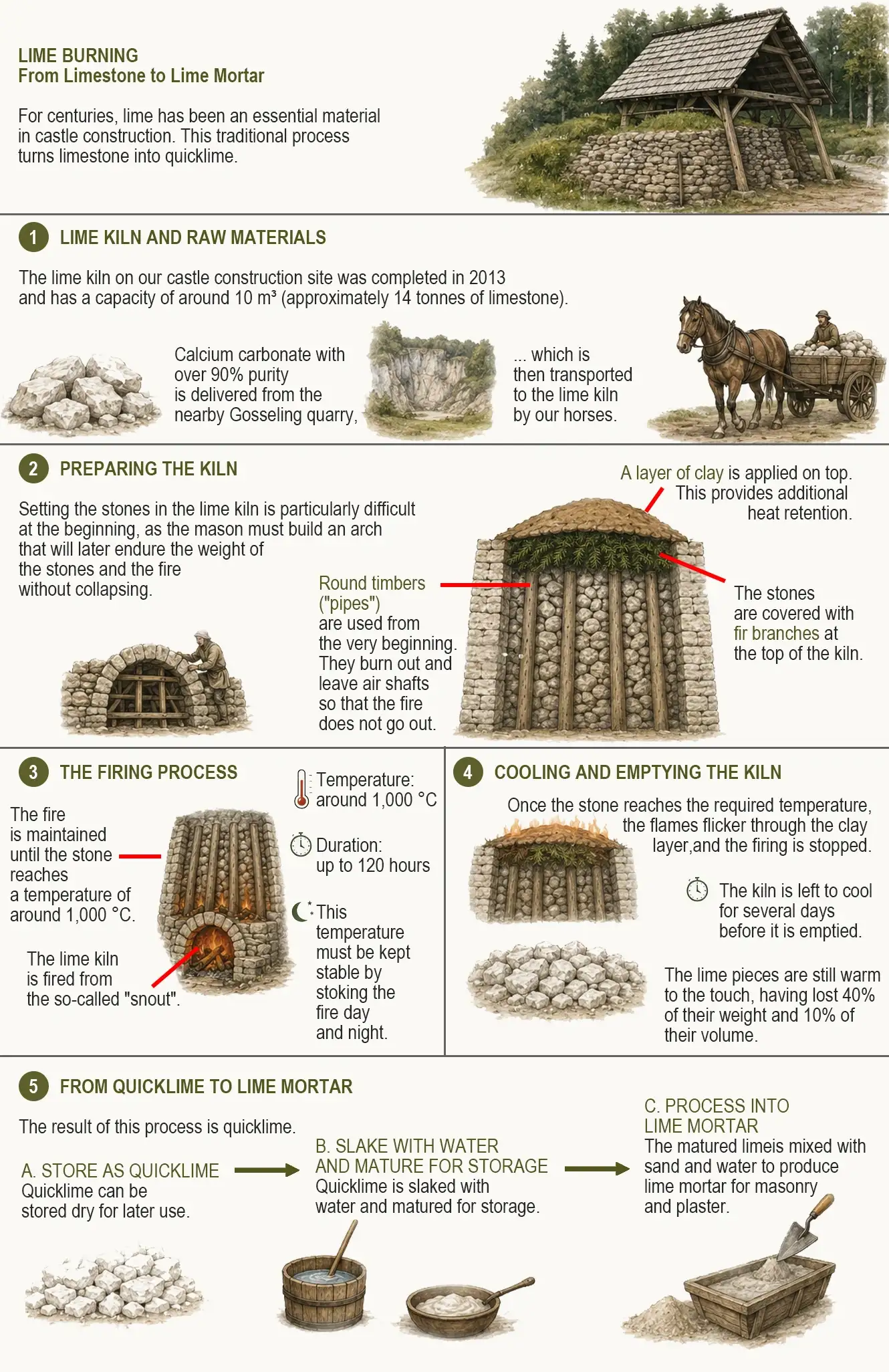
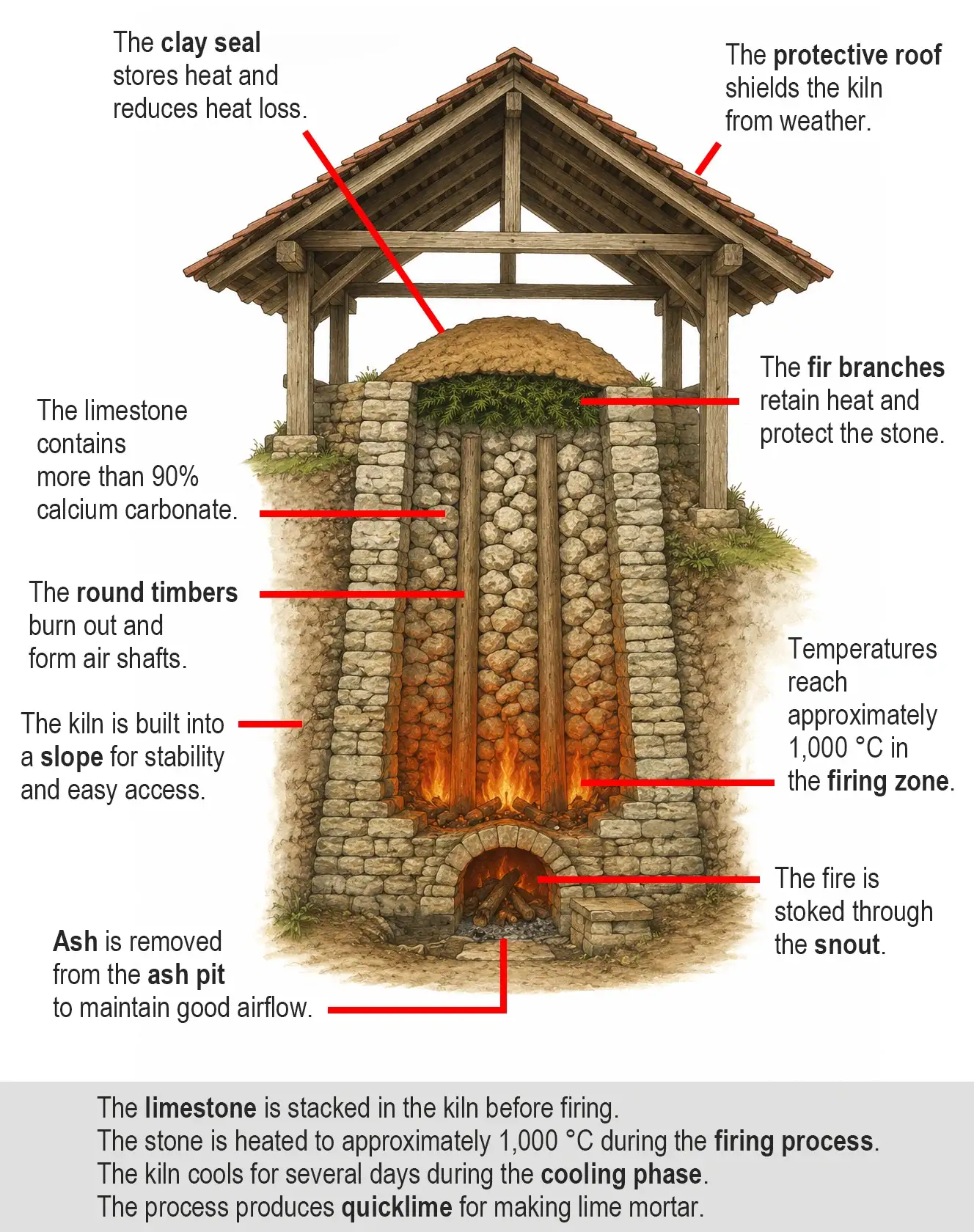
The lime kiln on our castle construction site was completed in 2013 and has a capacity of around 10 m³ (approximately 14 tonnes of limestone).
Calcium carbonate with over 90% purity is delivered from the nearby Gösseling quarry, which is then transported to the lime kiln by our horses.
Preparing the Kiln
Setting the stones in the lime kiln is particularly difficult at the beginning, as the mason must build an arch that will later endure the weight of the stones and the fire without collapsing. From the very beginning, round timbers (also called pipes) are used; these burn out and leave air shafts so that the fire does not suffocate.
The stones are covered with fir branches at the top of the kiln (heaven), and a layer of clay is applied on top. This serves to further store heat.
The Firing Process
The lime kiln is fired from the snout, and the fire is maintained until the stone reaches a temperature of around 1000 °C. This temperature must then be kept stable by stoking the fire day and night. The process in this kiln takes up to 120 hours.
Cooling and Emptying the Kiln
Once the stone reaches the required temperature, the flames flicker through the clay layer, and the firing is stopped. The kiln is left to cool for several days before it is emptied. The lime pieces are still warm to the touch, having lost40% of their weight and 10% of their volume.
From Quicklime to Lime Mortar
The result of this process is quicklime, which can either be stored as it is, immediately slaked with water and stored as lime putty, or directly processed into lime mortar.
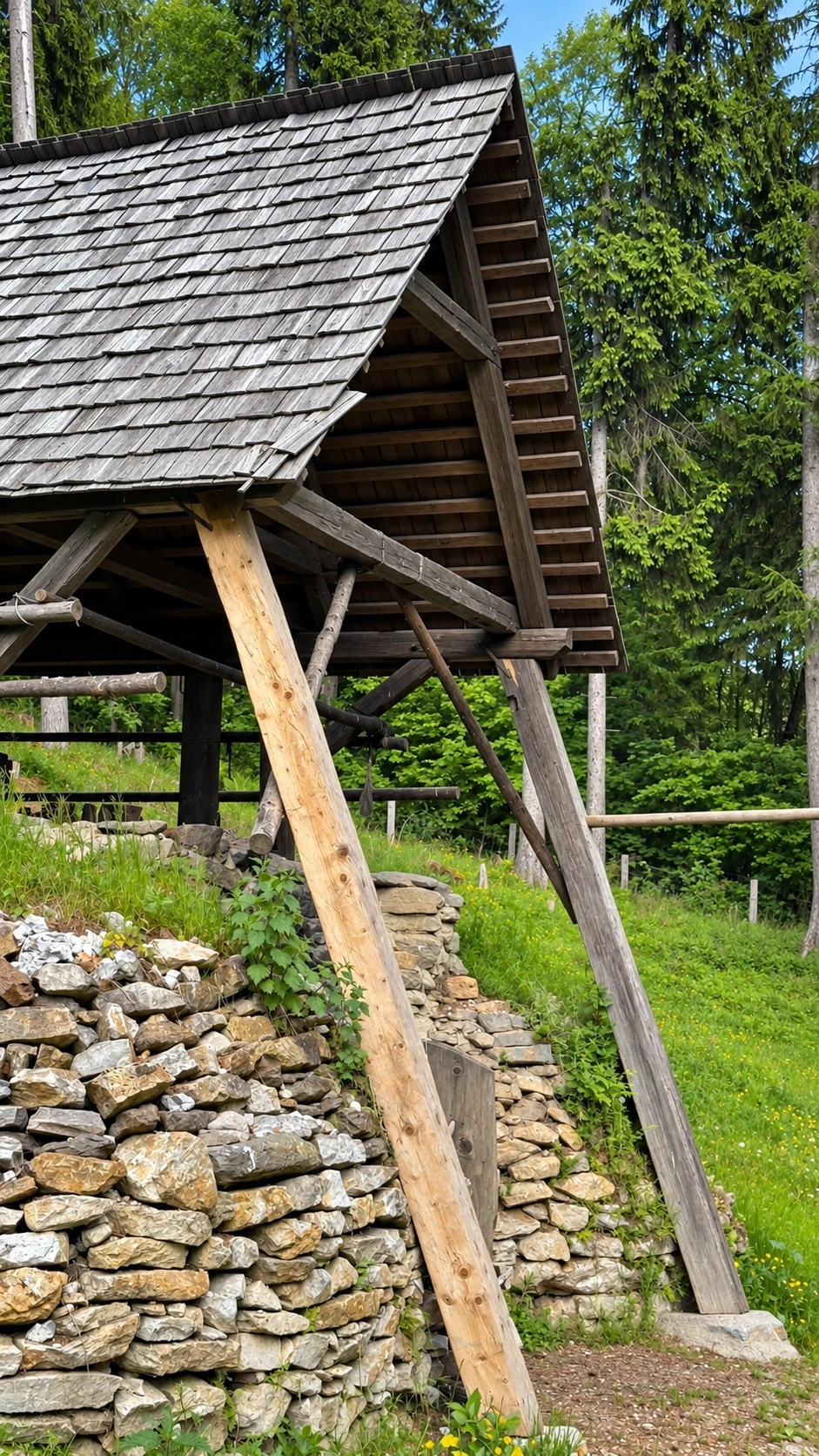
Close-up: lime-burning shelter. It shelters the lime kiln during firing.
A roofed shelter protects the lime kiln from rain while allowing ventilation and access during lime production.