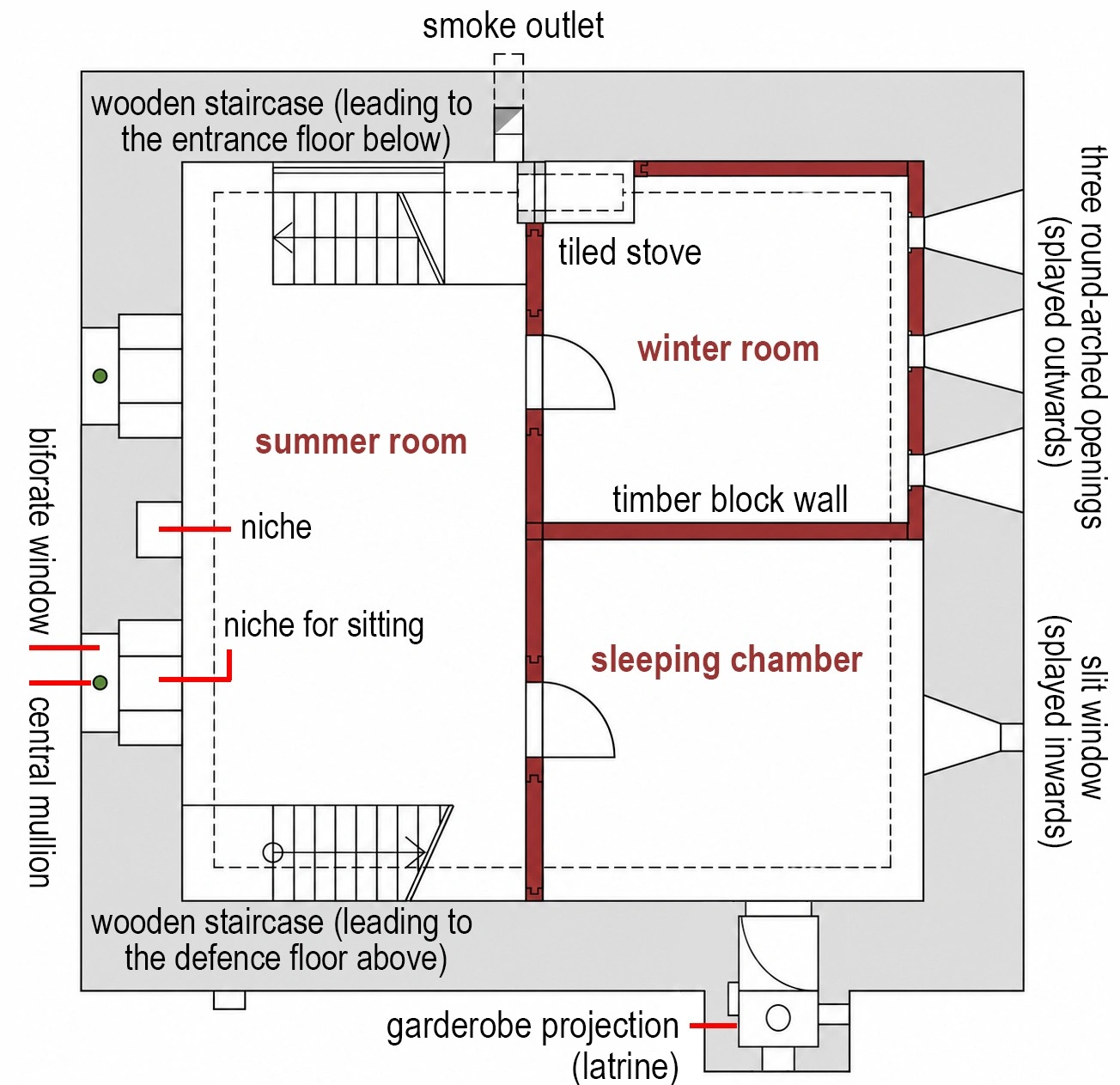
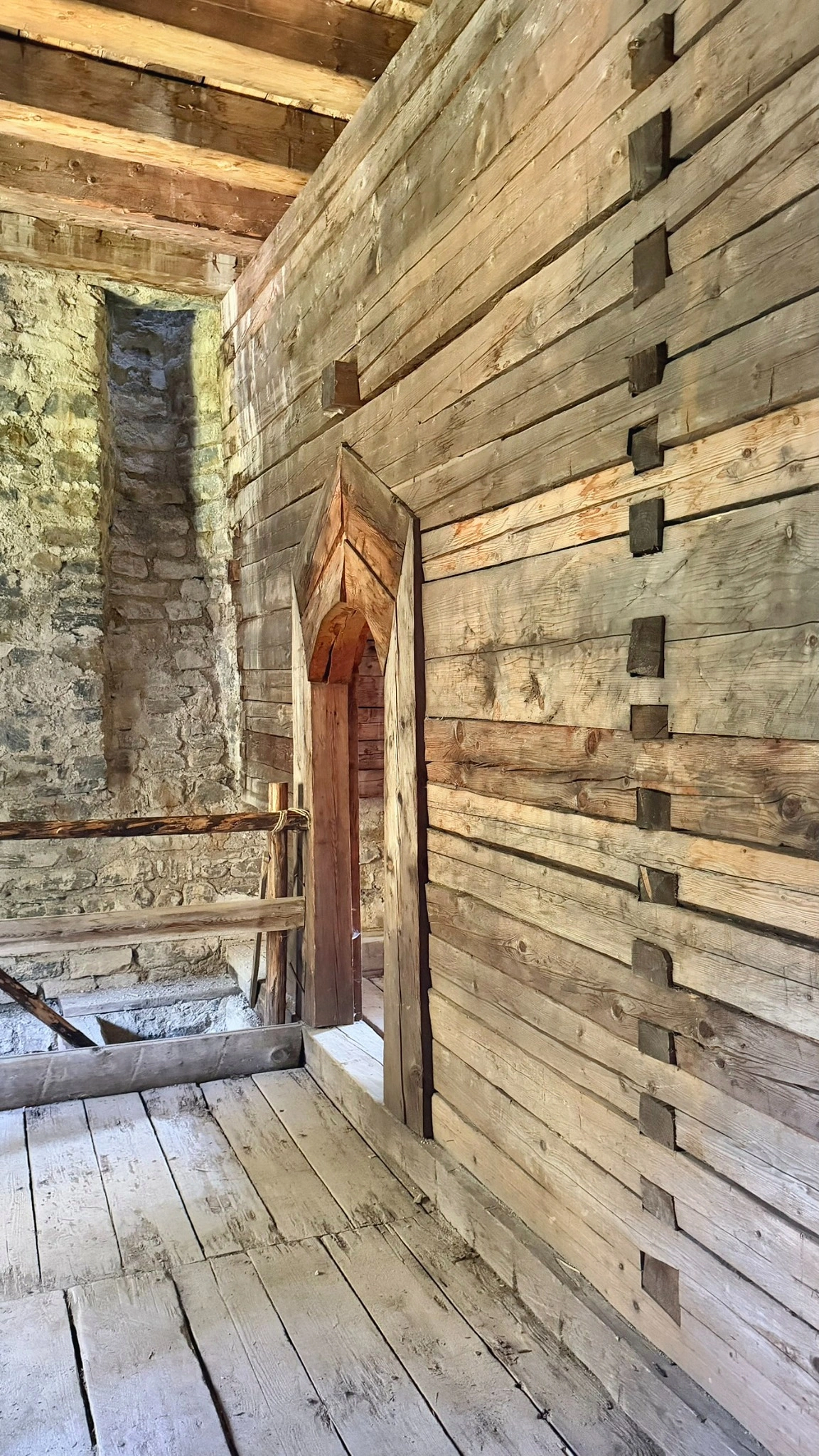
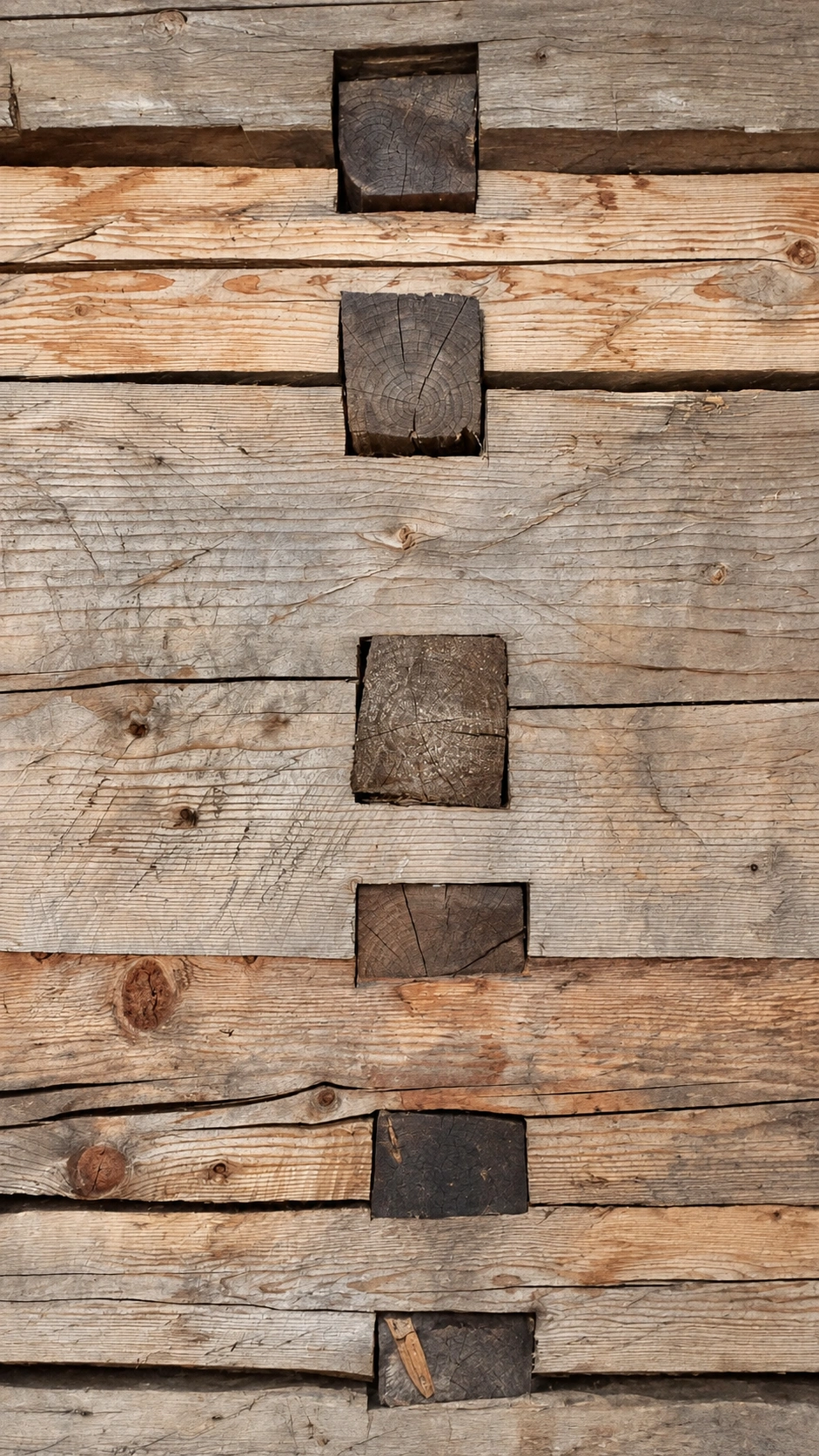
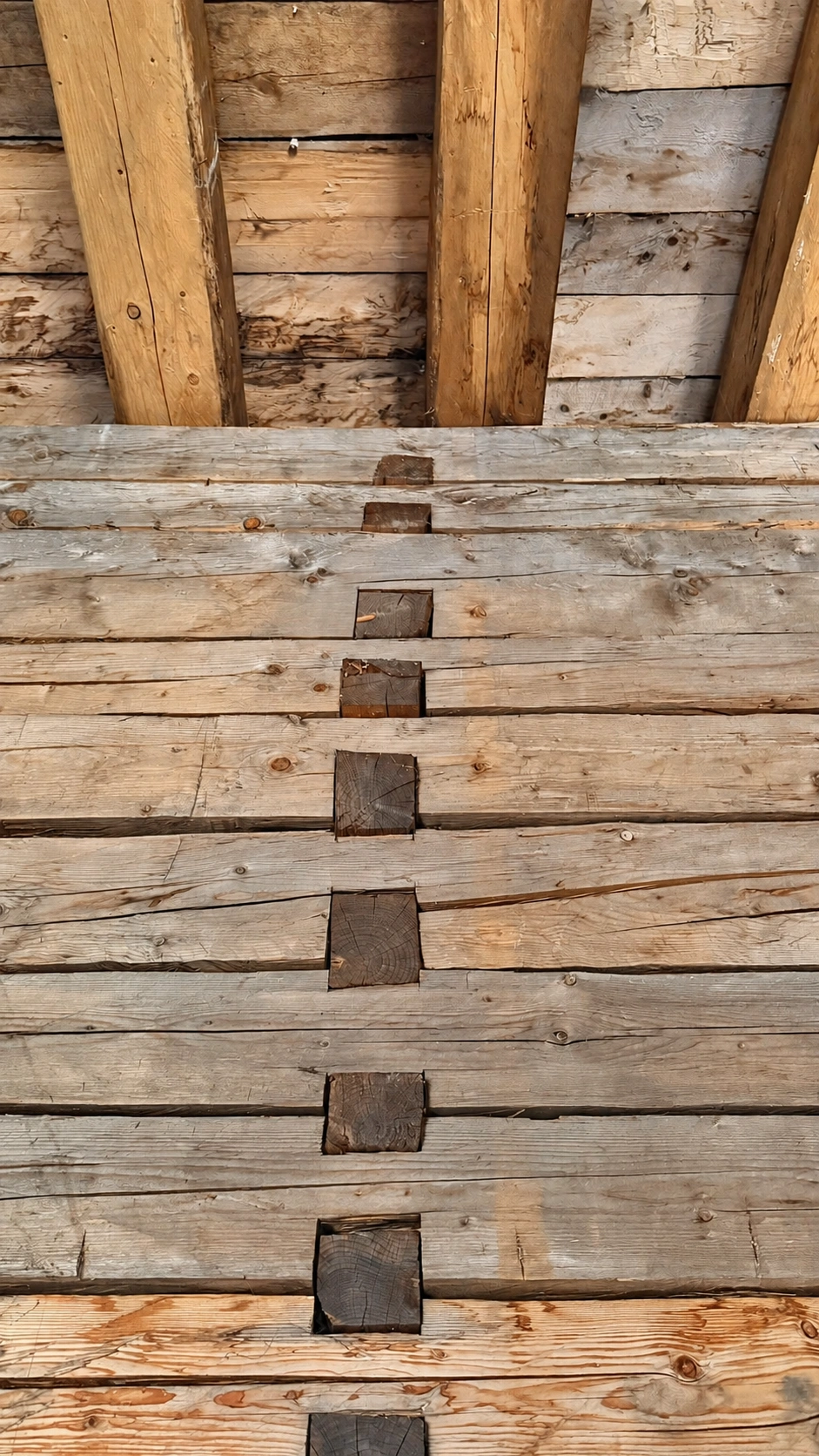
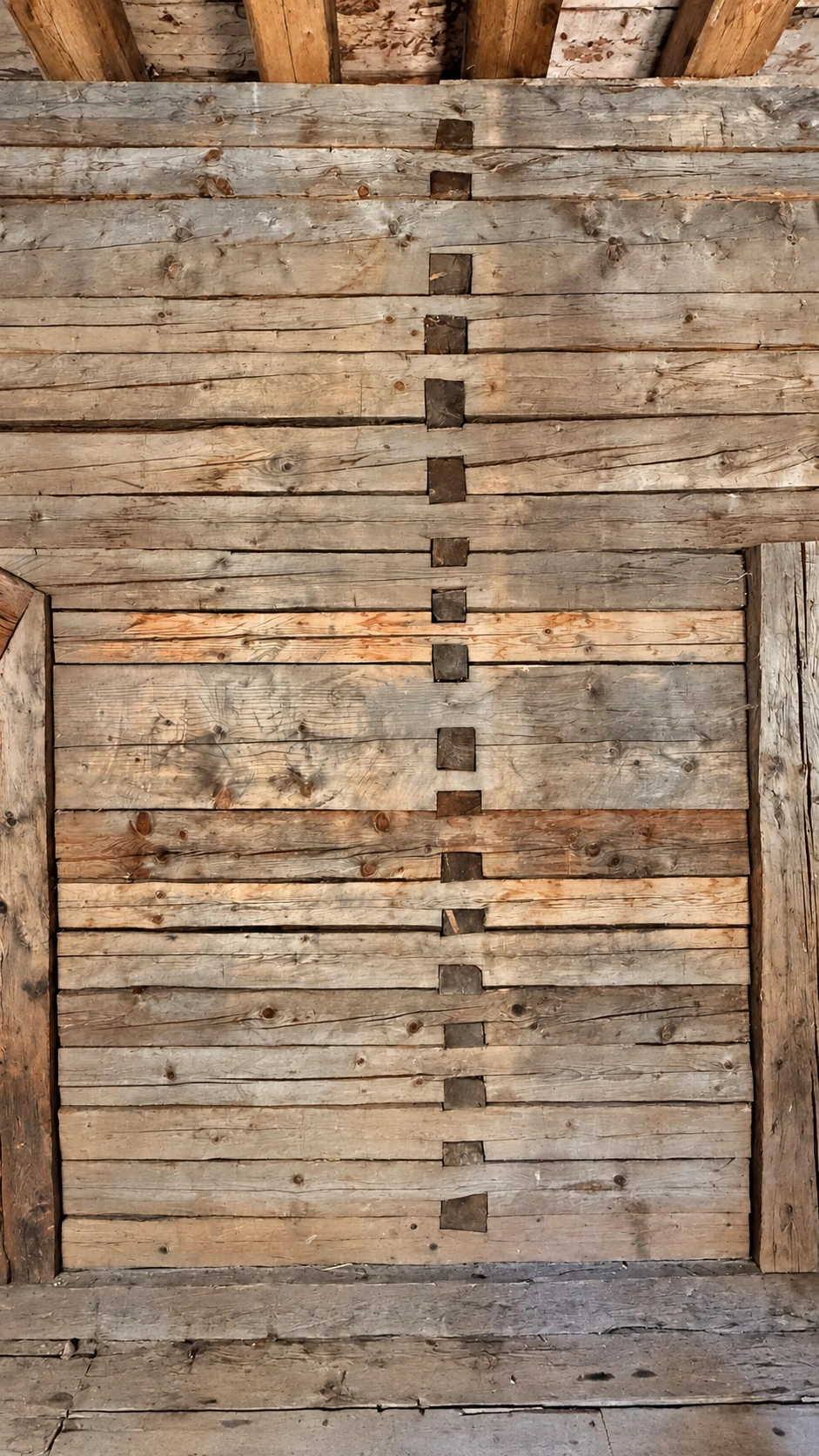
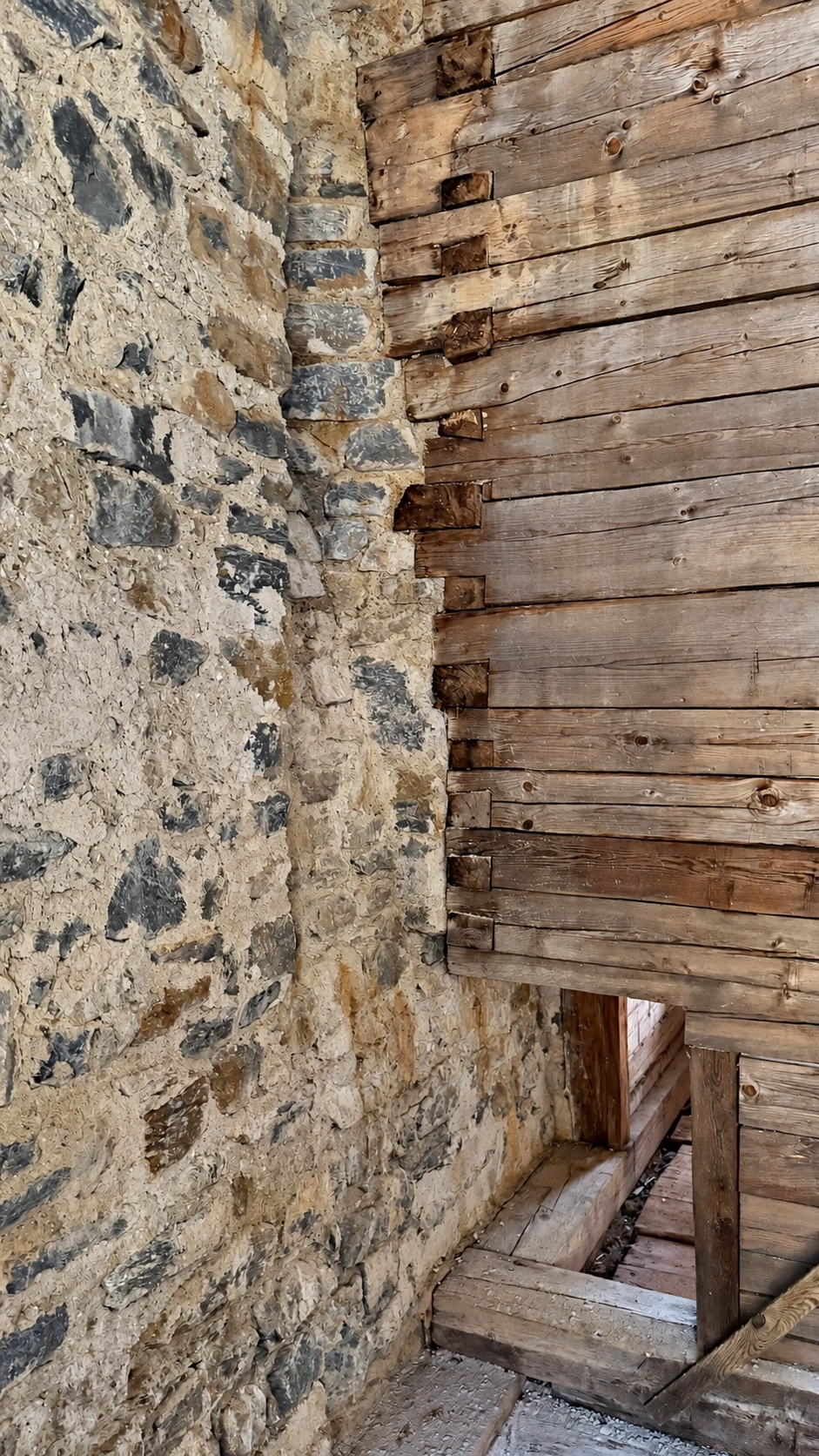
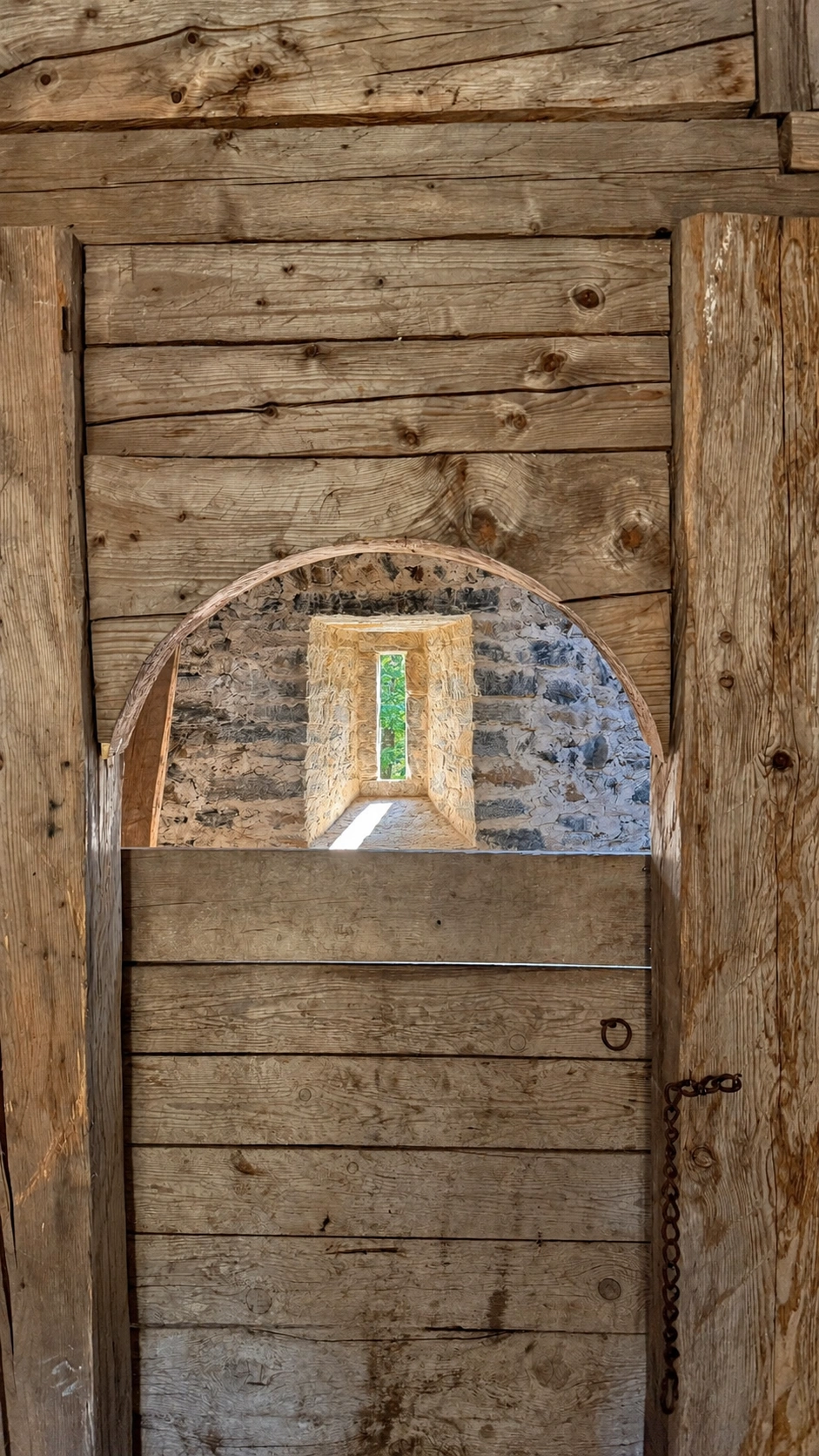
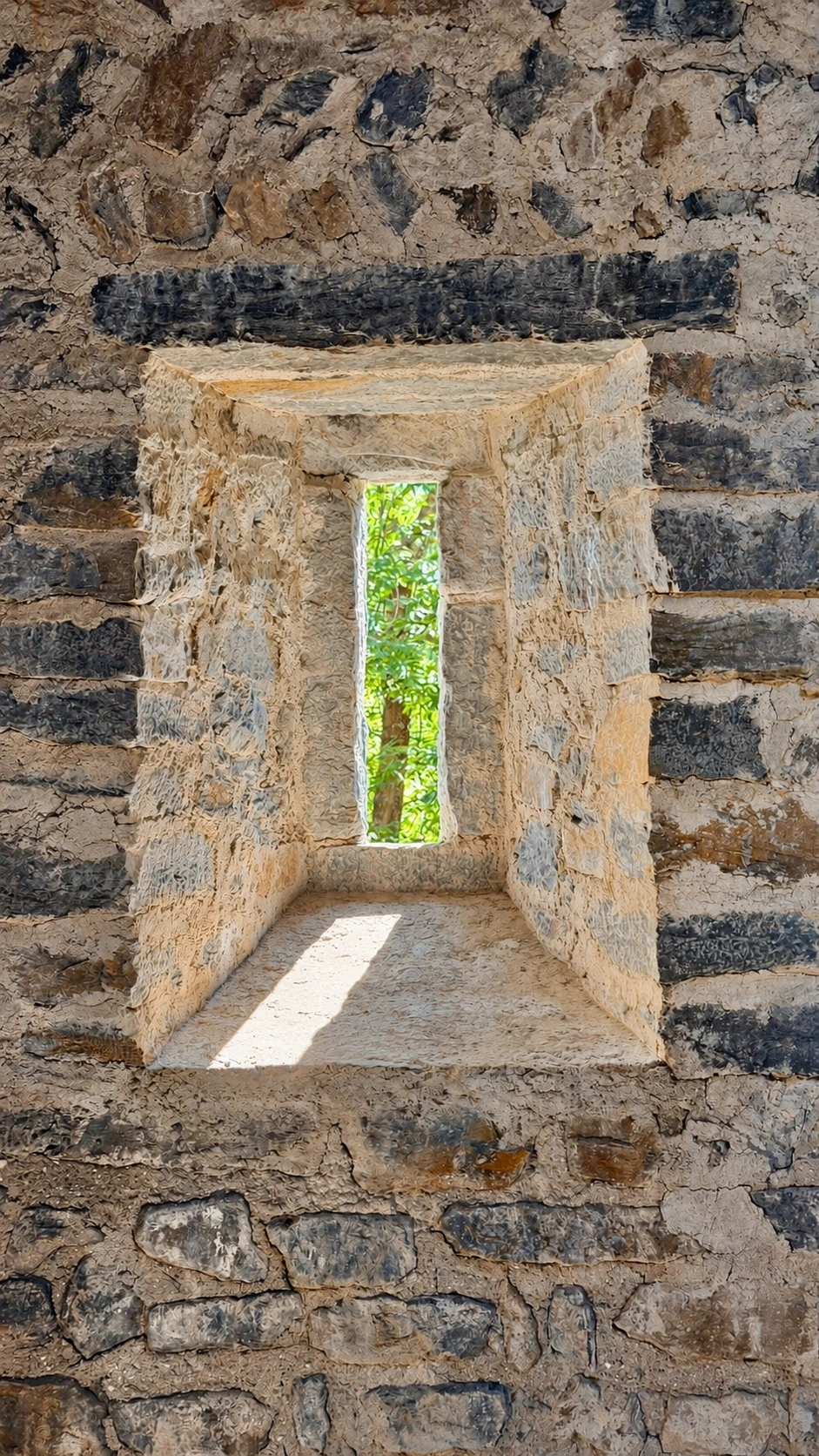
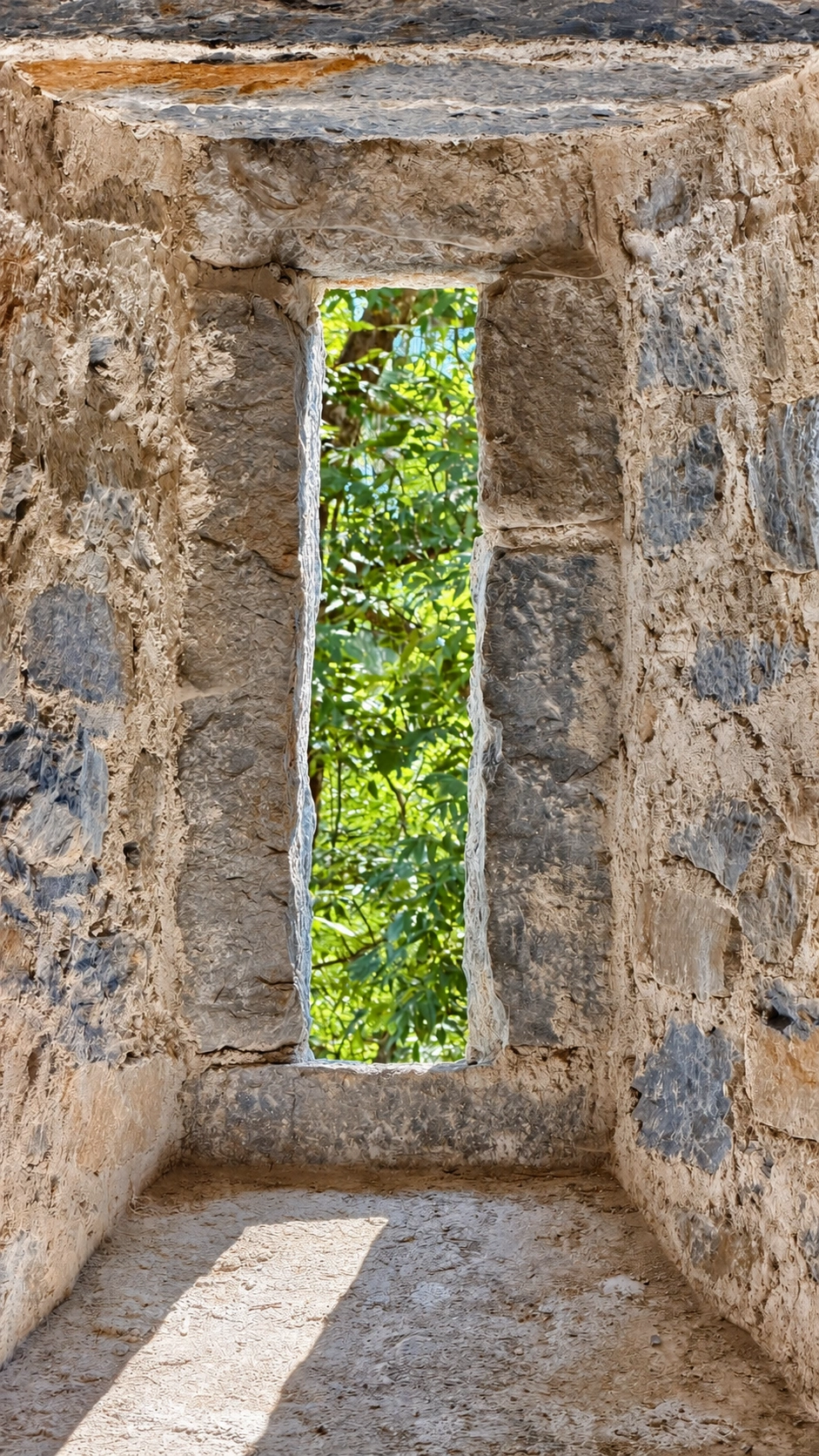
The main residential floor is divided by timber block walls into three rooms.
Summer Room
The largest room of the main residential floor is the summer room. It is also the brightest space in the tower house. It is lit by two bifora windows (paired openings divided by a central stone column).
The designation “summer room” did not mean that this room was used only in summer. As it had no heating and the bifora windows could only be closed with wooden shutters (internal shutters), it was cold and inhospitable in winter.
Winter Room
In the colder months, the adjoining block-built winter room offers greater comfort.
For improved thermal efficiency, the winter room retains block-built exterior walls, against which the stone shell of the tower was added in a second construction phase. It is the only room in the tower house fitted with a tiled stove.
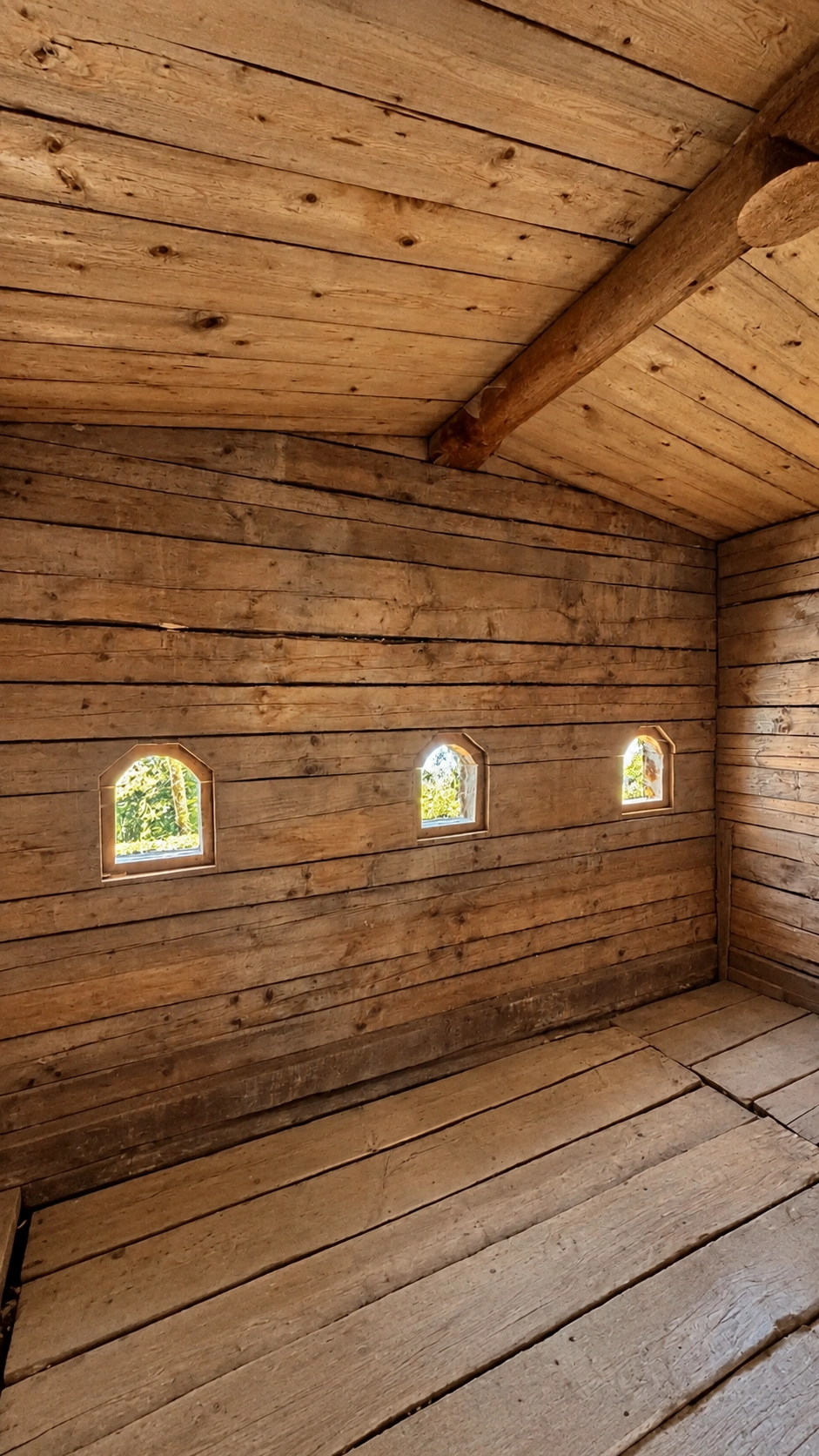
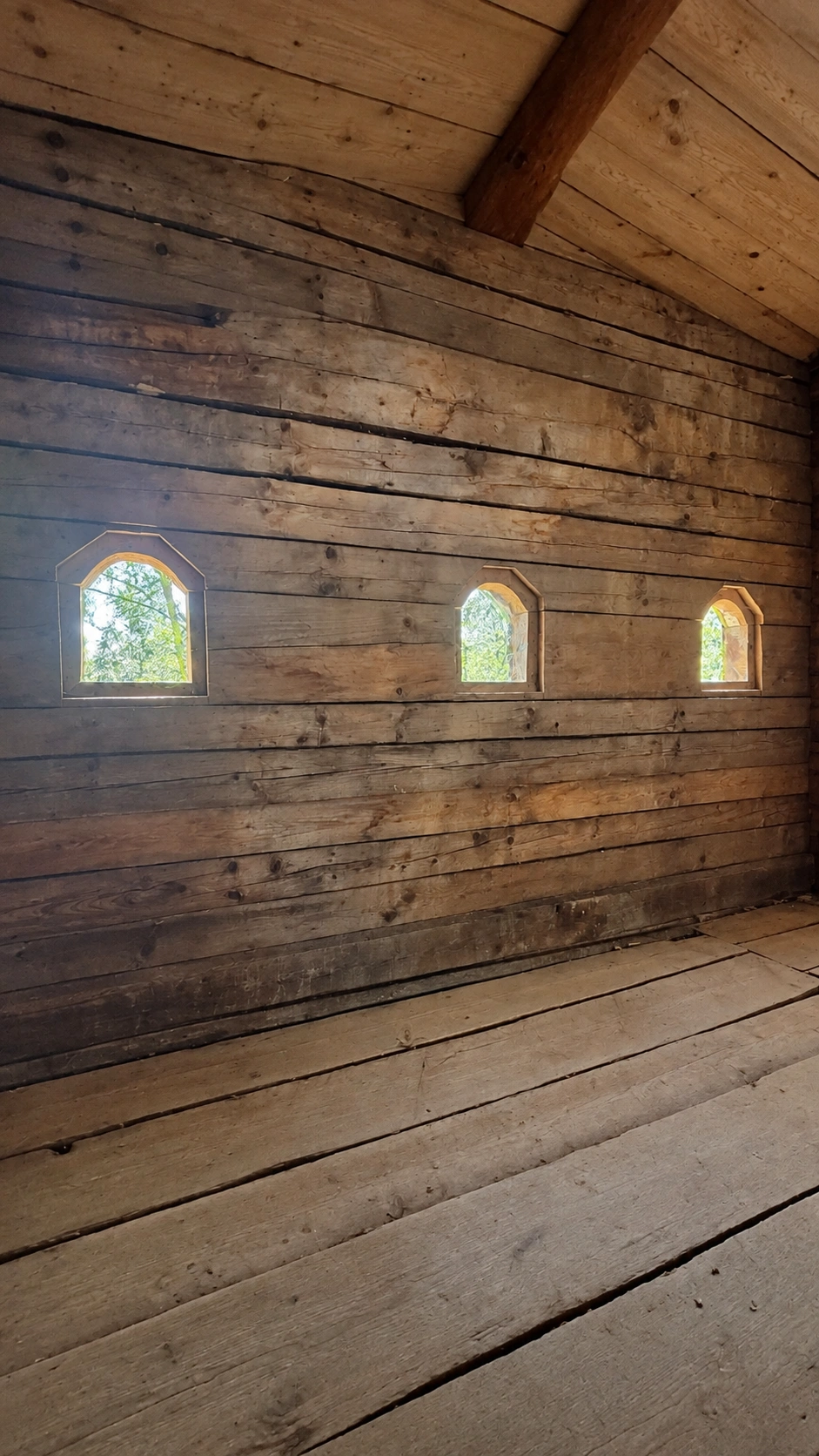
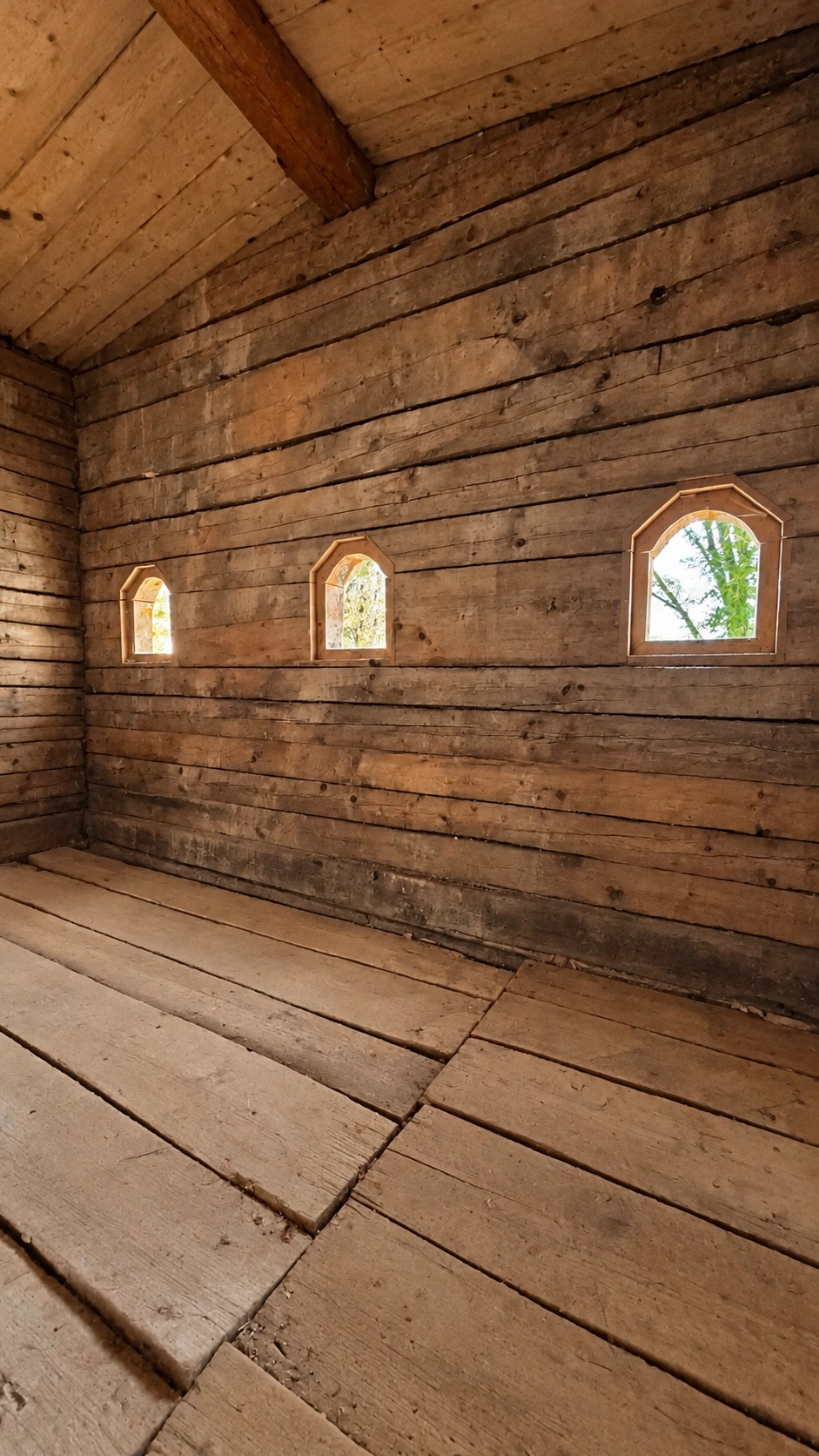
In the external wall in front of the winter room, a group of windows is set. It consists of three outward-splayed round-arched openings. The openings contain frames set within the block-built wall.
In the High Middle Ages, thin animal membranes, bladder skins, waxed paper, or similar light-permeable materials were stretched across these frames.
Window glass only became widely used towards the end of the Middle Ages and was not used in High Medieval castle construction.
The winter room, with these features, became a standard element in castles from the 13th century onwards.
Sleeping Chamber
The third room on the main residential floor is the unheated sleeping chamber. It is lit and ventilated only by a slit window without any closing mechanism. The chamber is fitted with a garderobe projection (latrine).
The sleeping chamber was used by the lord of the castle and his family. The latrine was reserved exclusively for the lord’s household.
Block Staircase
A block staircase in the summer room leads up to the service floor above.
Labelled floor plan, residential level
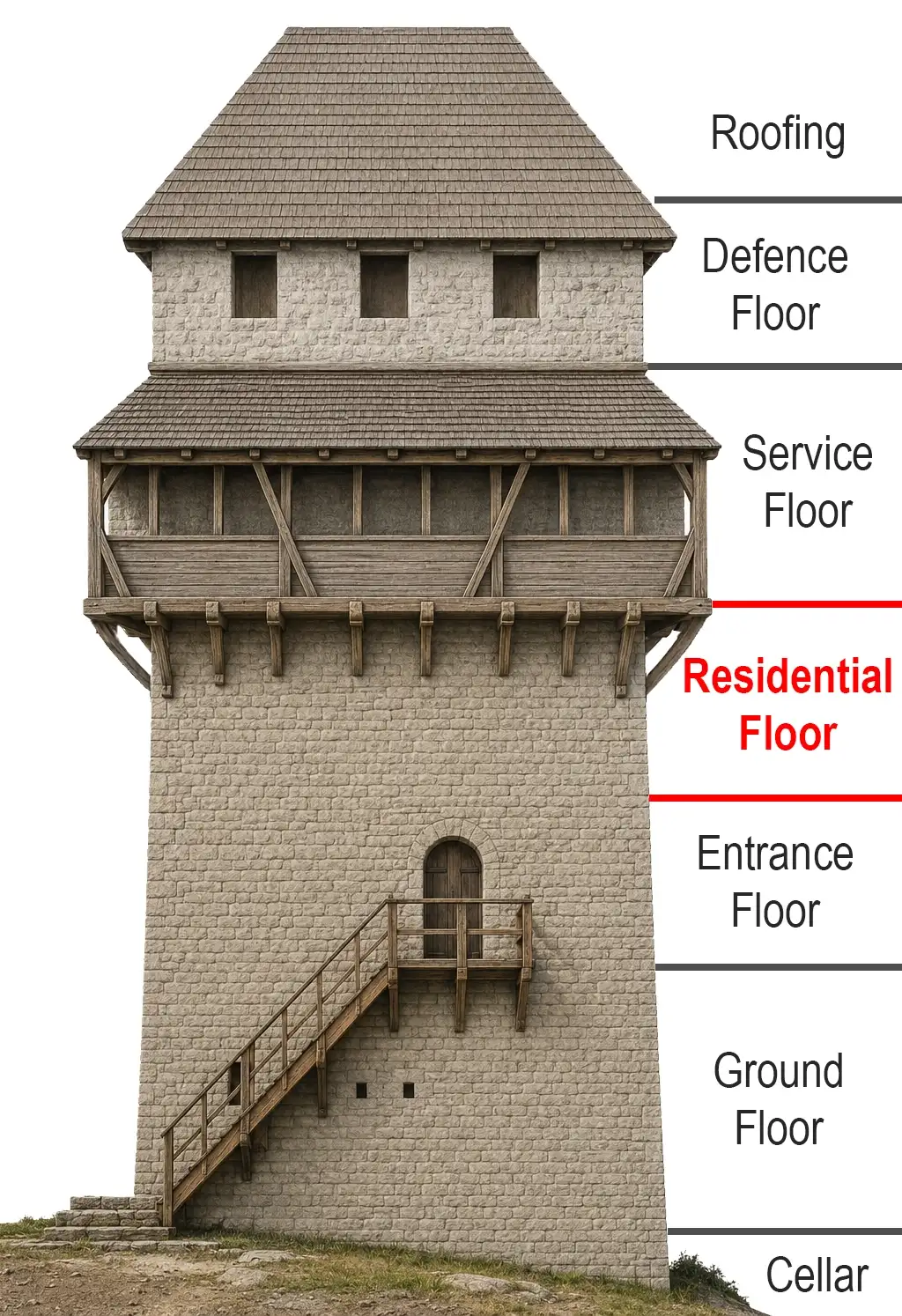
Interpretative illustration of the completed tower showing the north face and residential level.
The staircase leads from the entrance level to the summer room on the residential level.
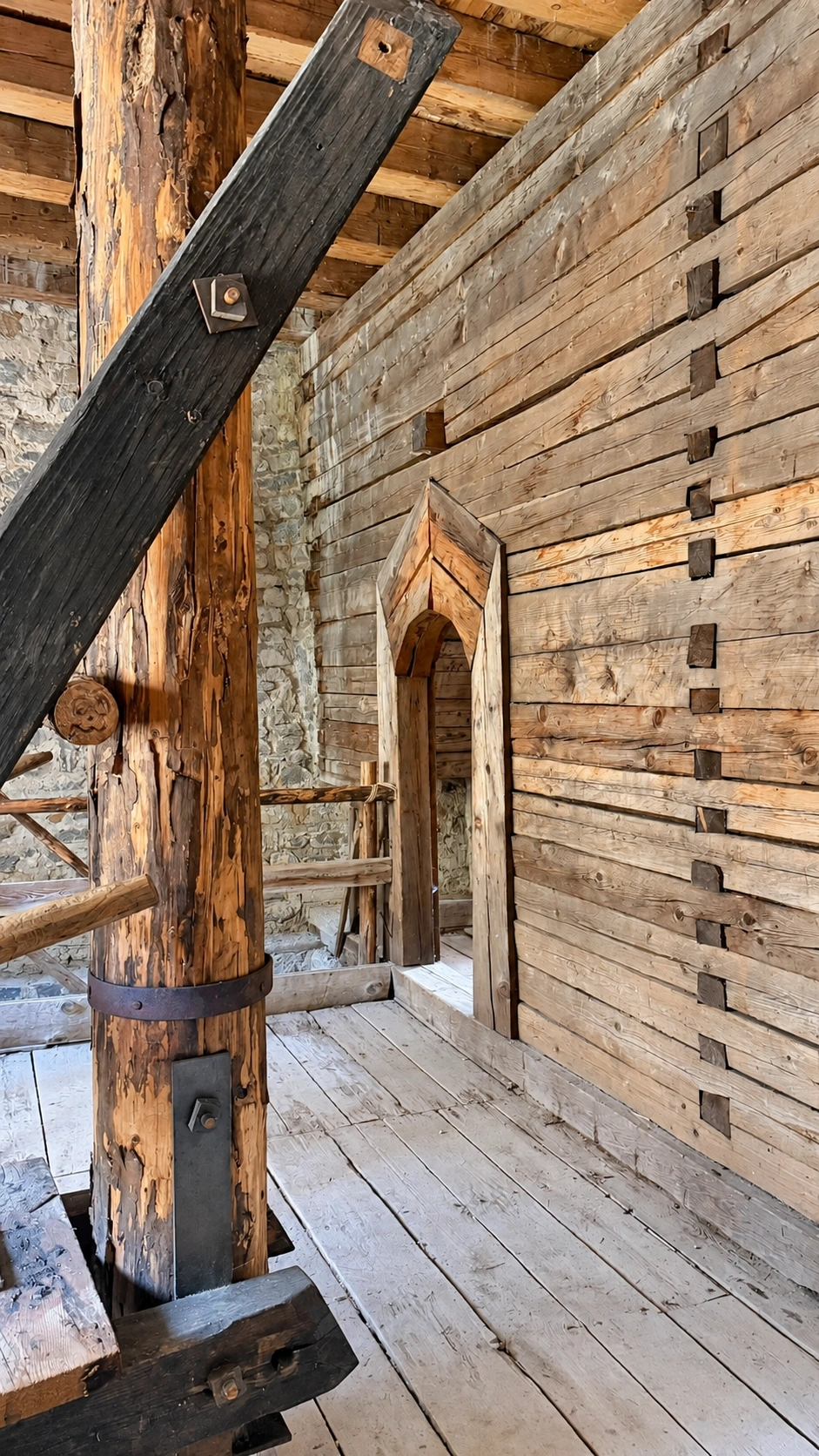
The timber block wall, viewed from the south-west corner of the summer room.
A timber block wall separates the summer room from the winter room and sleeping chamber.
Central section of the timber block wall.
Central section of the timber block wall and the summer room ceiling.
Central section of the timber block wall extending to the summer room ceiling.
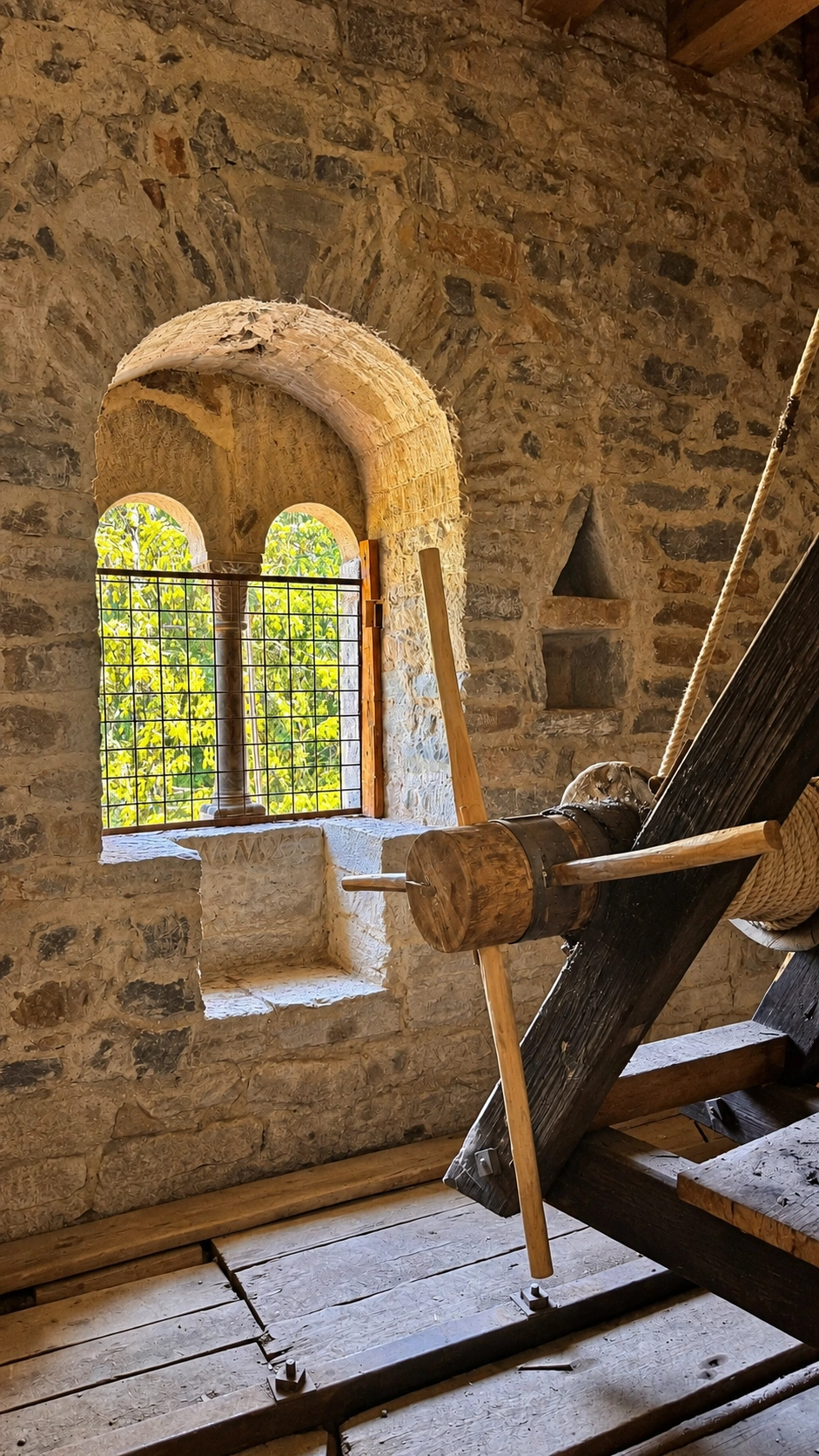
One of the biforate windows in the west wall of the tower.
One of the biforate windows in the west wall of the tower.
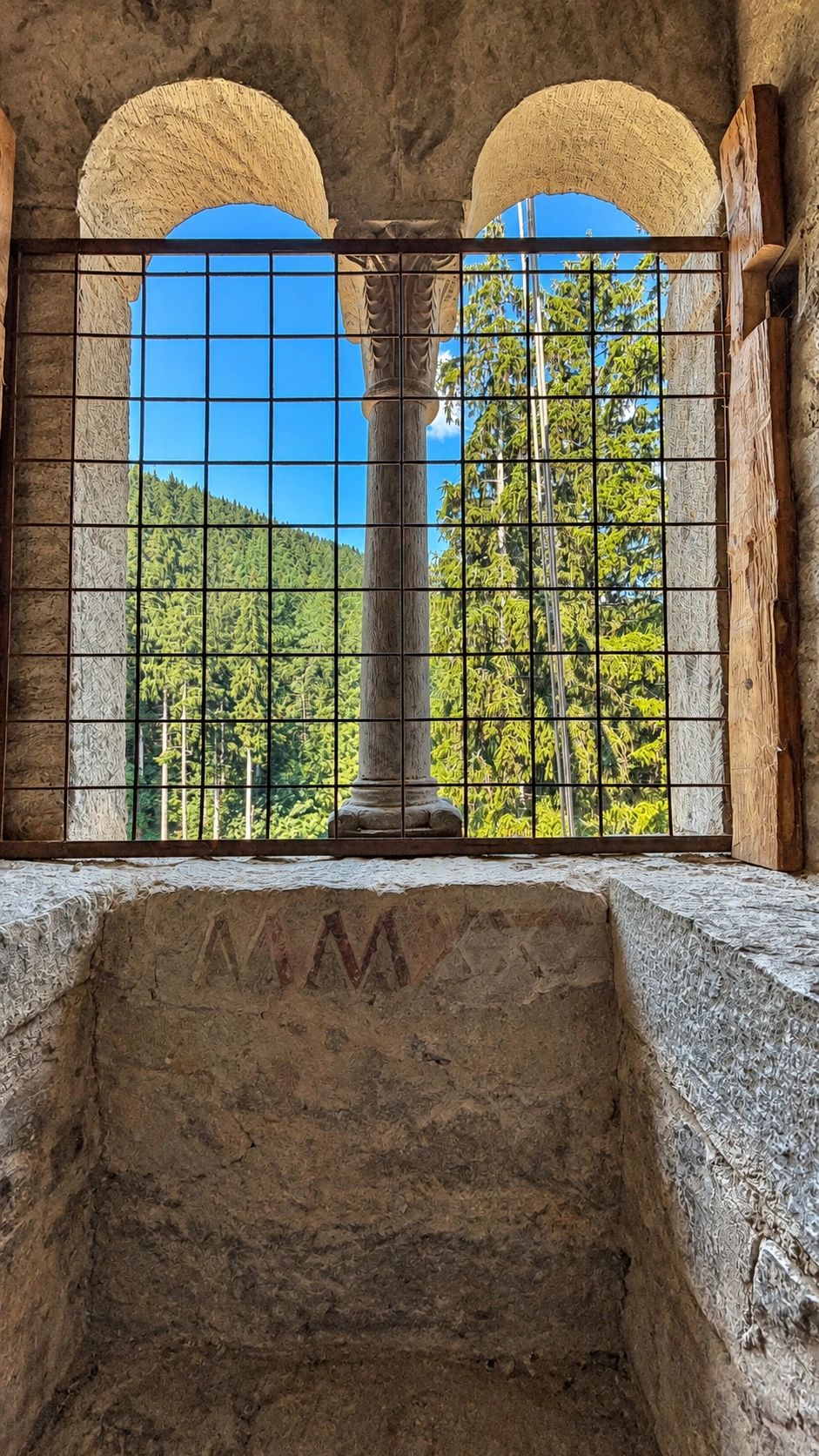
Frontal view of a biforate window with a wall recess below.
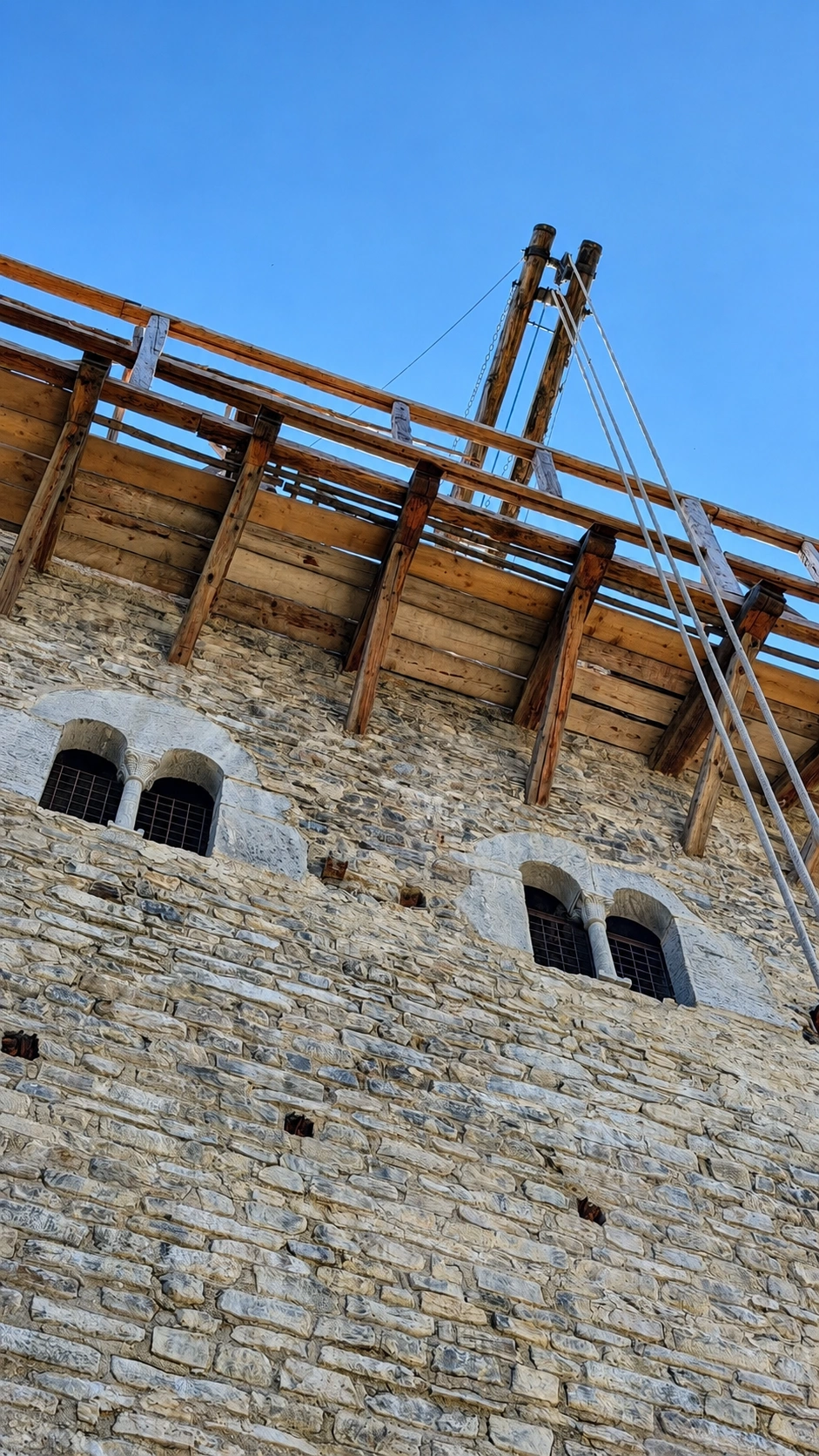
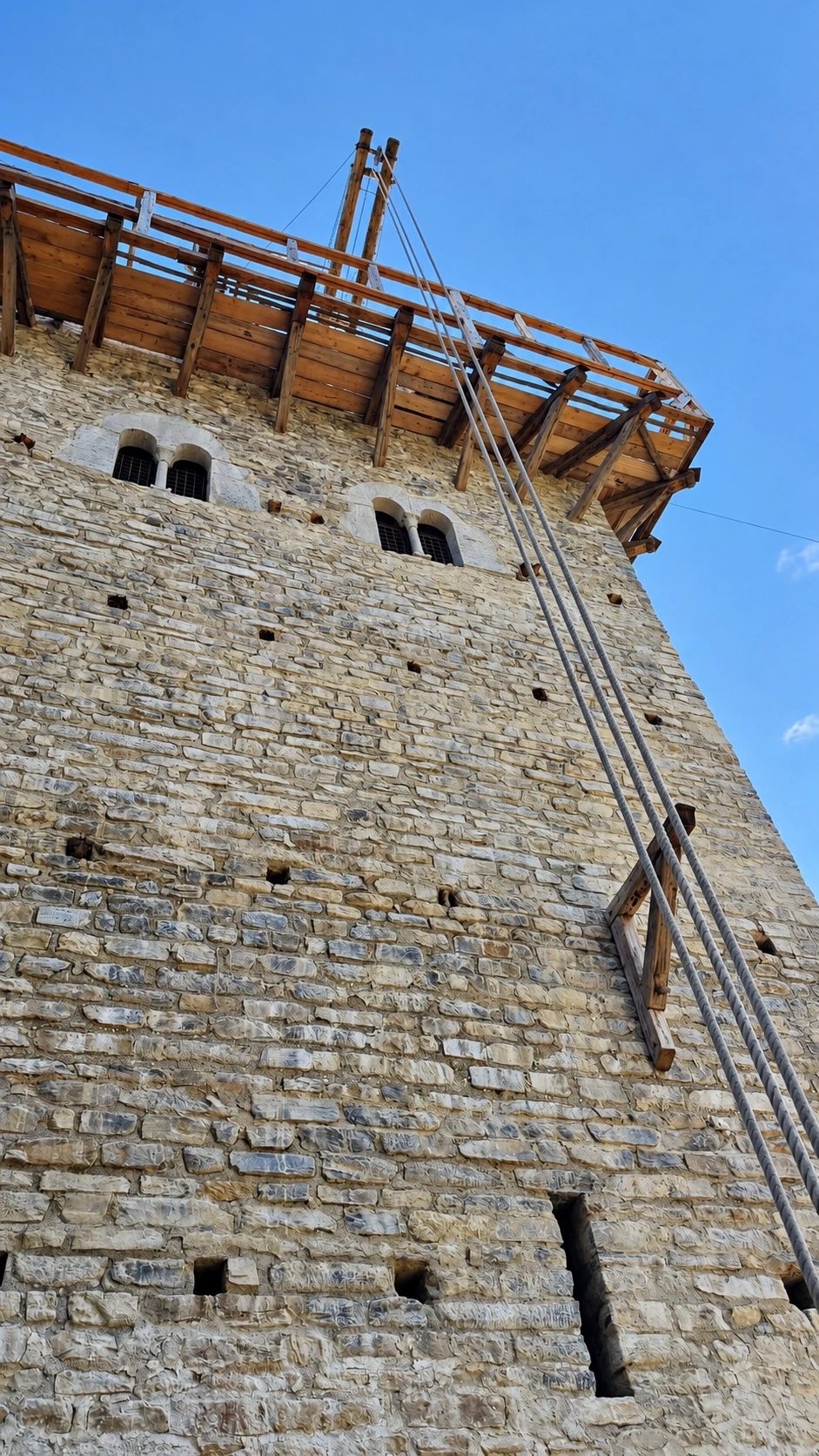
Biforate windows in the tower's west wall, viewed from outside.
Biforate windows in the tower's west wall, viewed from outside.
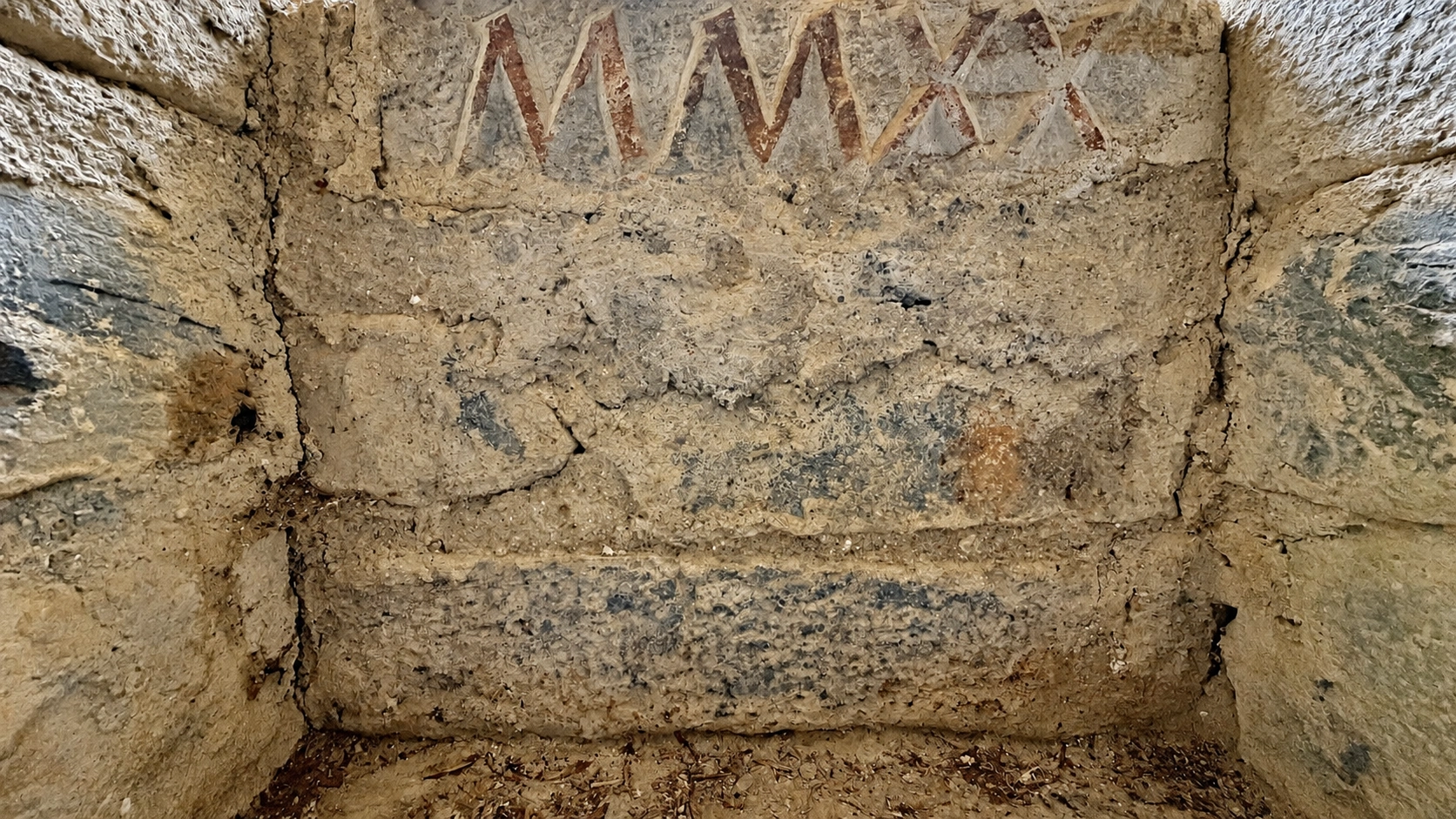
Wall recess below the biforate window bearing the inscription "2020".
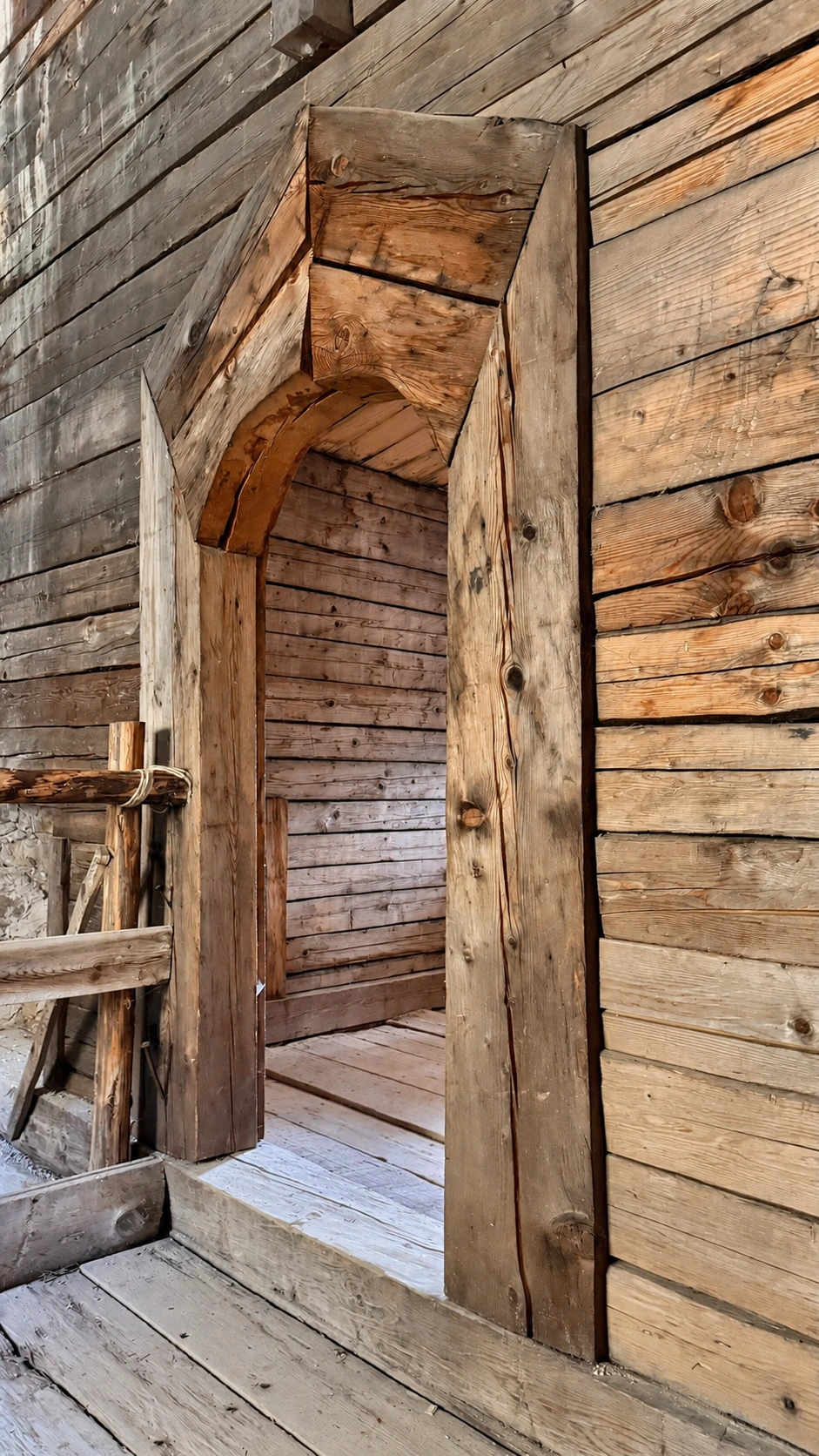
Wooden door surround and doorway leading to the winter room.
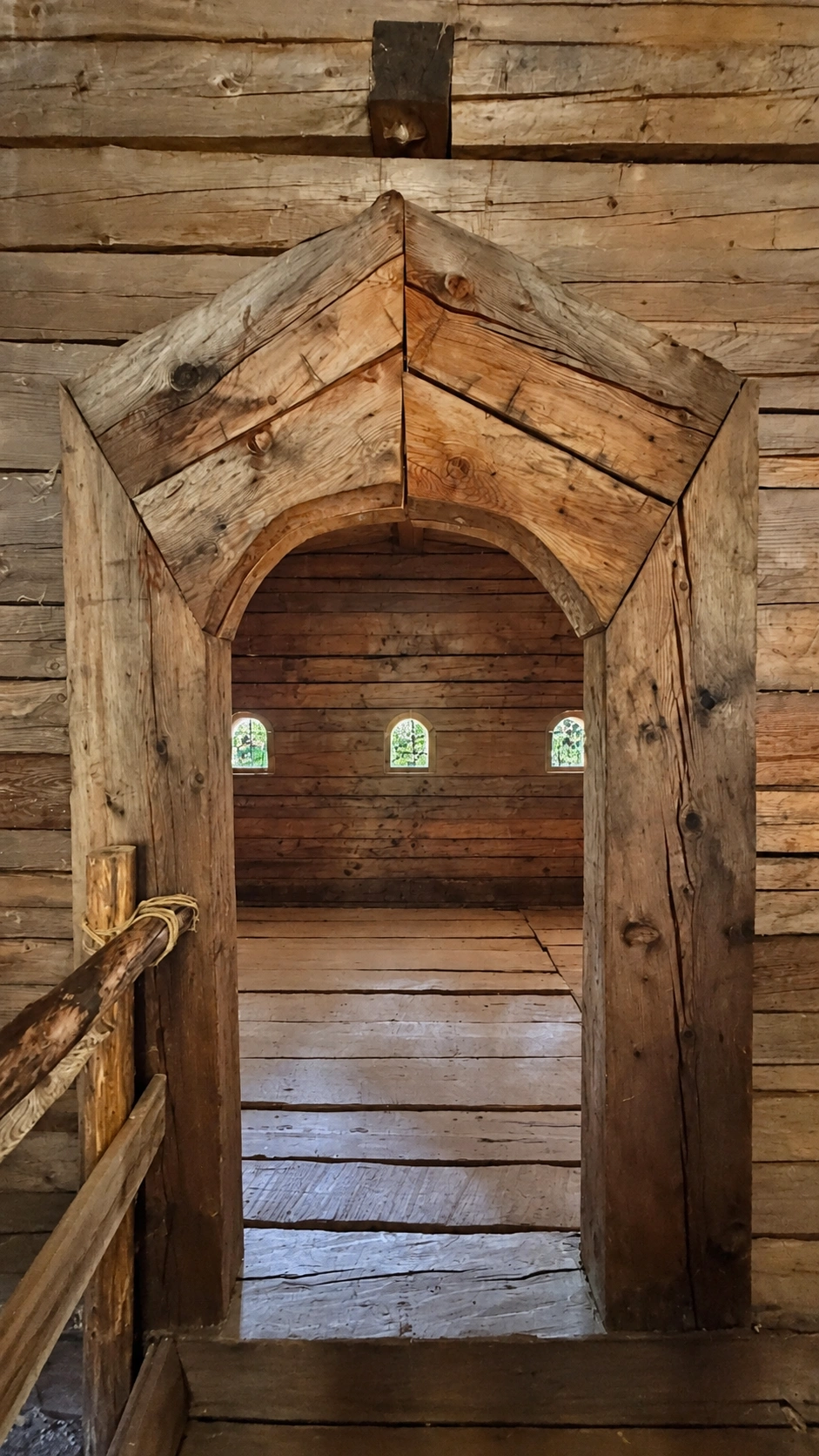
Wooden door surround with a view into the winter room. Three round-arched openings in the east wall are visible.
Three round-arched openings in the east wall are visible.
Three round-arched openings in the east wall are visible.
Three round-arched openings in the east wall. Timber floorboards in the foreground.
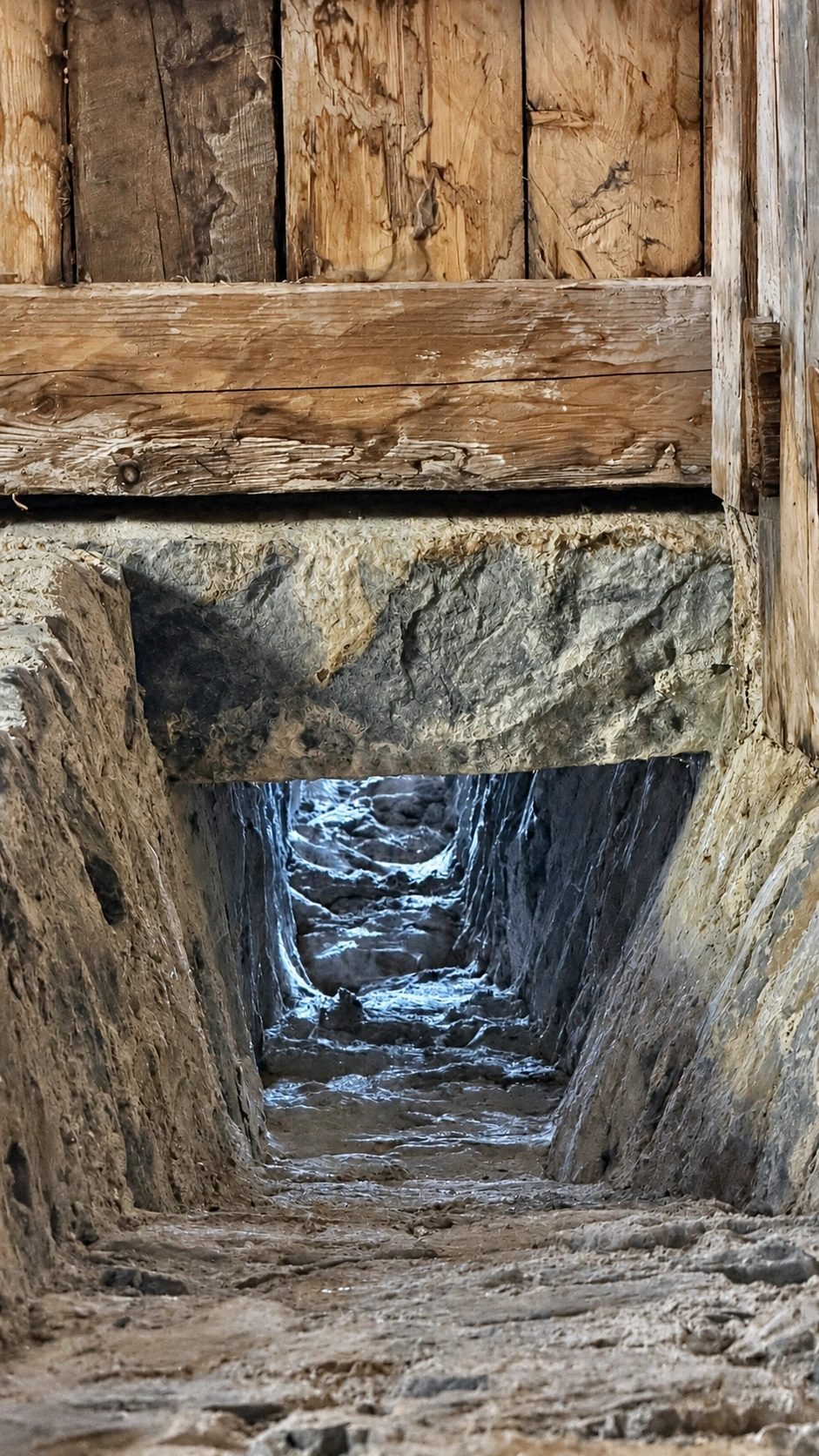
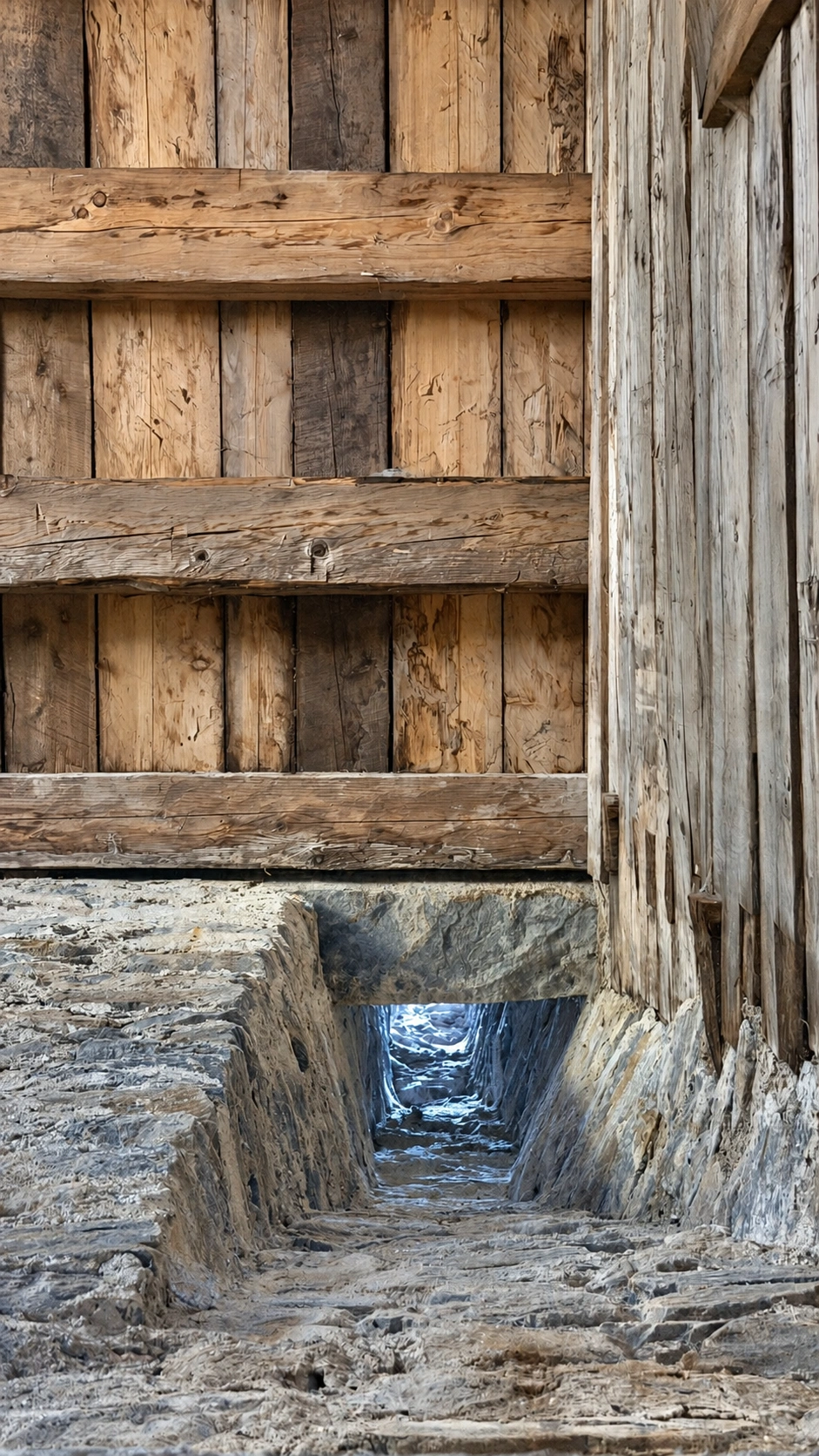
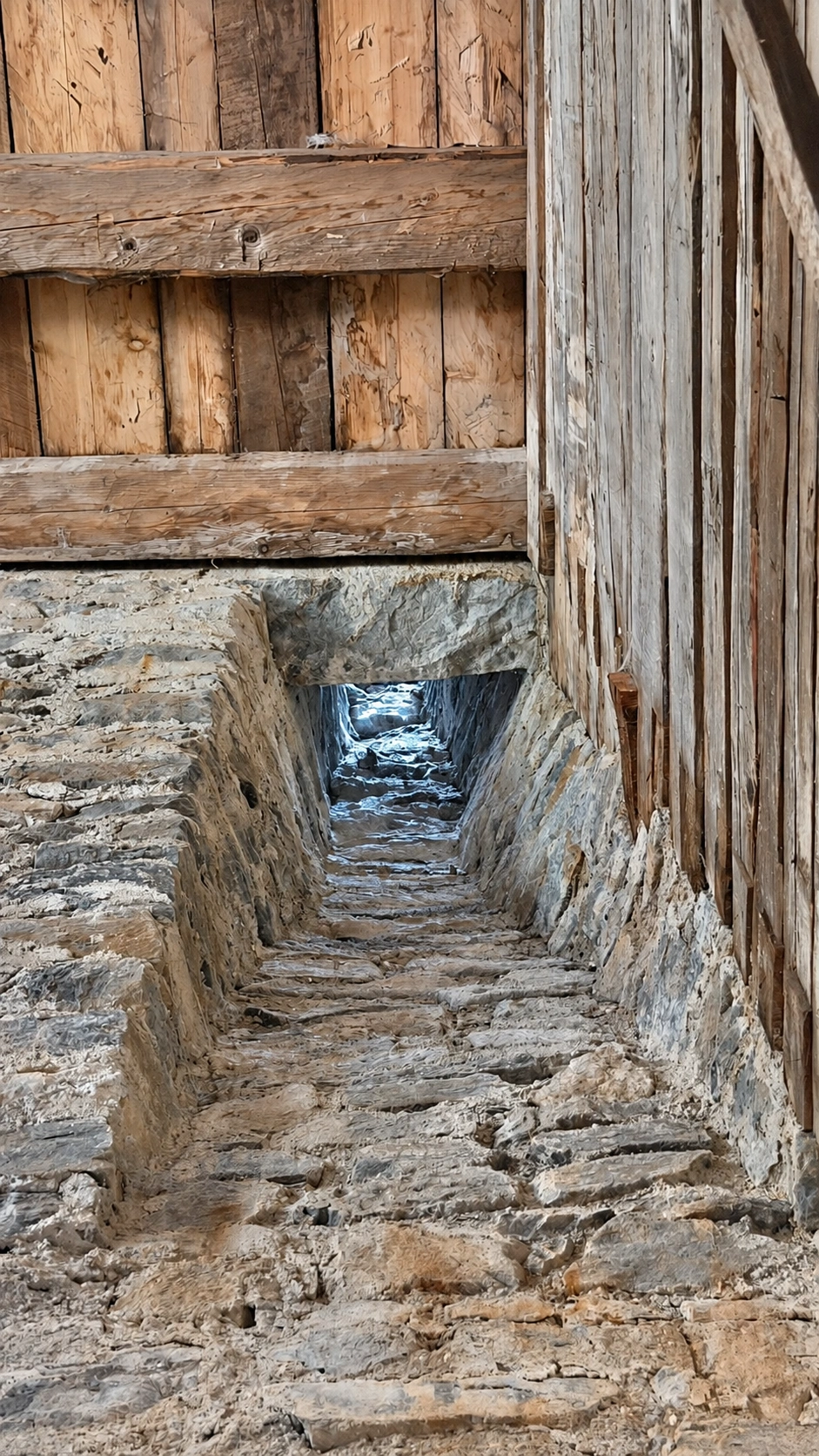
Smoke outlet in the tower's north wall, viewed from below.
Smoke outlet in the tower's north wall, viewed from below.
Close-up of the smoke outlet in the tower's north wall, viewed from below.
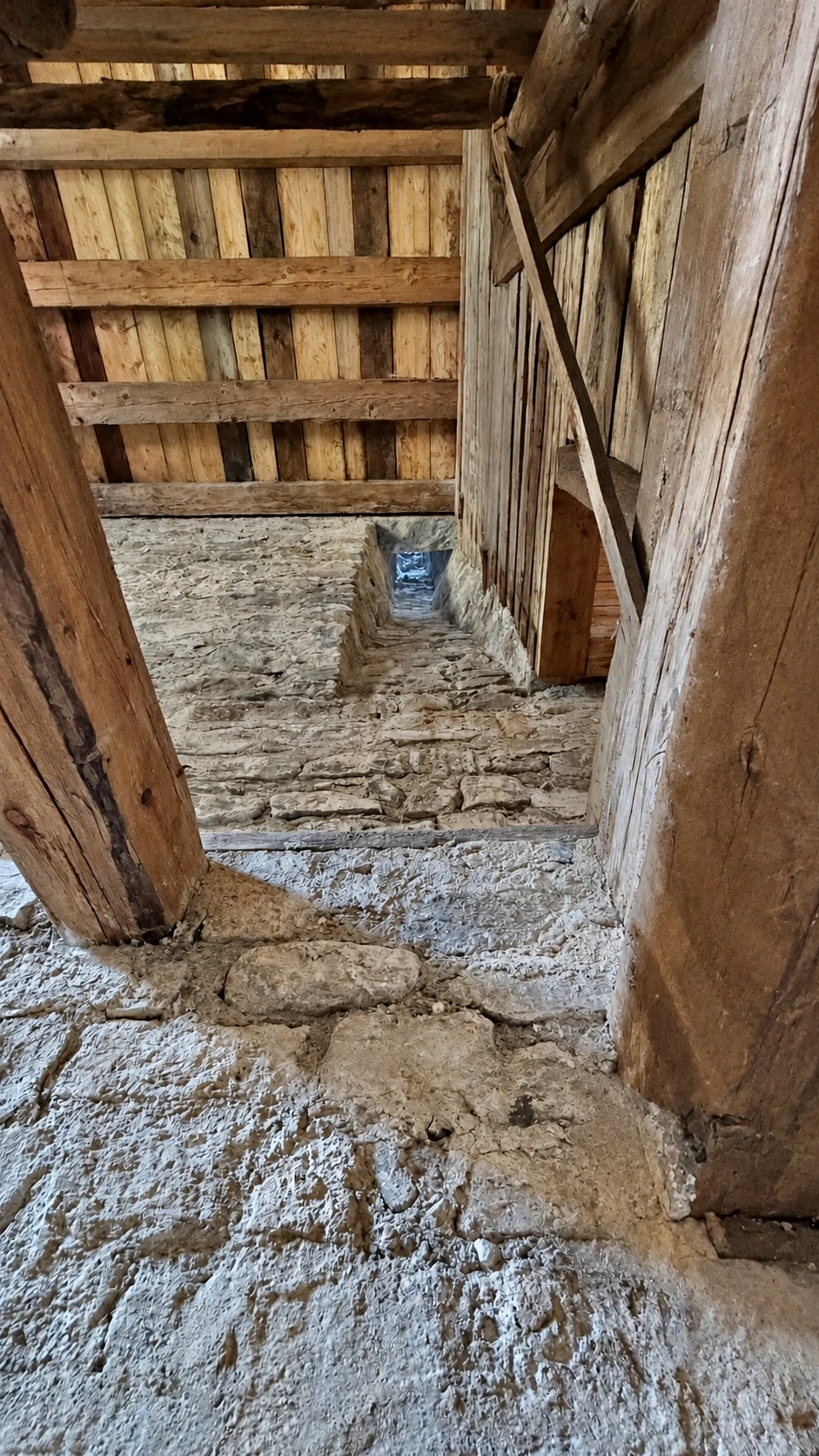
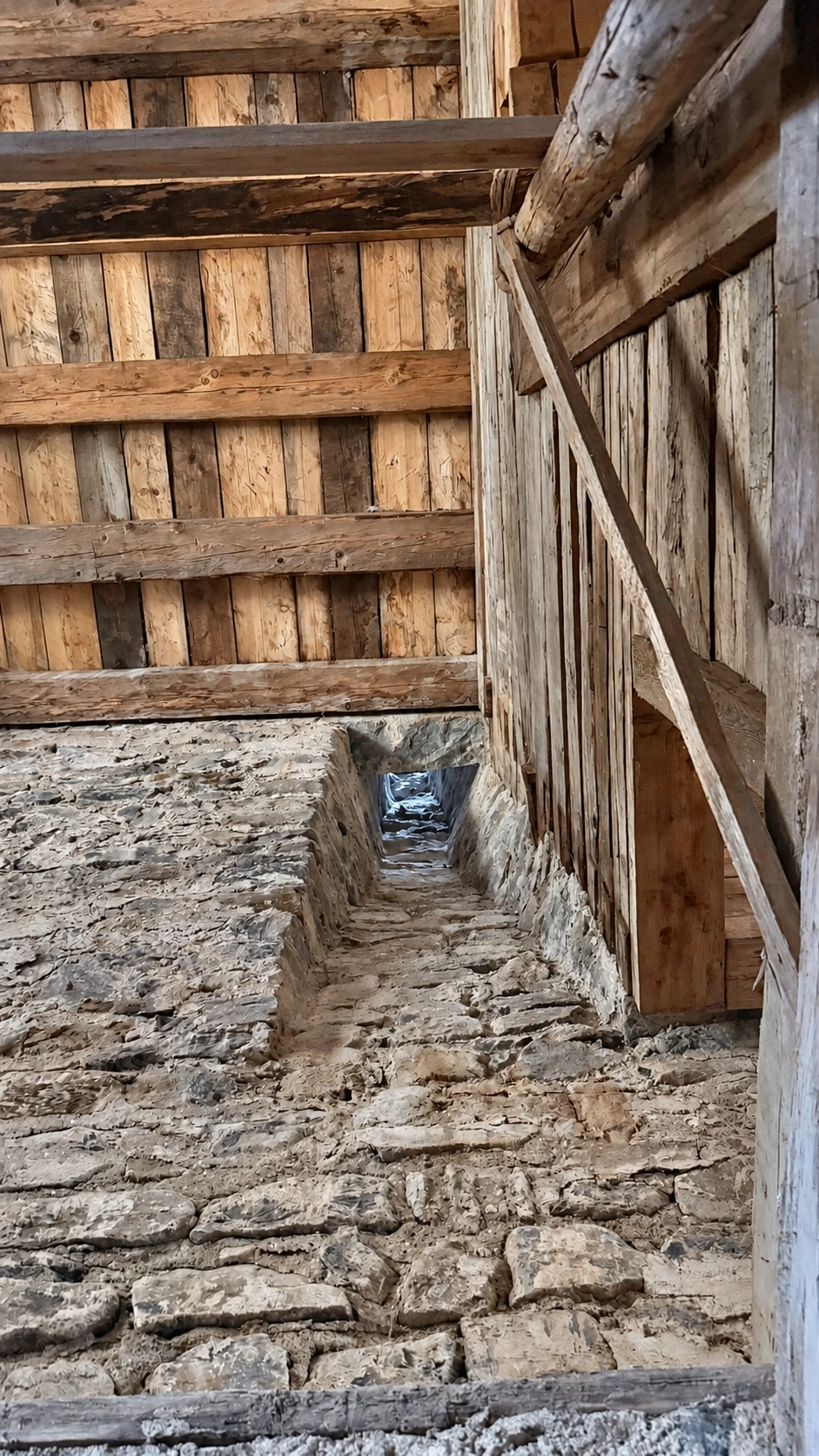
Smoke outlet, viewed from the staircase leading to the residential level.
Smoke outlet, viewed from the staircase to the residential level. The opening on the right leads to the tiled stove in the winter room.
The opening below leads to the tiled stove in the winter room. Viewed from the summer room.
Wooden door leading from the summer room to the sleeping chamber.
Slit window in the sleeping chamber, set in the tower's east wall.
The slit window in the east wall provides light and ventilation for the sleeping chamber.
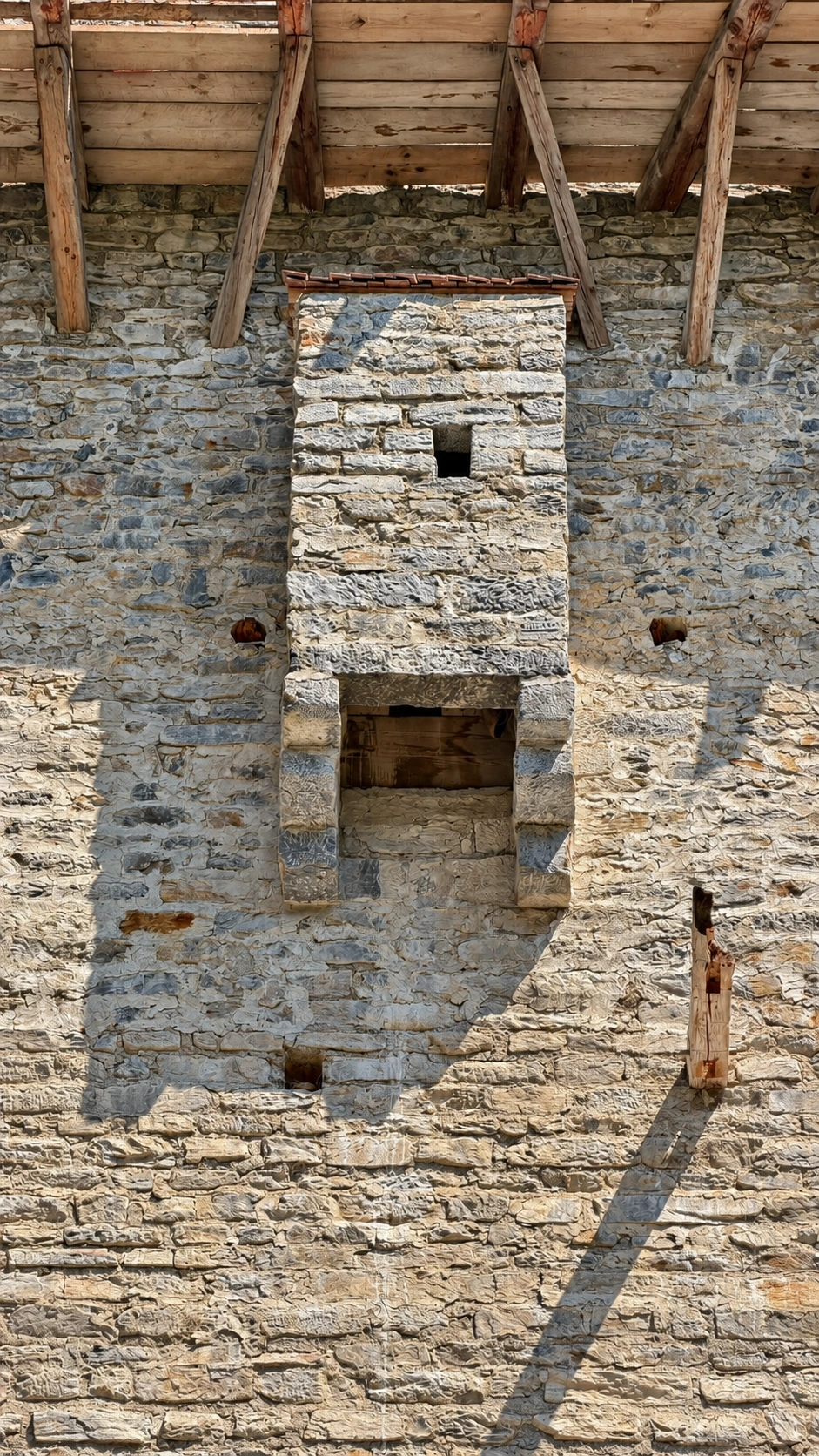
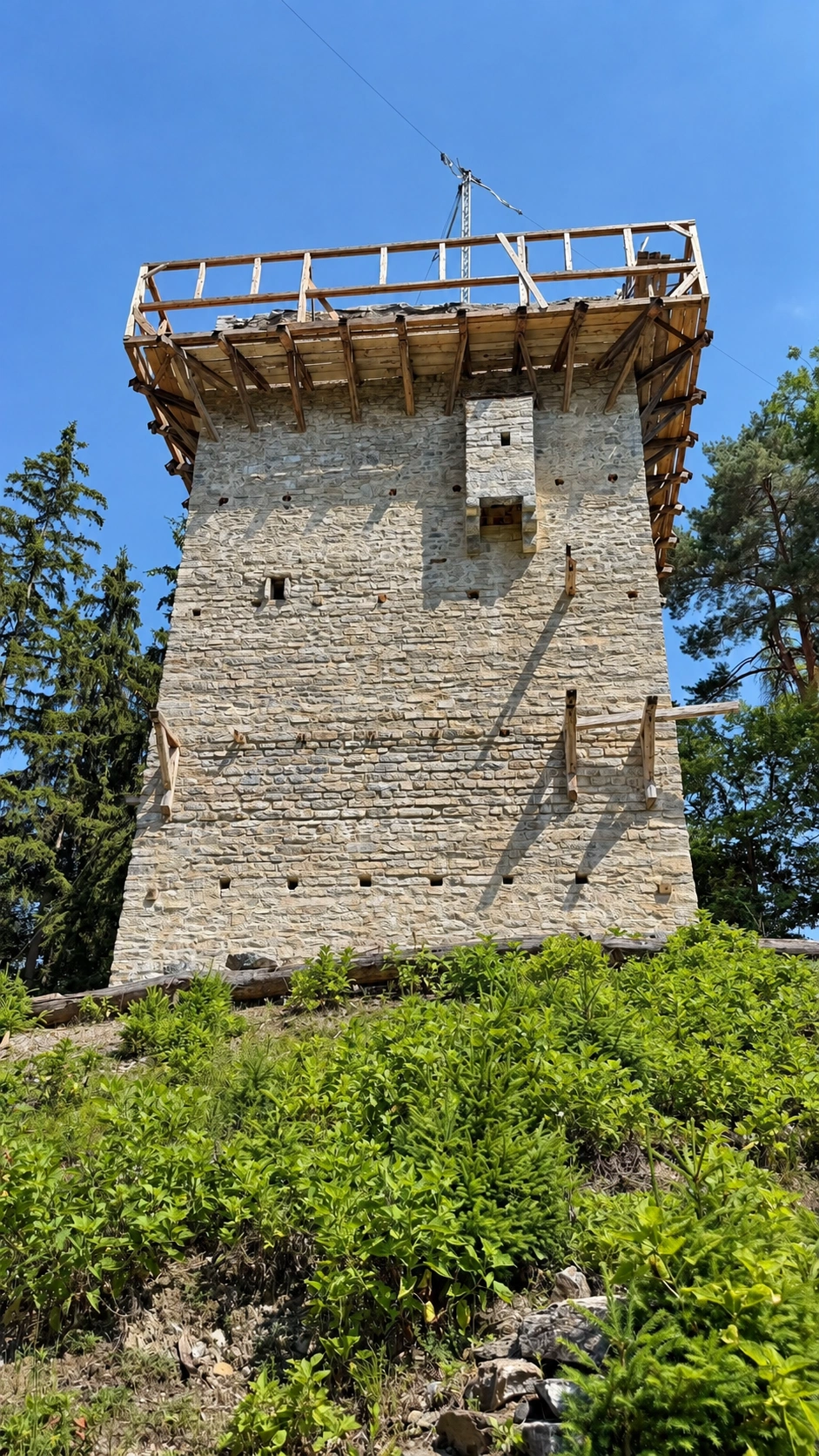
The garderobe projection on the tower's south wall, viewed from outside. It is connected to the sleeping chamber.
Exterior view of the garderobe projection on the tower's south wall.
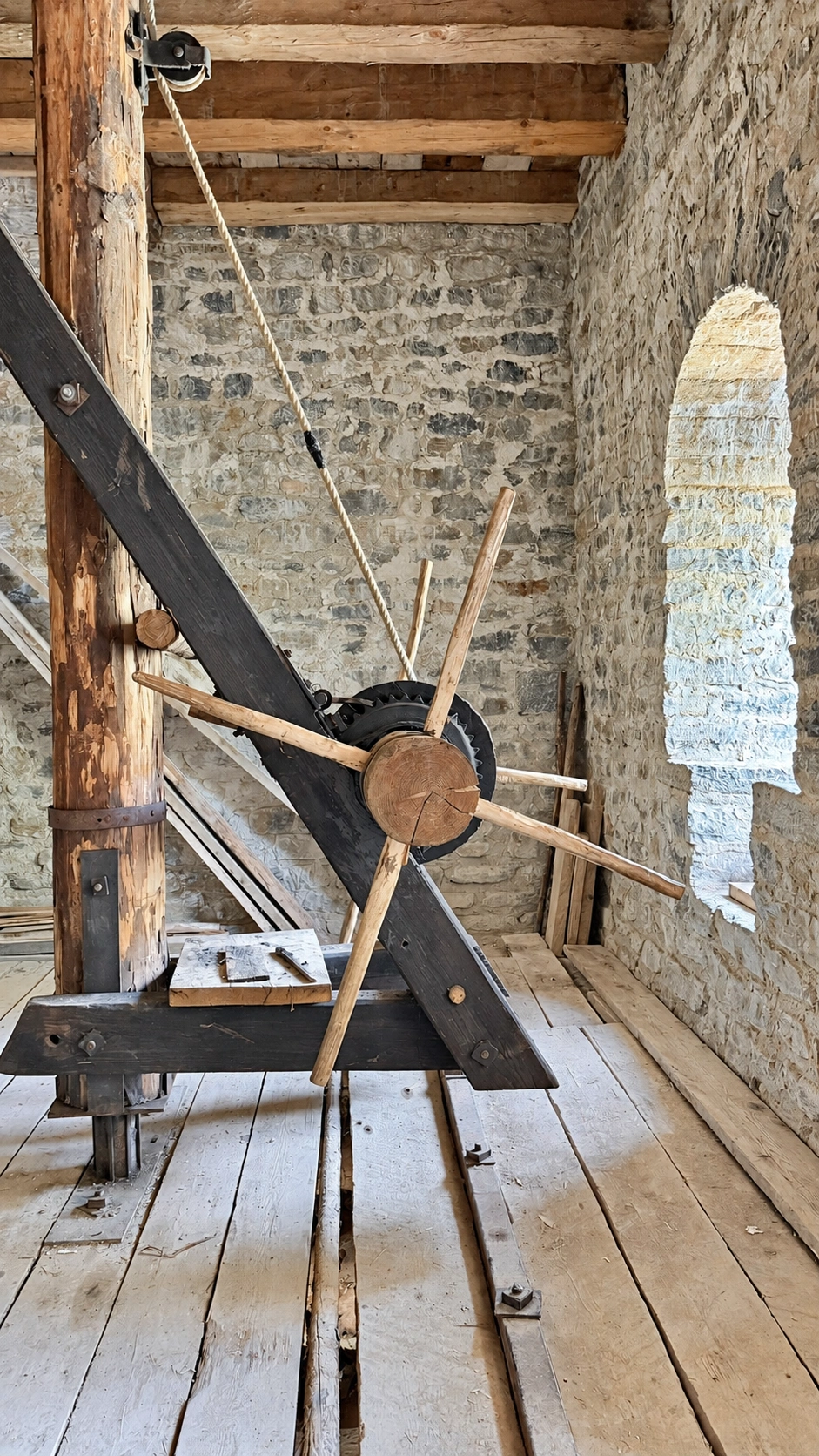
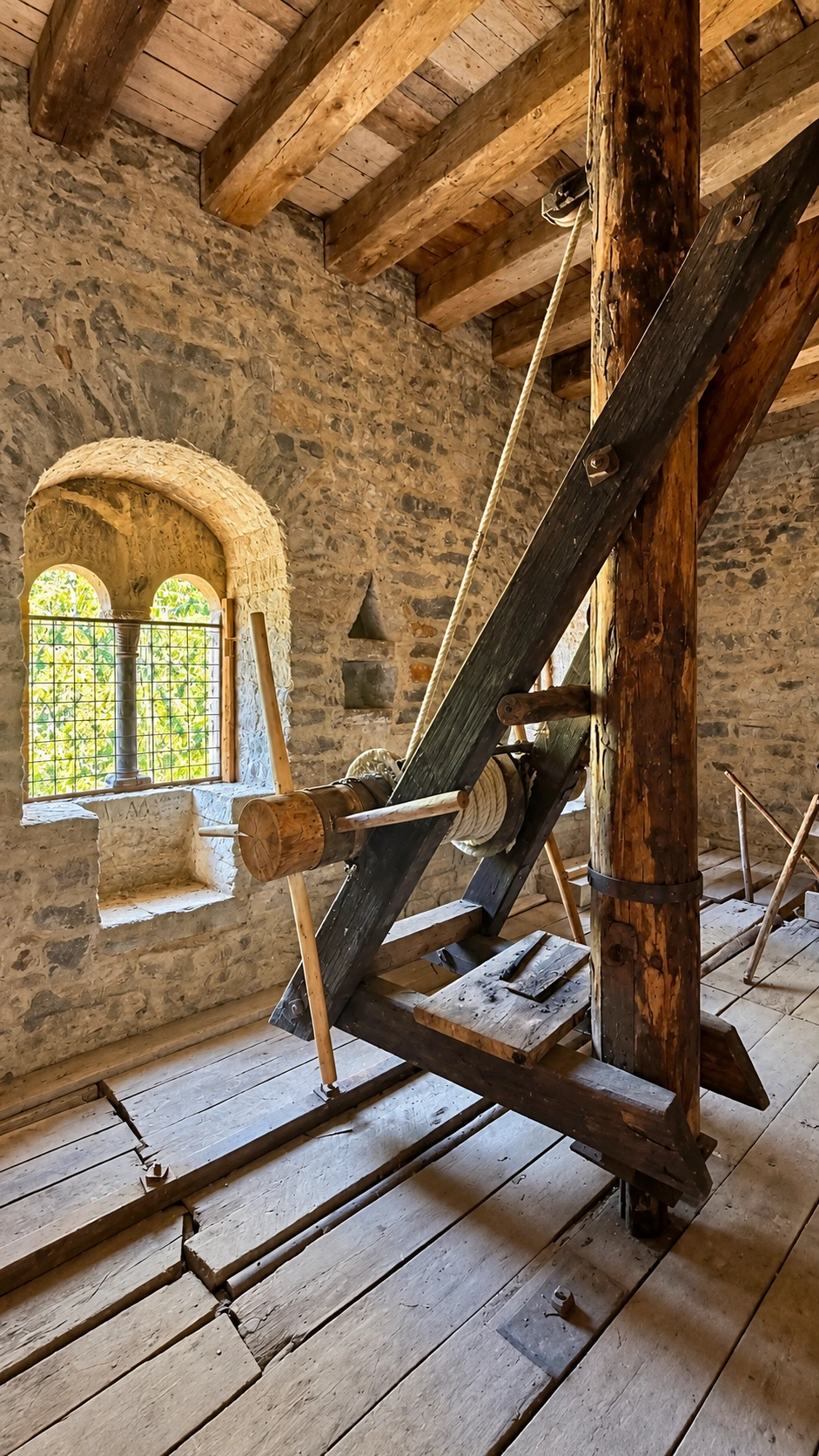
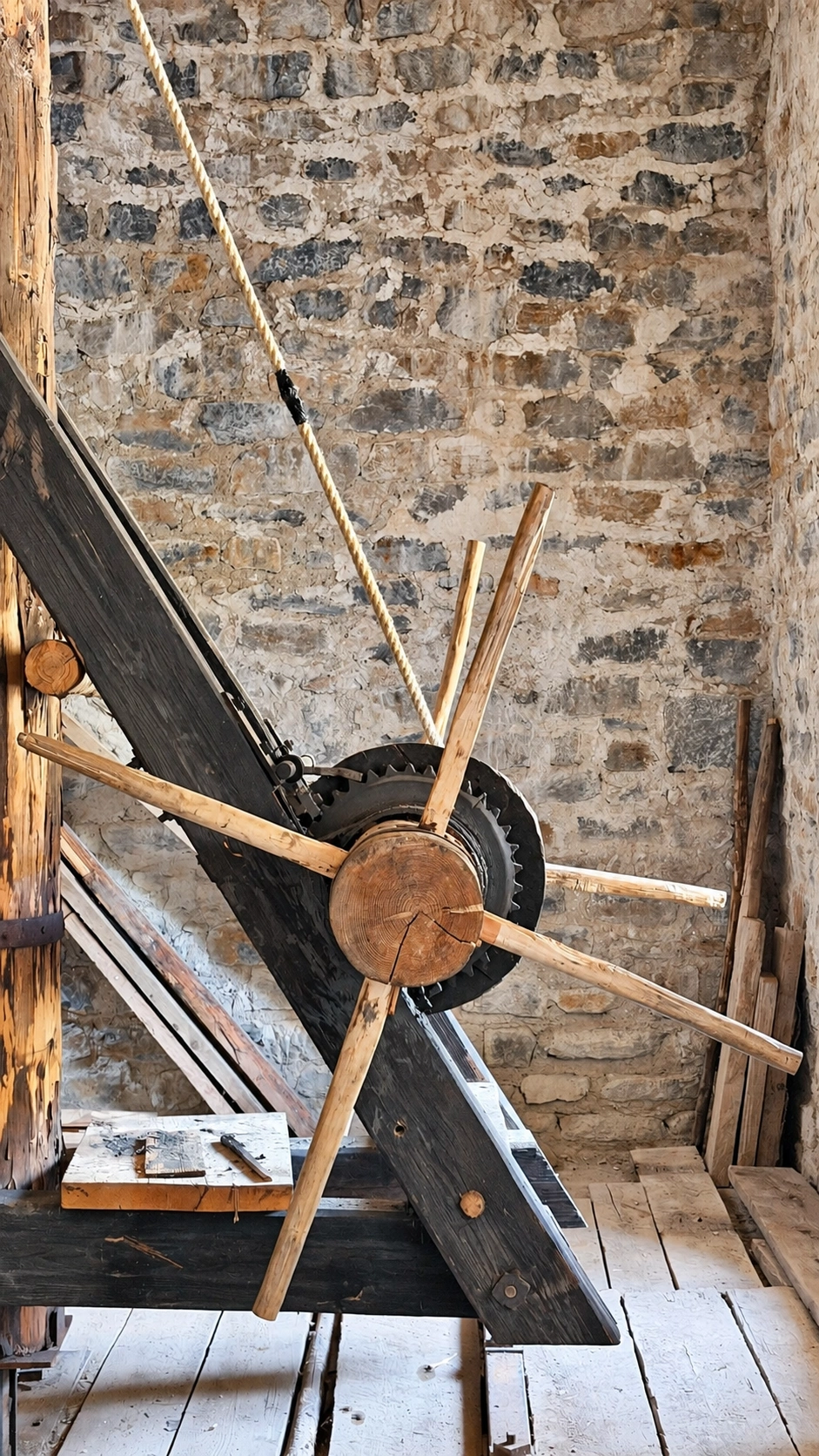
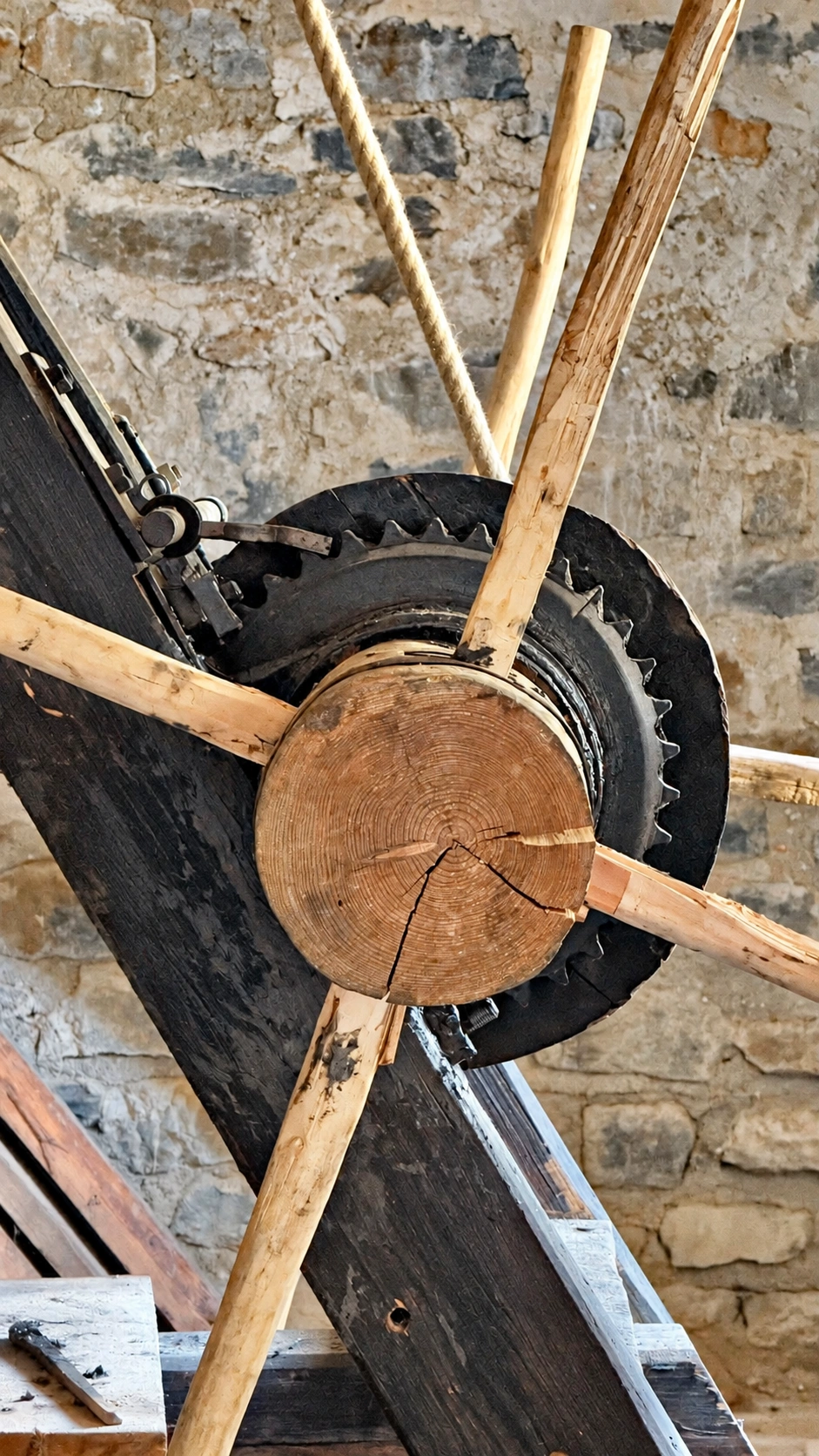
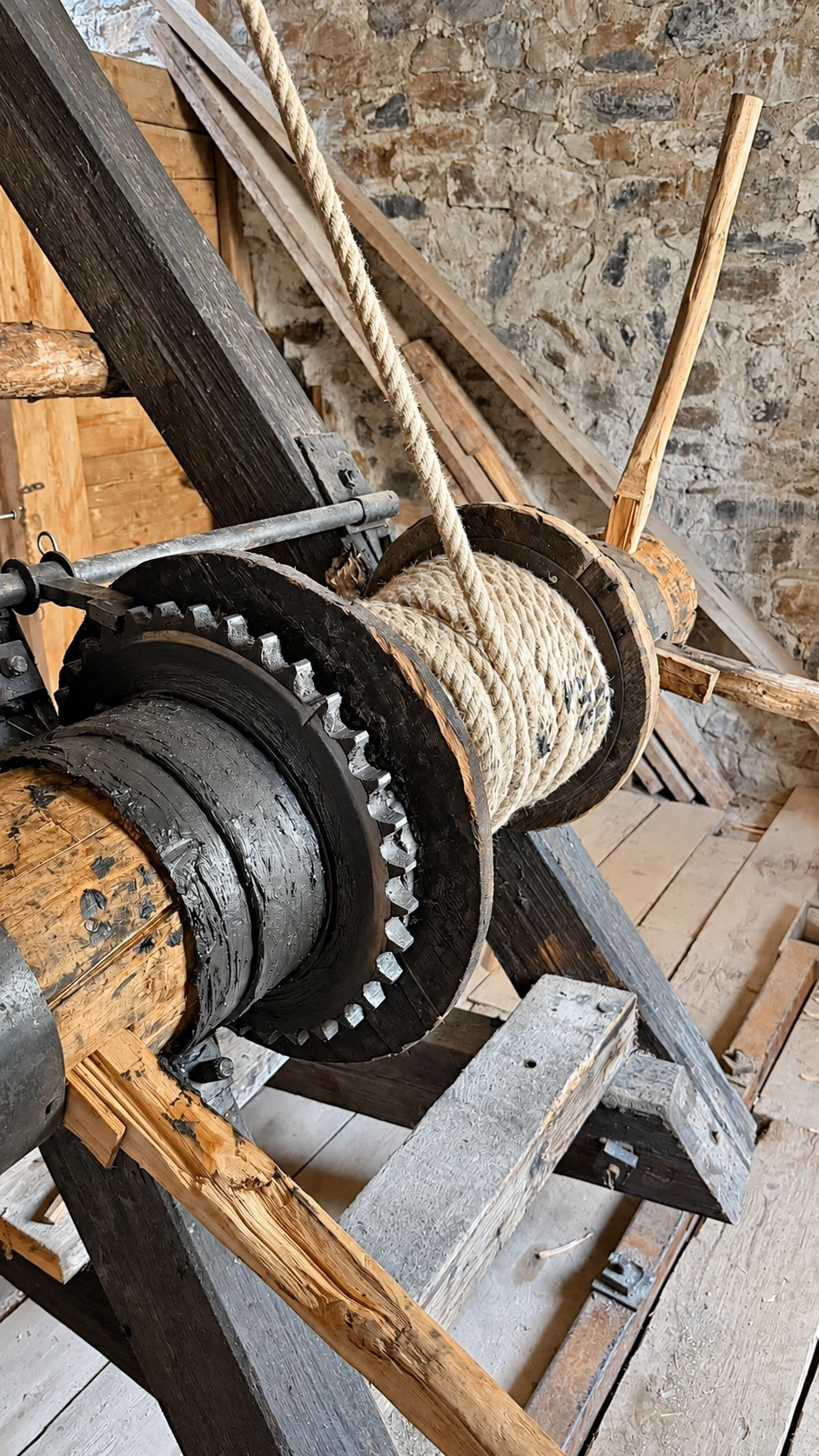
Winch in the summer room during the tower's construction.
Winch in the summer room during the tower's construction.
Winch in the summer room during the tower's construction.
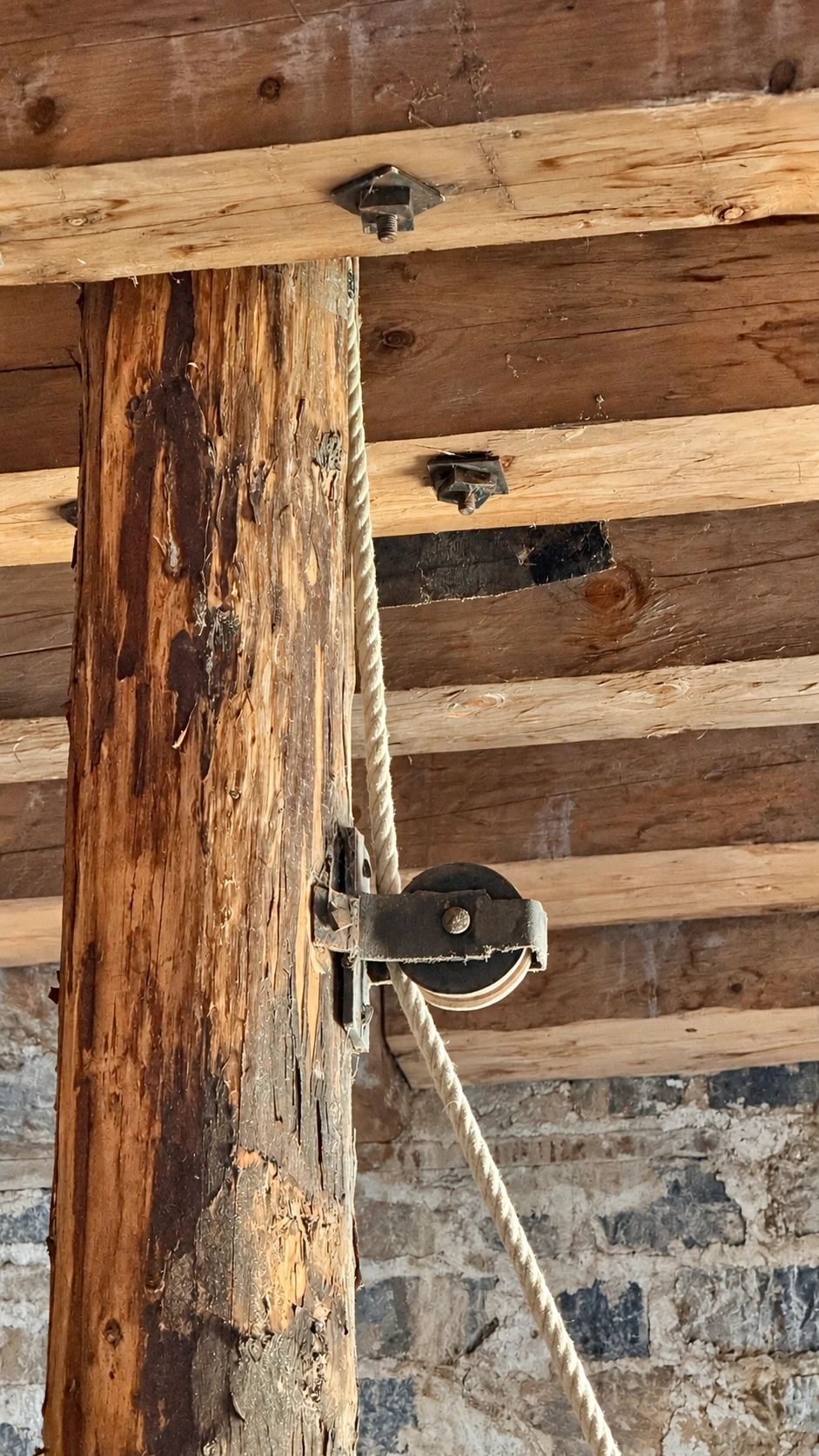
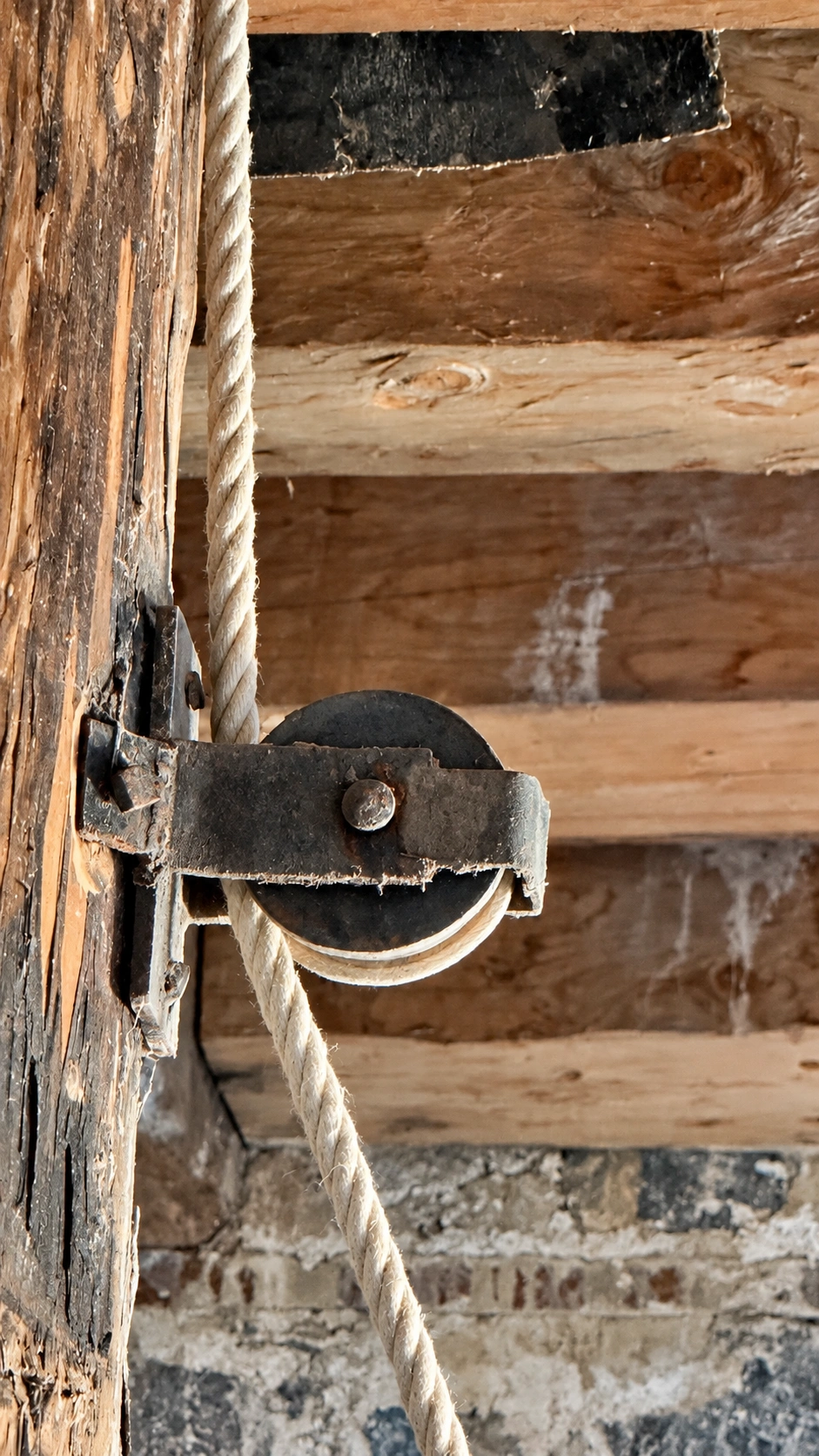
Guide pulley for the winch rope, mounted on a timber beam and used during the tower's construction.
Guide pulley for the winch rope, mounted on a timber beam and used during the tower's construction.