The blacksmith was one of the most important craftsmen on the castle construction site, and even later, after the completion of the castle, he was indispensable. His task was to make items such as fittings, hinges, locks, and keys. He was also responsible for making and maintaining the tools of the other craftsmen. Additionally, the blacksmith was needed for the maintenance of equipment in the castle and for daily needs.
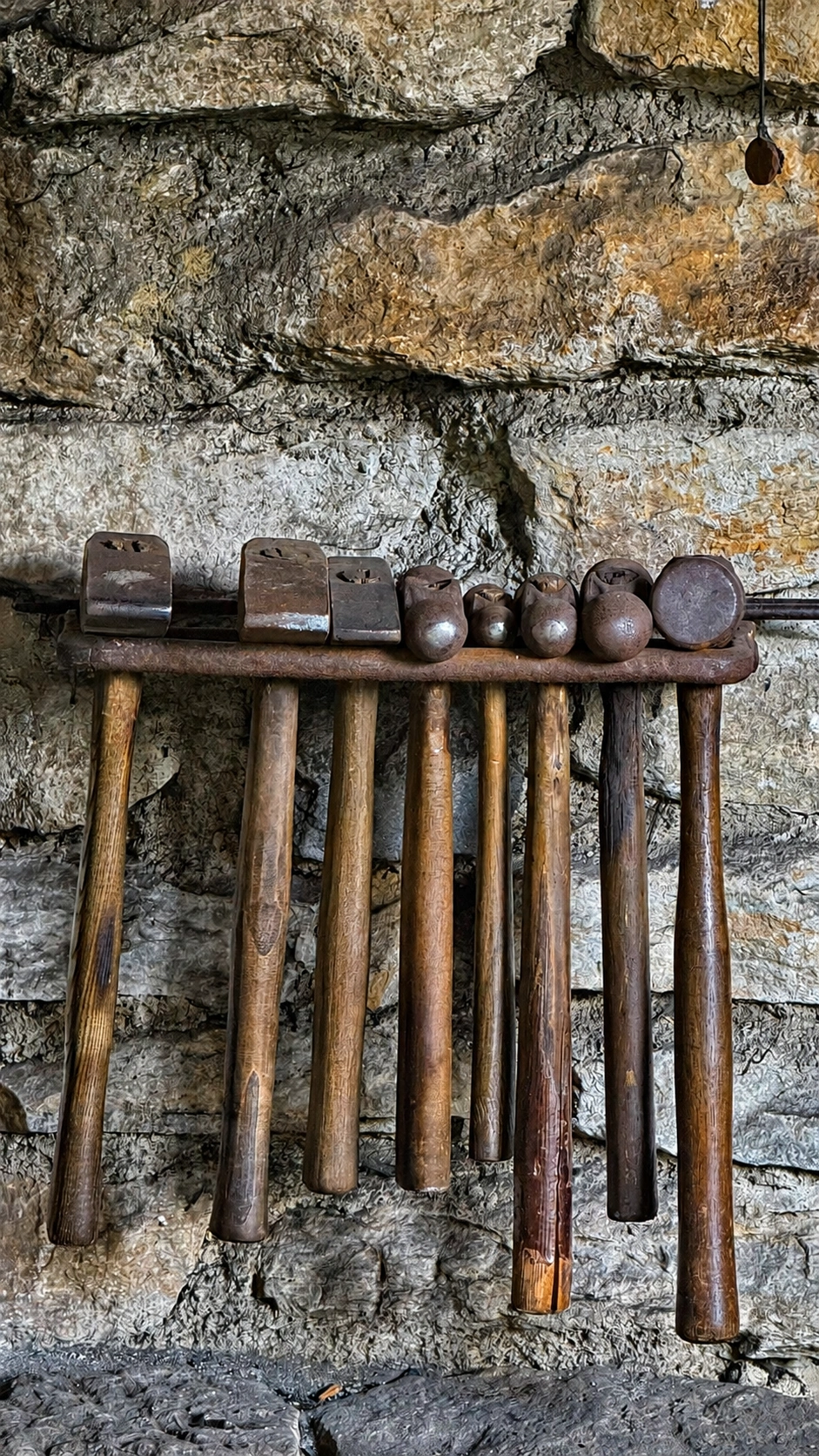
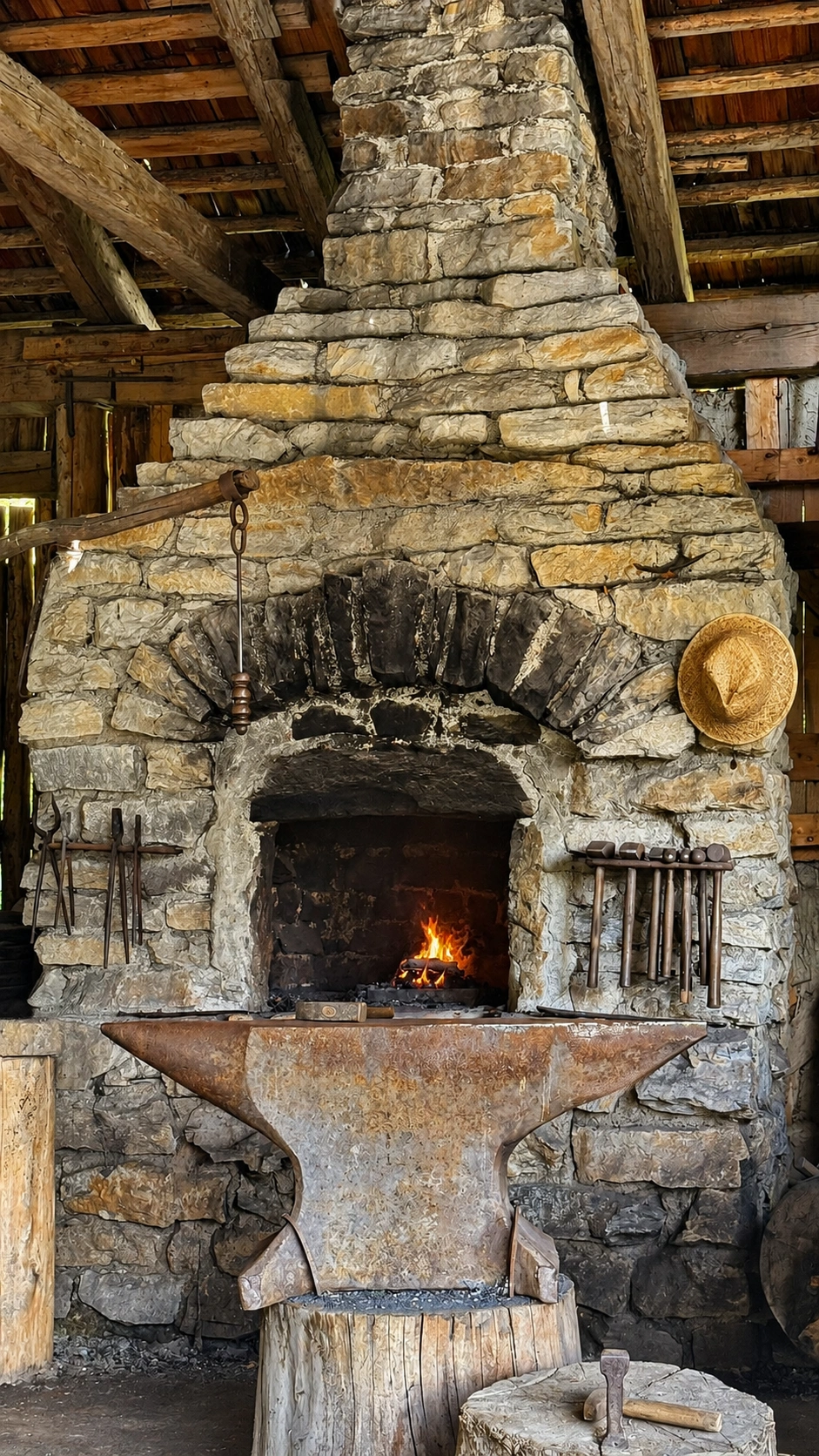
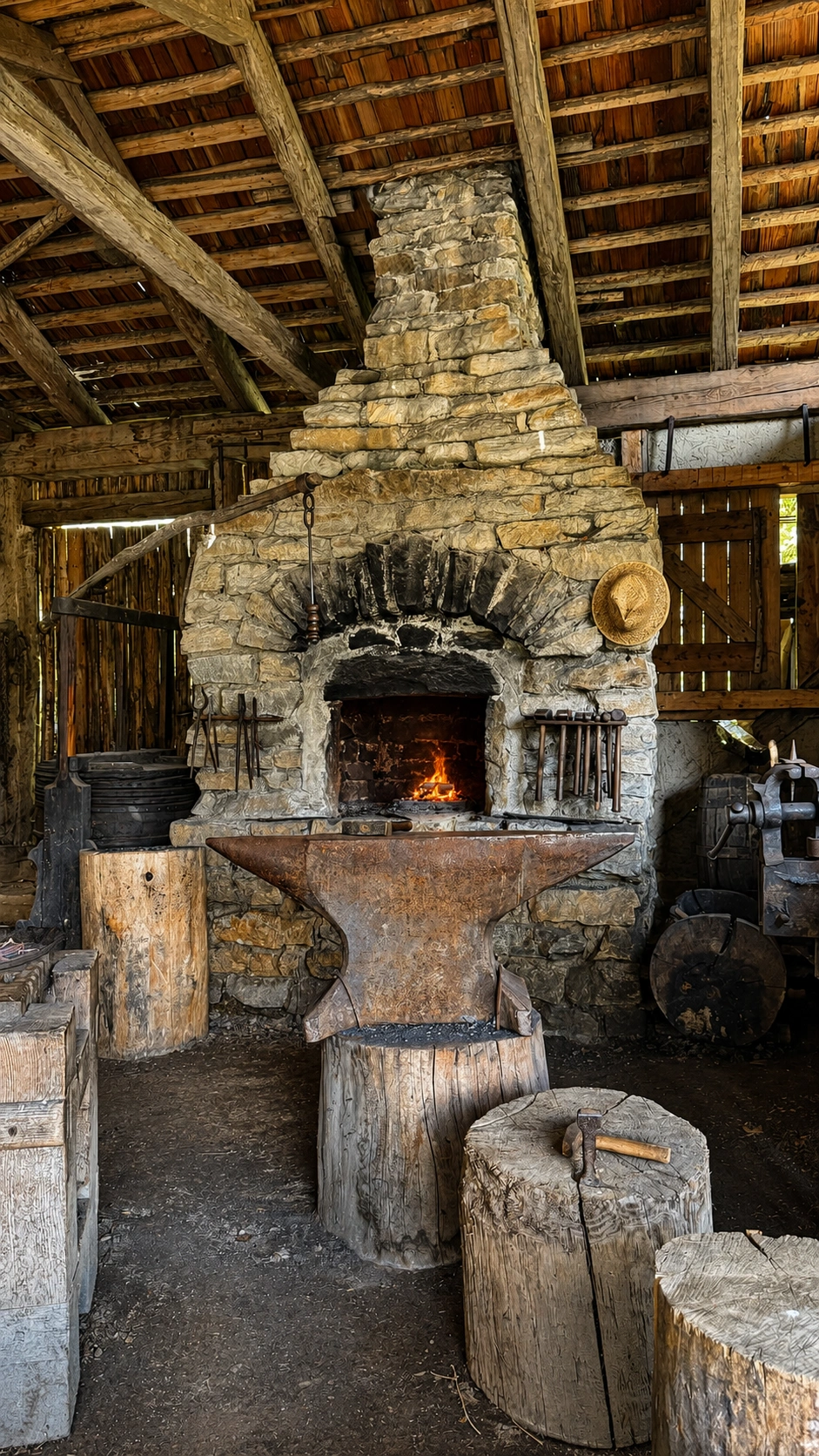
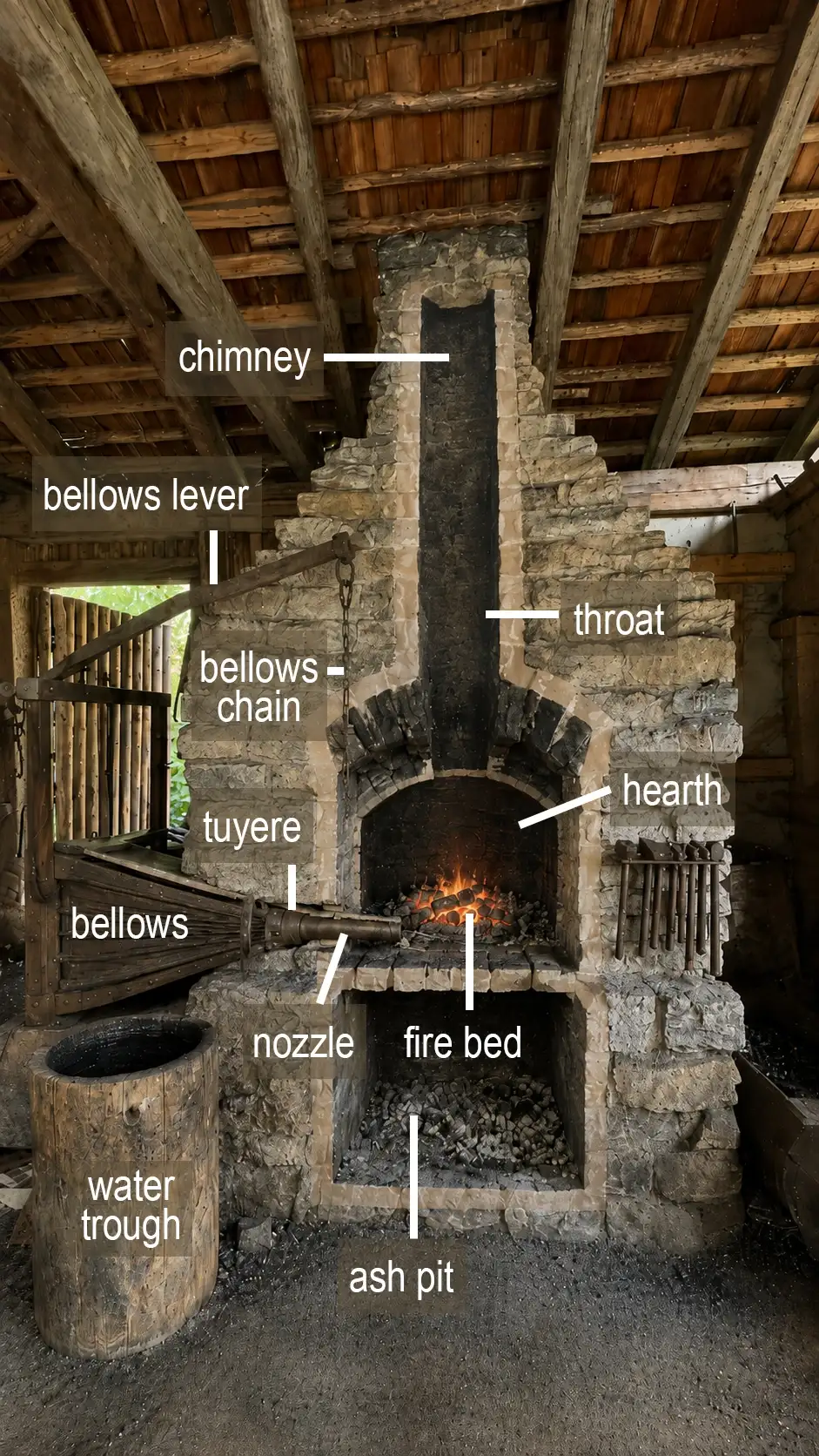
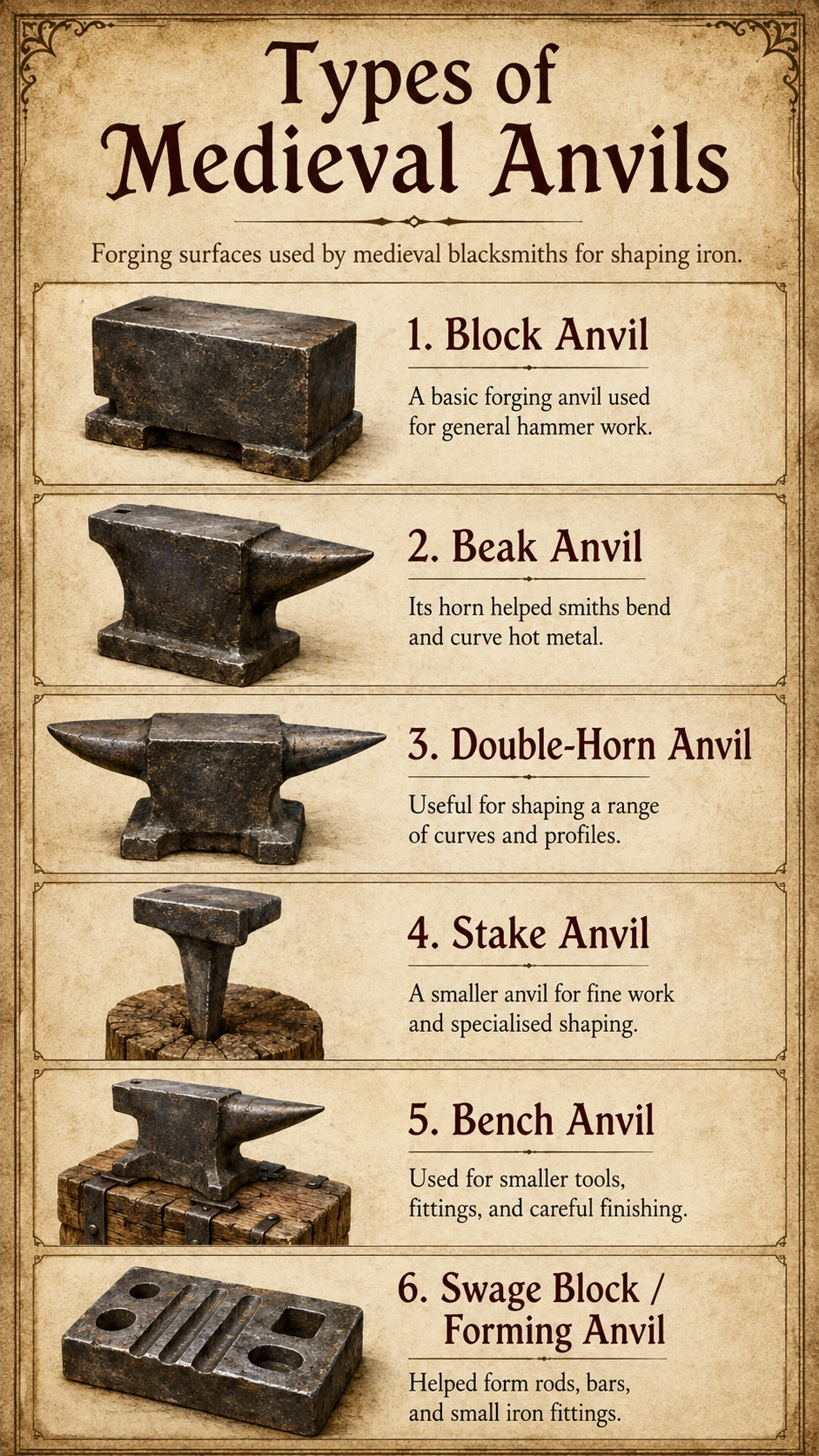
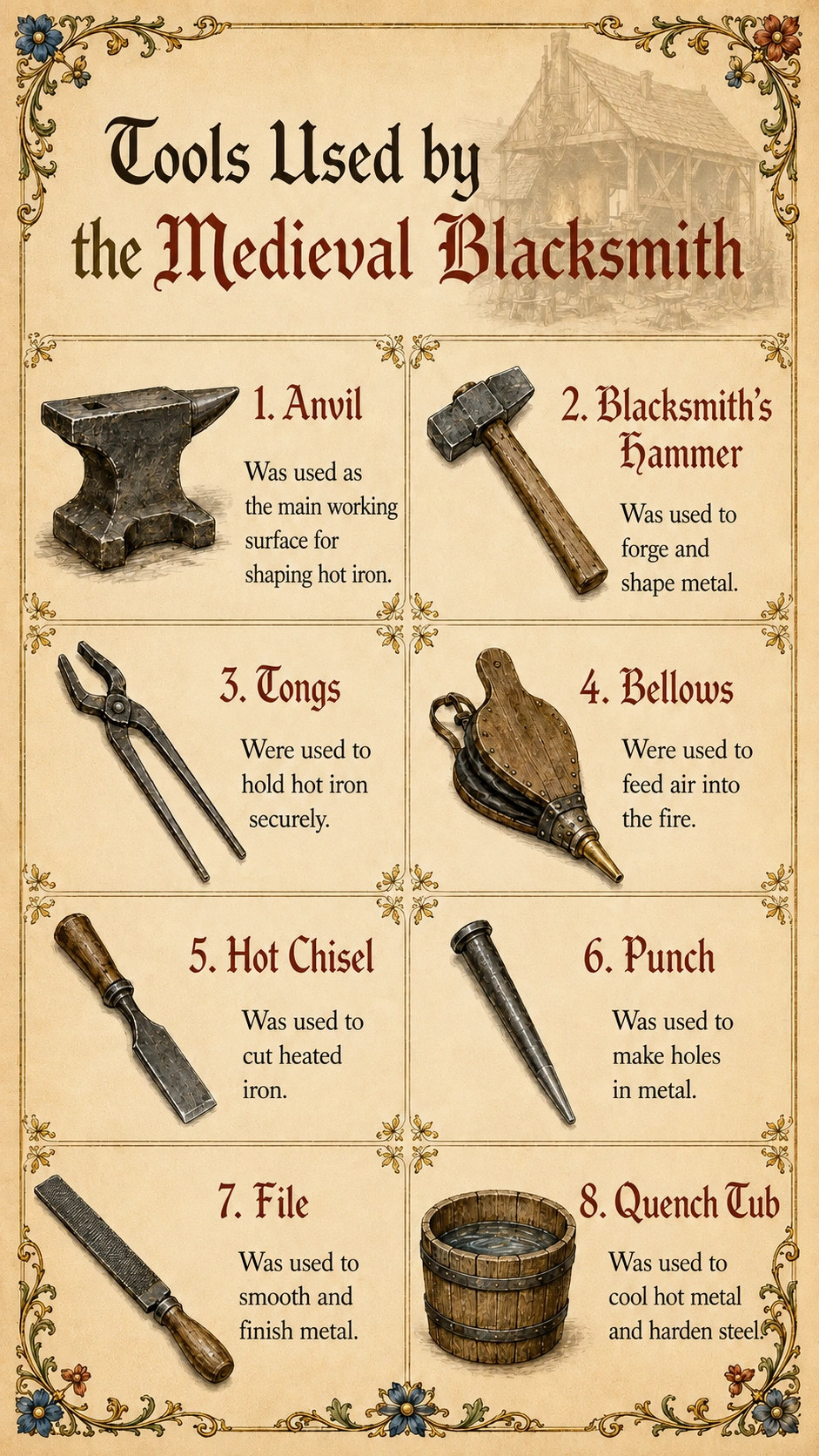
The blacksmith’s workshop consisted of an open hearth with a flue (forge), operated by a pair of bellows. Next to it were the anvil and a water trough. The workshop also included storage for the required charcoal and scrap metal. The most important tools of a blacksmith were the anvil (flat anvil, blacksmith’s anvil, horn anvil, and thumb anvil), the hammer (hammers were made not only from iron and steel but also from cattle horns), and the tongs.
The training for this profession was subject to strict rules. Working with fire and shaping iron with hammer and anvil earned the blacksmith high esteem. However, because of this, he was sometimes feared and regarded as a sorcerer. Therefore, after completing their training, blacksmiths had to swear an oath never to practice witchcraft.
The narrative shows: Workshop Overview → Blacksmith’s Tools → Forging Processes → Practical Ironwork → Construction Applications → Horseshoes → Transport
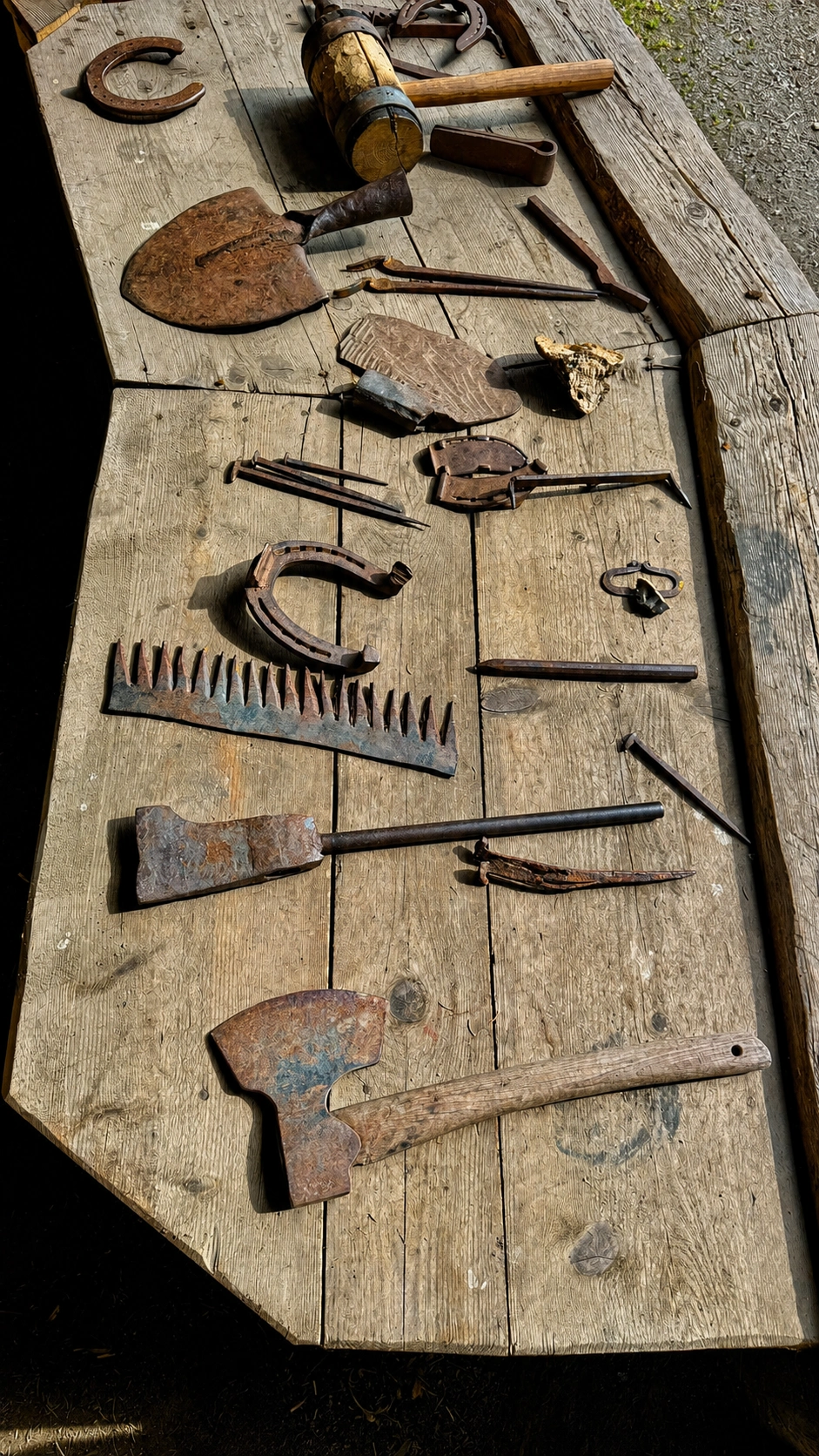
Forged tools and iron fittings support the wide range of work carried out by the blacksmith.
The blacksmith's workshop supplies essential tools for the building site. Each tool is formed and repaired at the forge.
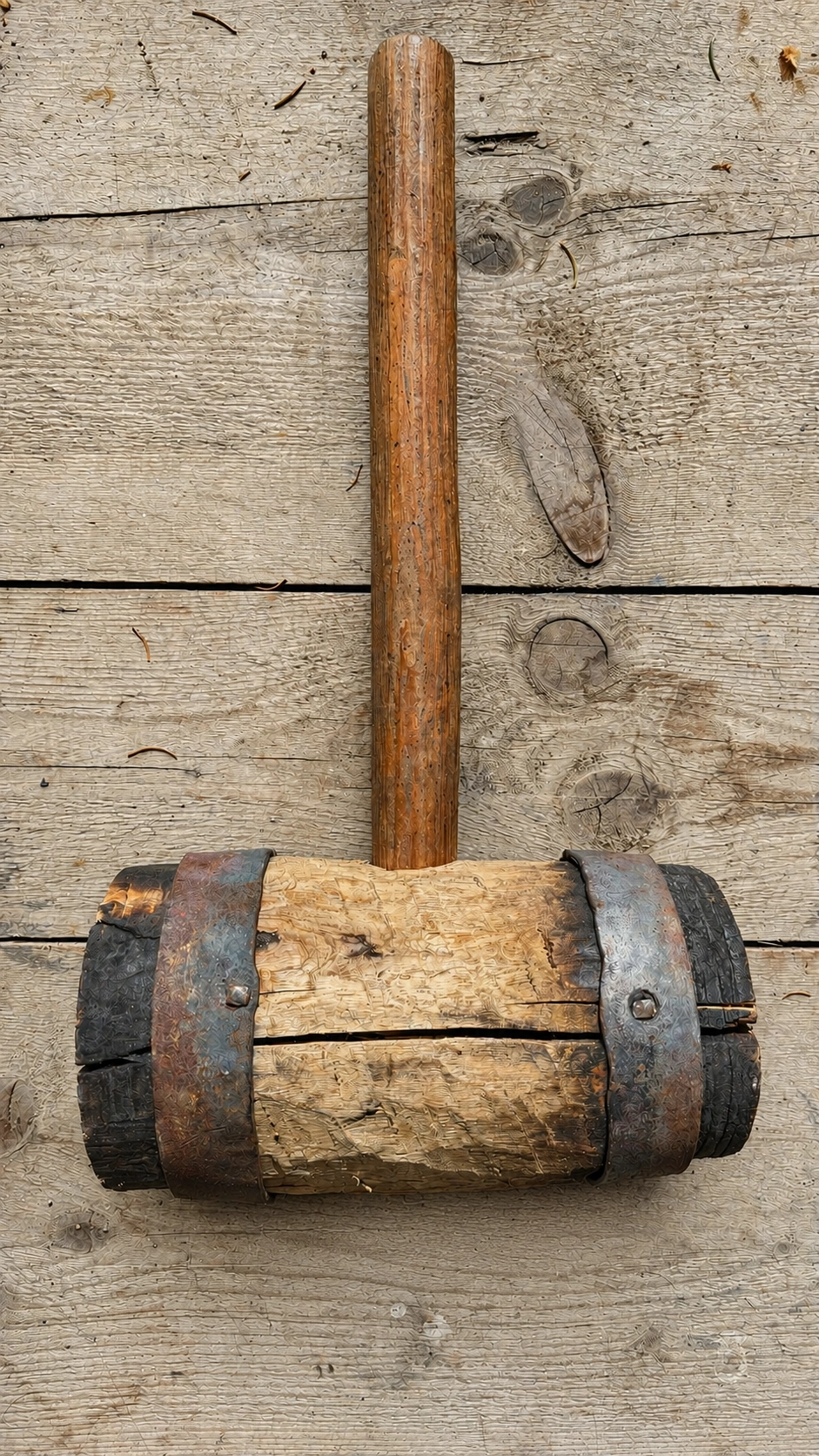
Wooden mallets deliver controlled force without damaging finished surfaces. Used in carpentry, assembly and stoneworking.
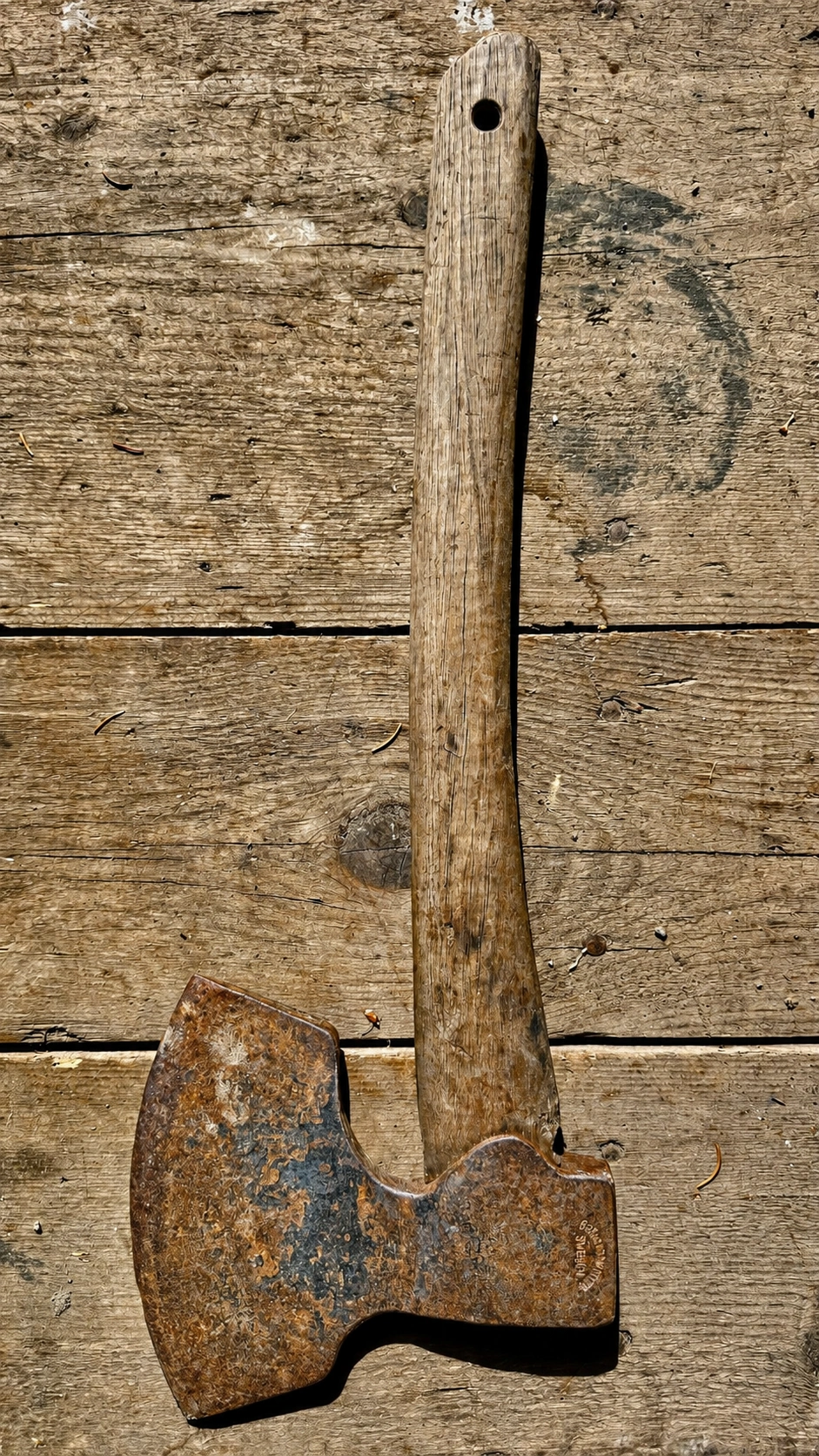
Broad axes shape beams and prepare construction timber. Their cutting edges require regular maintenance by the blacksmith.
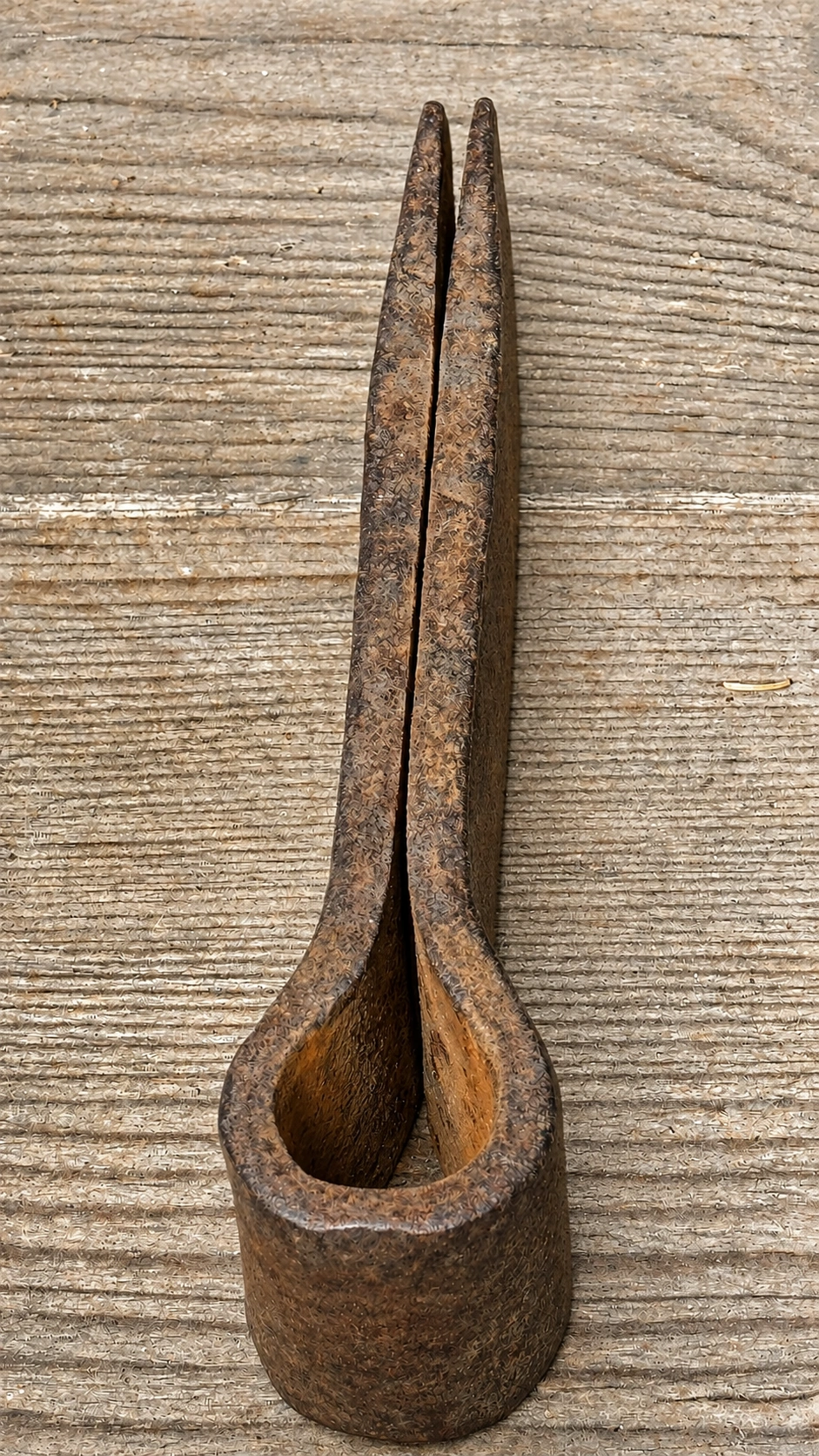
Forge tongs allow the blacksmith to hold glowing iron safely.
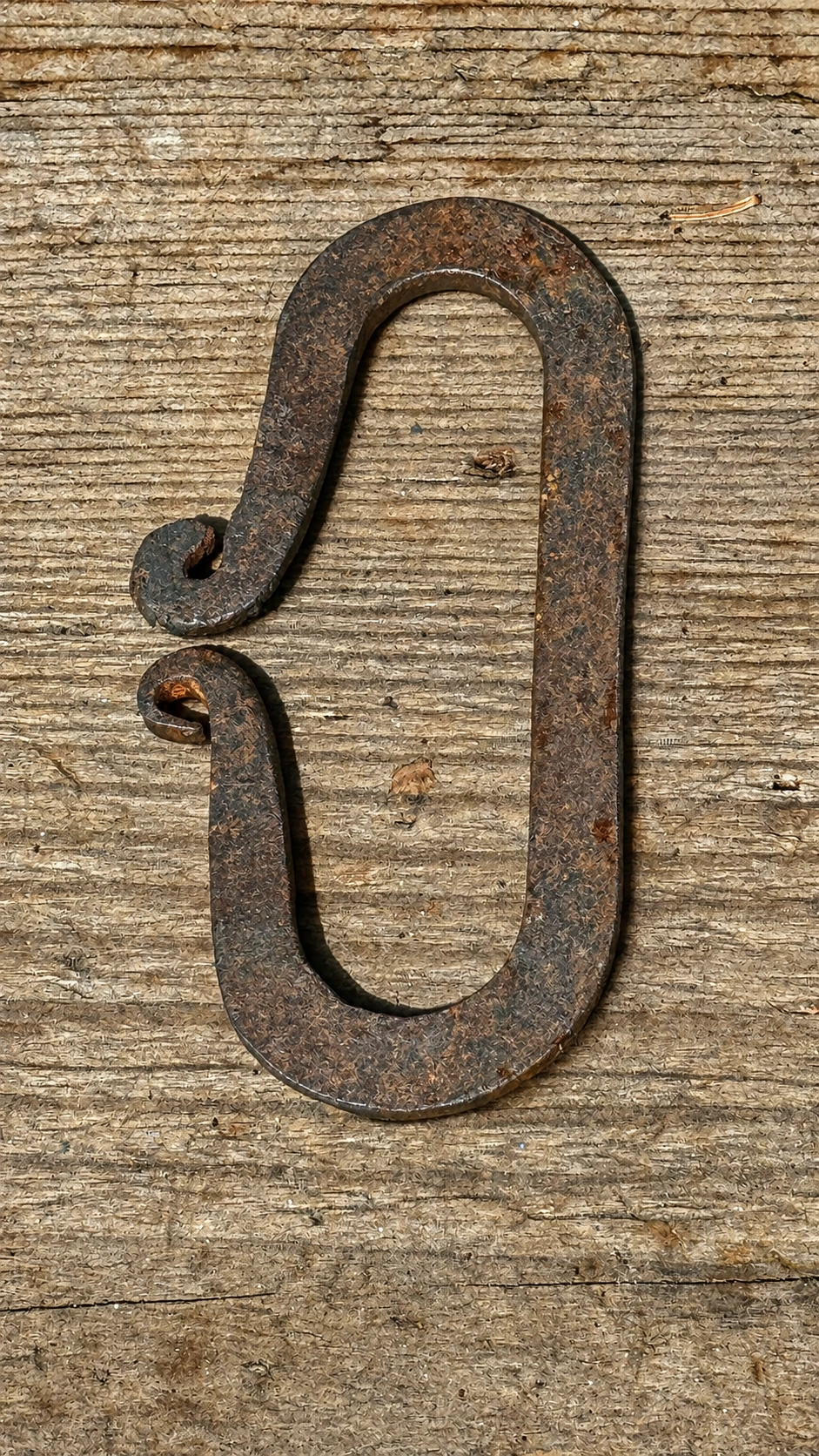
Simple iron hooks secure equipment, tools and supplies.
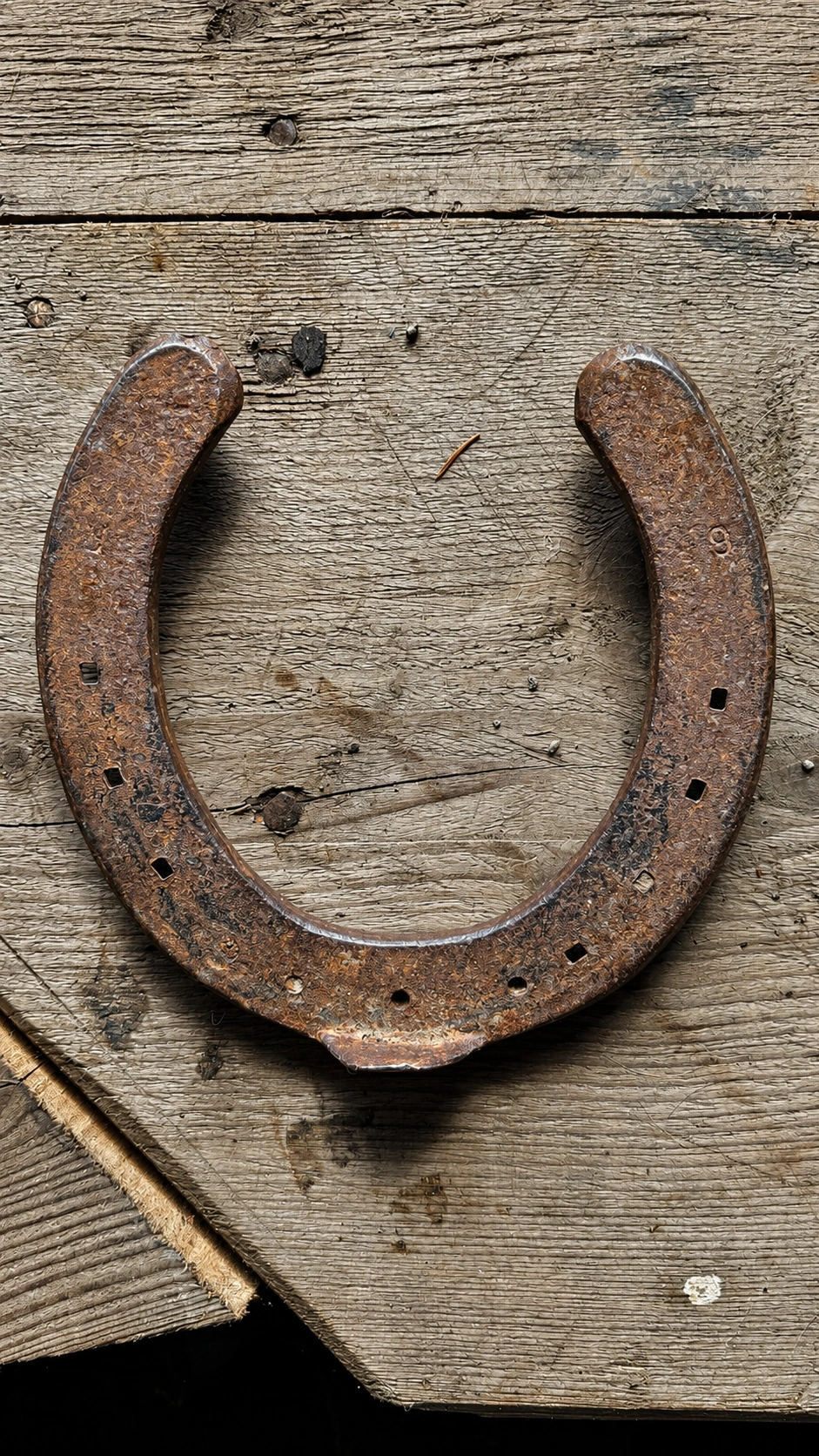
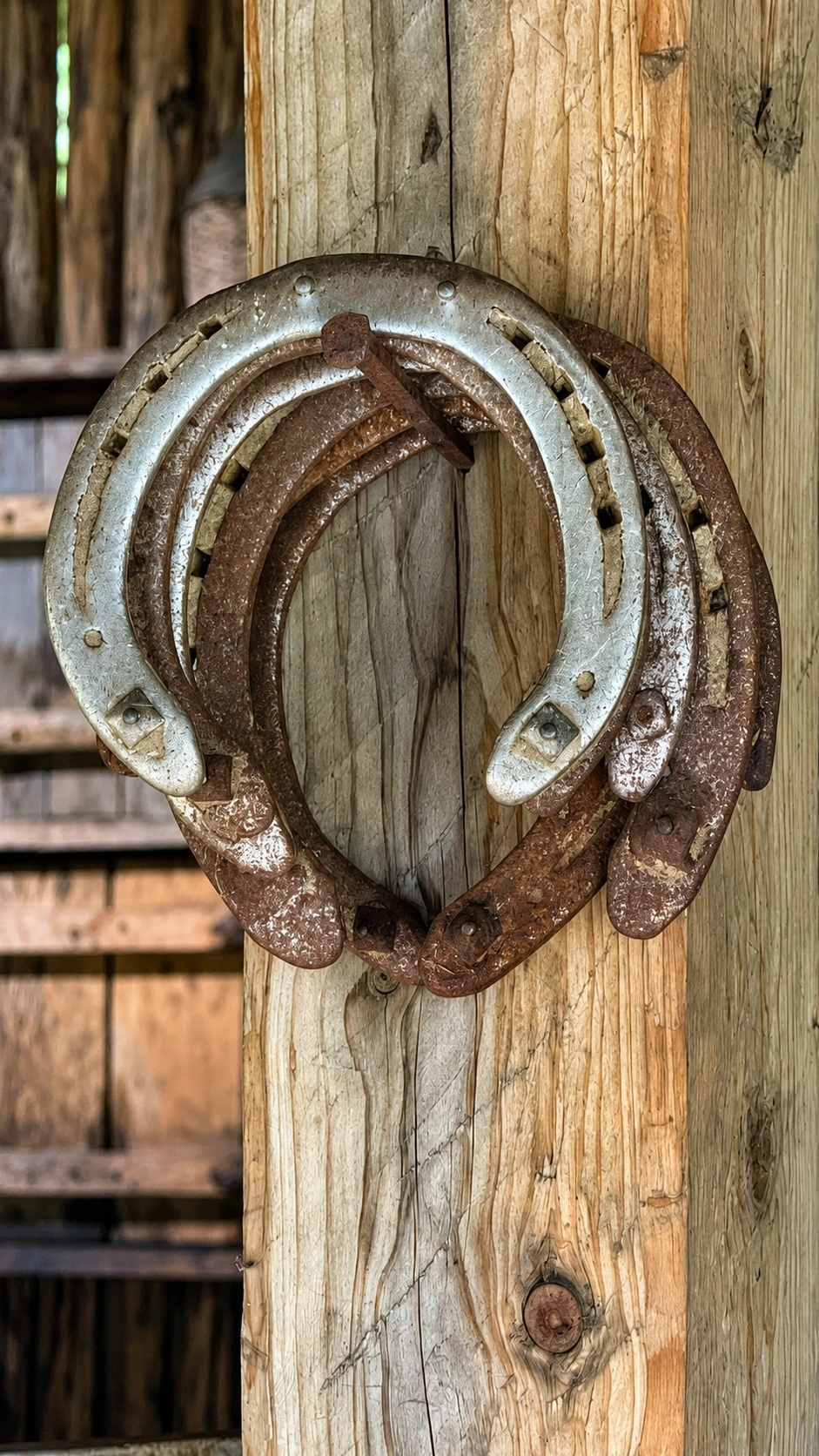
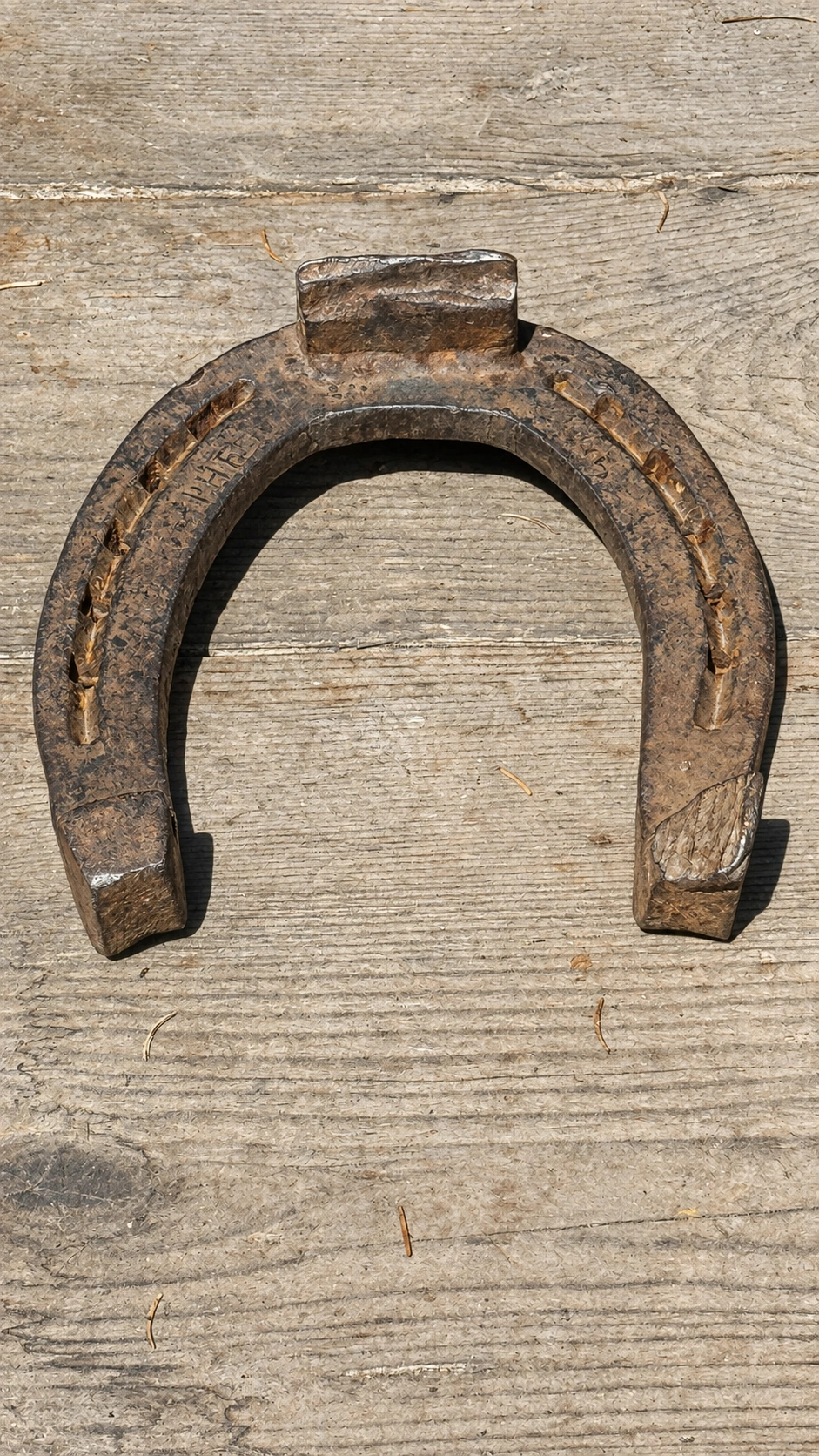
Horseshoes protect the hooves of working animals on rough construction tracks.
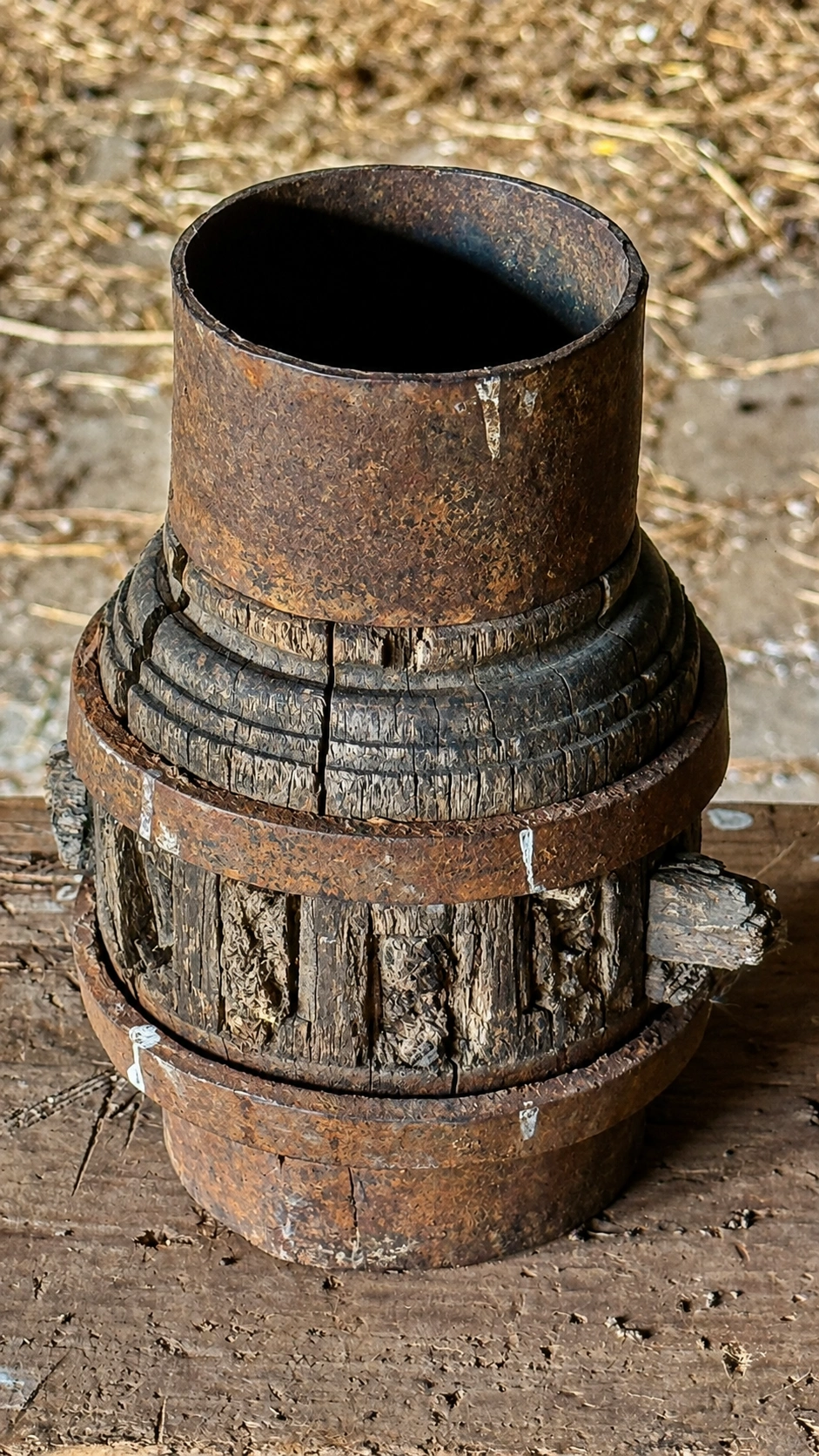
Iron fittings reinforce wooden components exposed to heavy loads and wear.
Large numbers of horseshoes are required to keep horses in service. Regular replacement is essential.
Specialised horseshoes improve traction and durability for working animals.
In the spring of 2010, the field forge was built, and the construction of the large forge with a hearth followed. In 2014, the blacksmith’s hut was expanded with another hearth. Among other tasks, nails and clamps are forged, tools are repaired, chisels are hardened, and fittings are installed.
The narrative shows: Heat Source → Working Surface → Tools → Workplace → Craftsman → Building
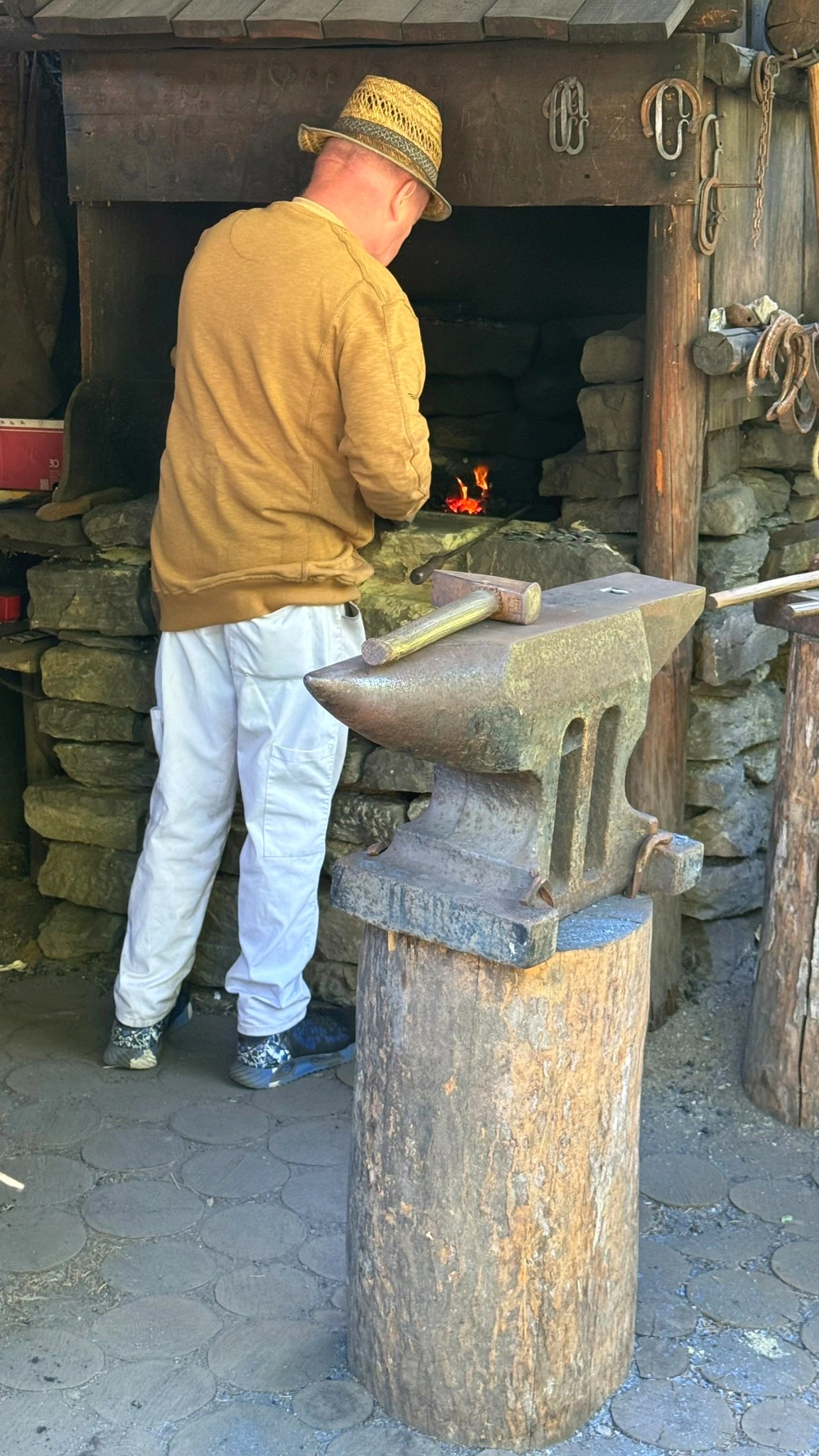
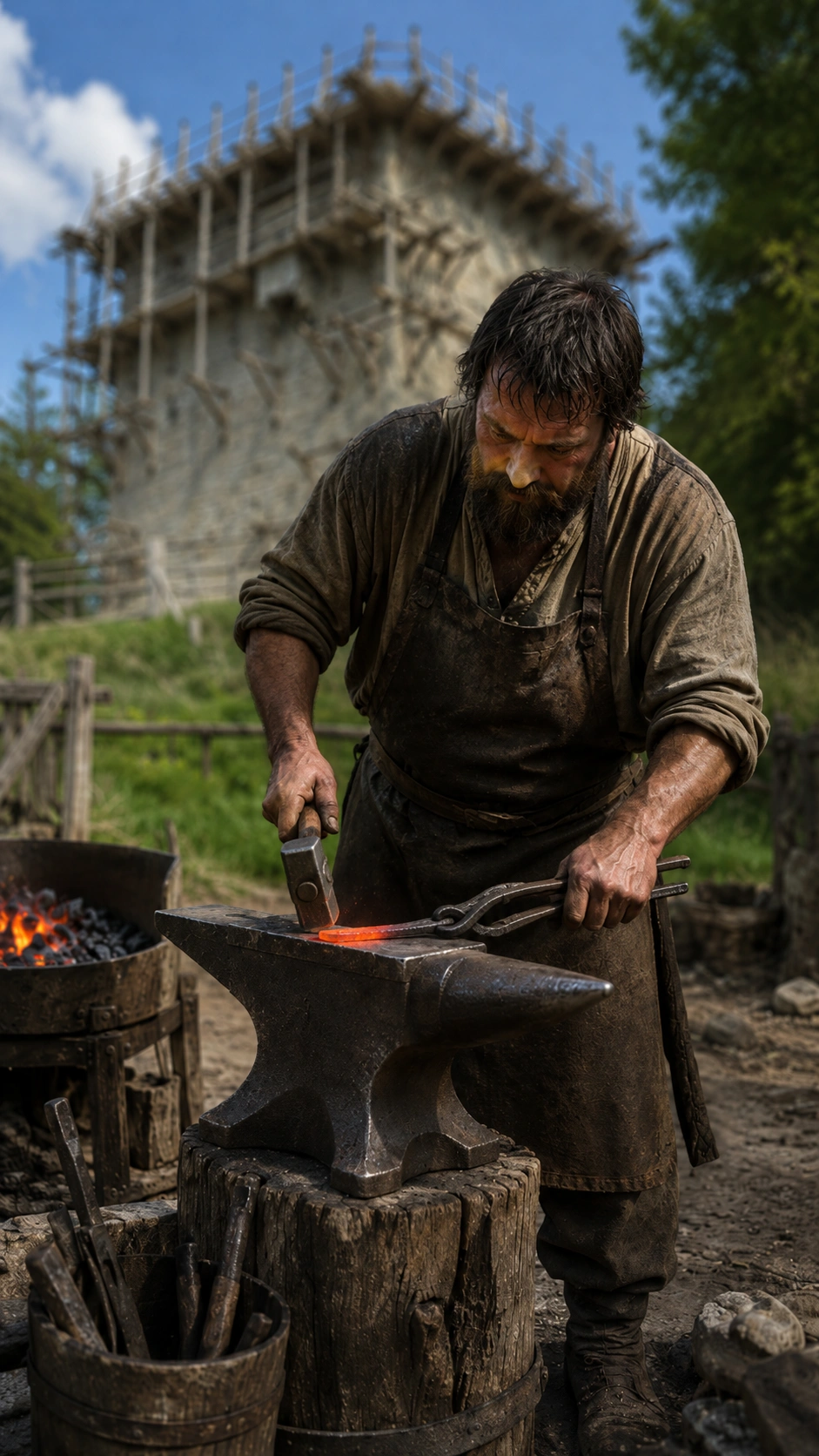
The anvil stands directly beside the forge for shaping heated iron.
The forge, anvil and tools are arranged around an efficient workspace.
The blacksmith tends the fire before shaping heated iron on the anvil.
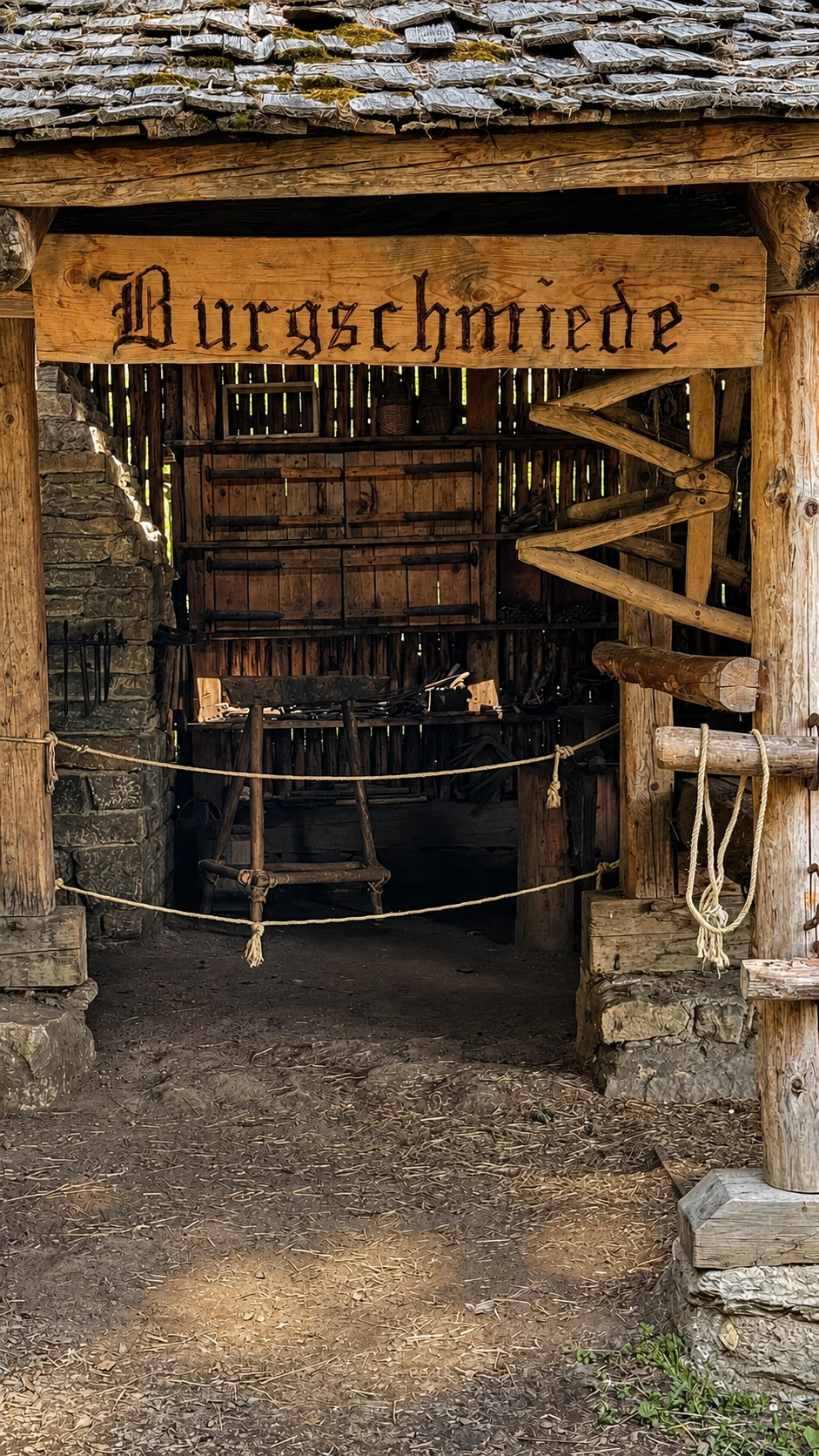
Visitors enter a workshop where fire, skill and experience shape iron.
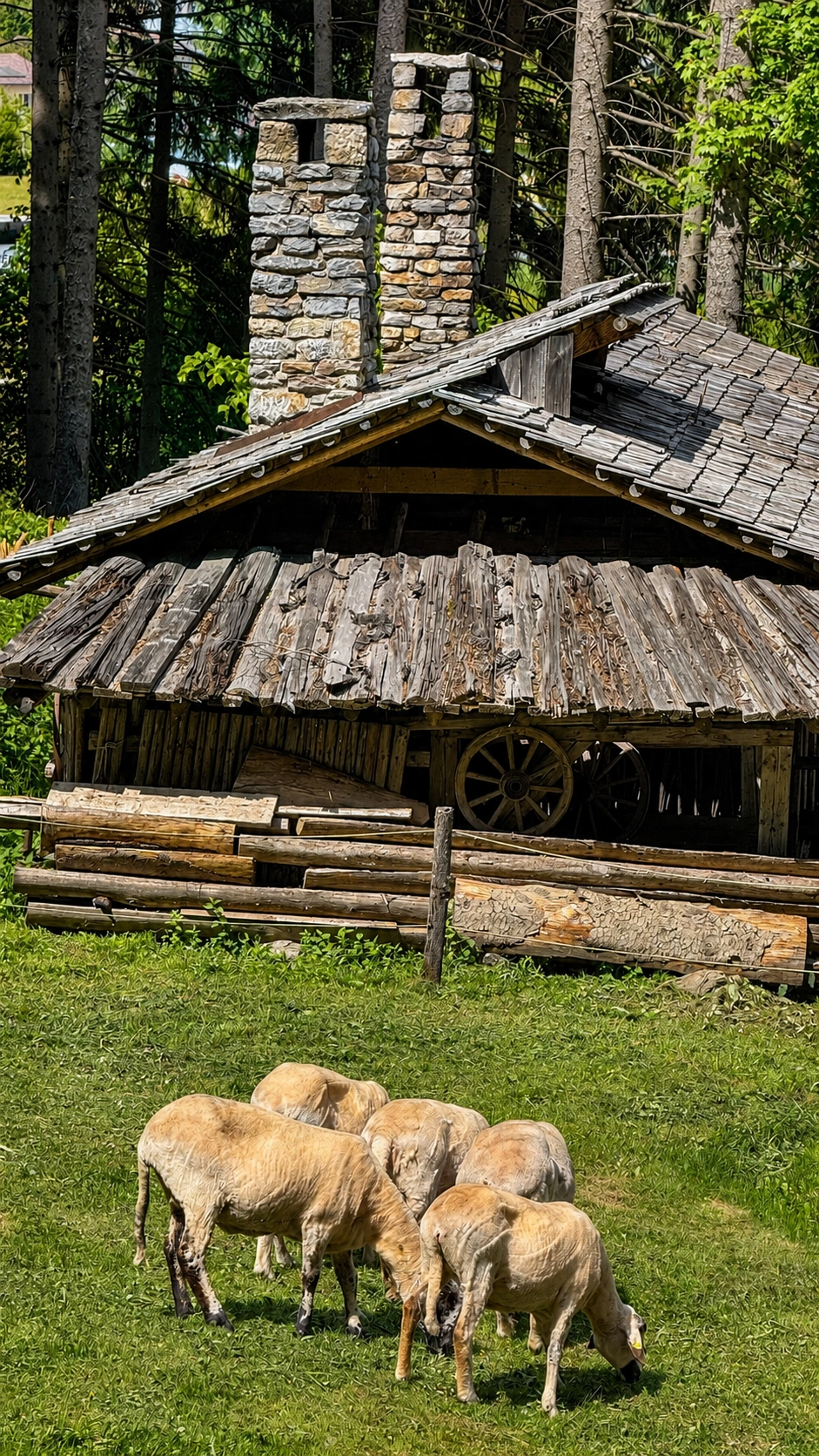
The forge forms part of a busy working landscape. Livestock are seen grazing next to the forge.
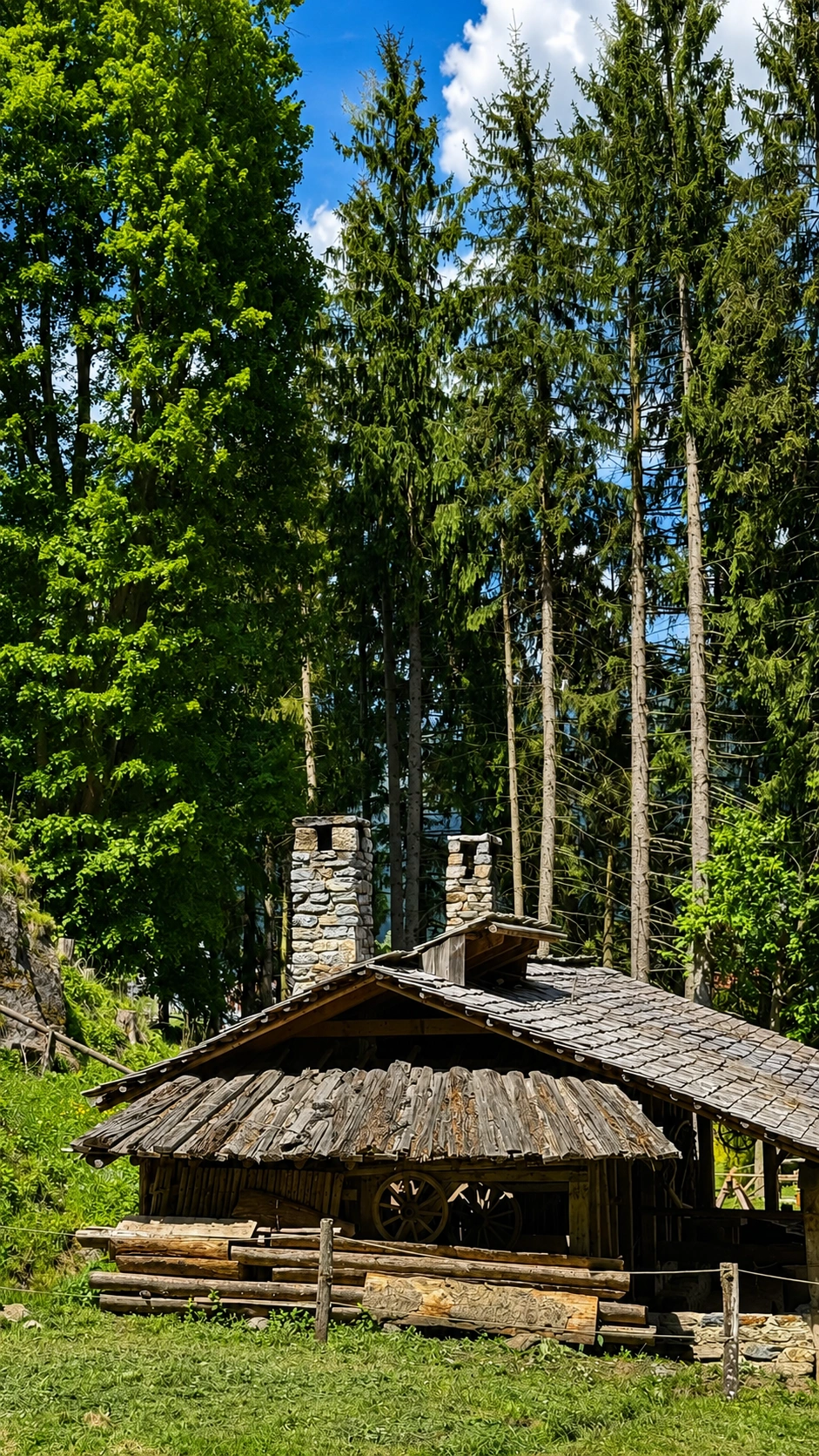
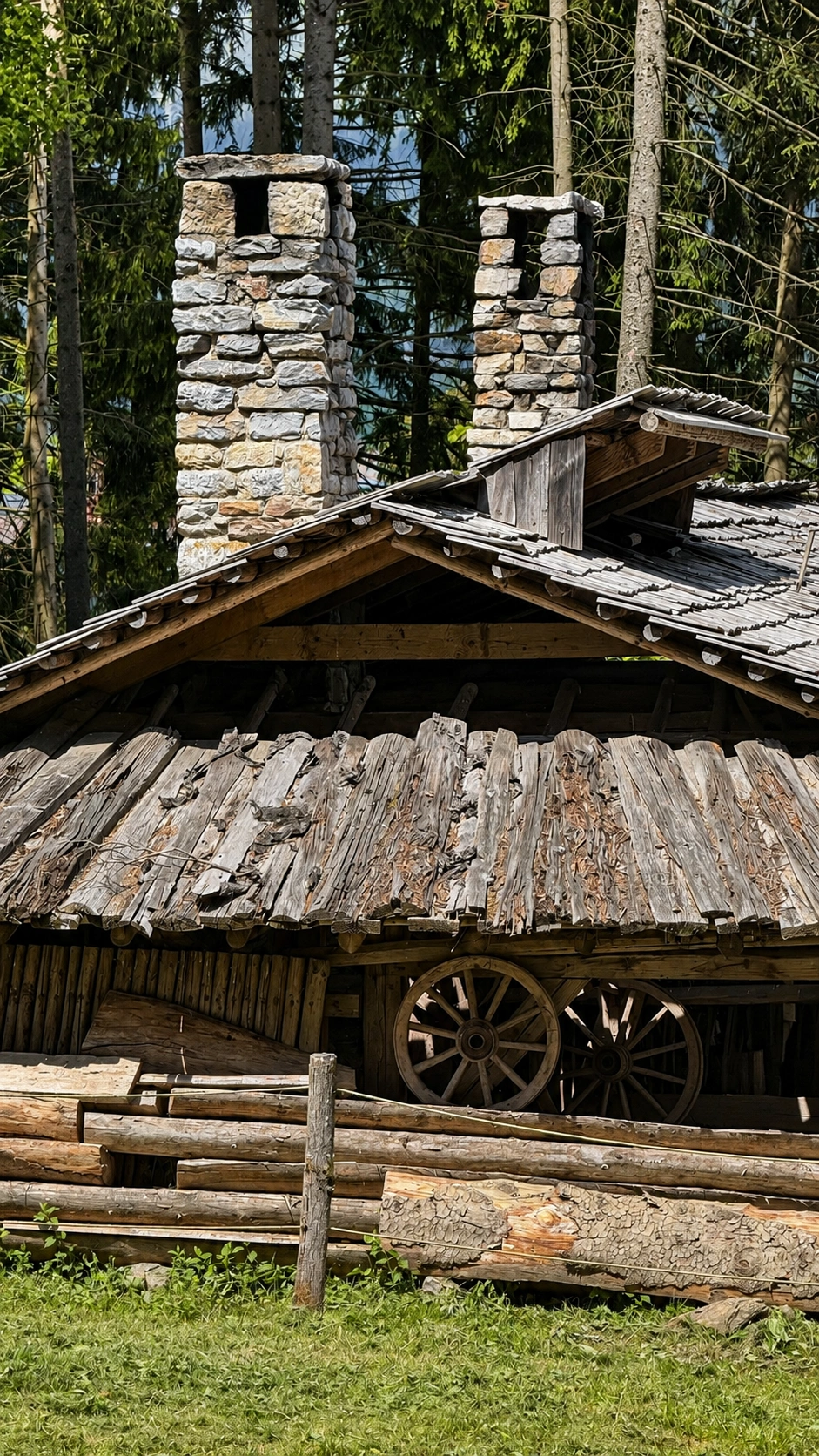
The reconstructed forge features traditional timber and stone construction.
Twin stone chimneys mark the forge and its two hearths.
Vertical Section of a Medieval Forge
Chimney Vertical flue that carried smoke, hot gases and sparks away from the forge and created draught to improve combustion.
Bellows Lever Wooden operating arm used to raise and lower the bellows, forcing air into the fire.
Bellows Chain Chain connecting the bellows to the operating lever, transmitting the pumping motion.
Throat Tapering section between the fireplace opening and the chimney flue that directed smoke and hot gases upward into the chimney.
Hearth Masonry structure containing the forge fire and supporting the working area around it.
Bellows Air-pumping device that supplied a continuous stream of air to increase the fire temperature.
Tuyere Metal air pipe passing through the hearth wall that conveyed air from the bellows into the fire.
Nozzle Inner end of the tuyere where the air entered the fire bed; concentrated and directed the airflow.
Water Trough Container of water used for quenching hot metal and cooling tools.
Ash Pit Chamber beneath the hearth where ash, clinker and other combustion debris accumulated for removal.
Fire Bed Area of burning charcoal within the hearth where metal was heated for forging.
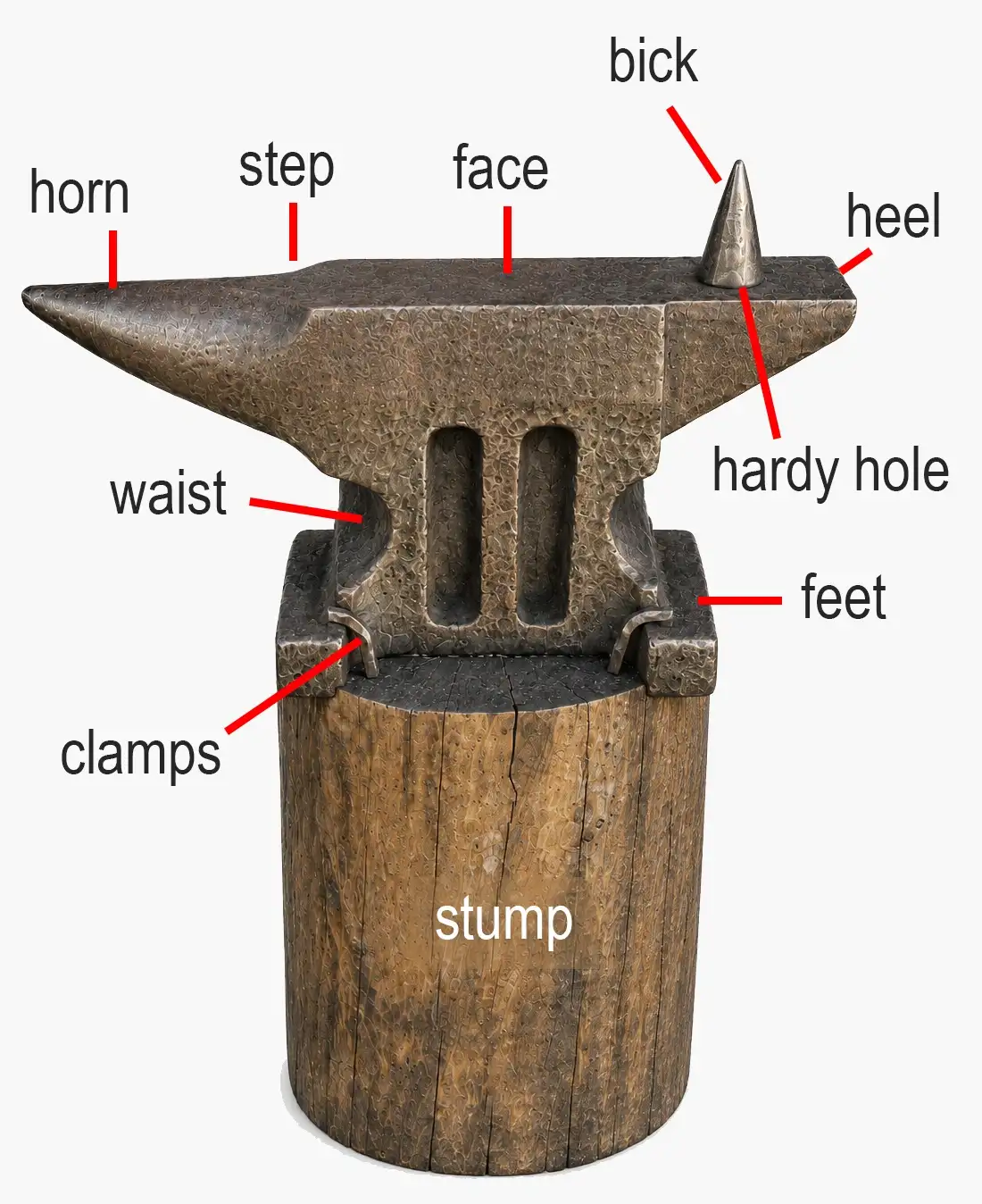
Medieval Anvil Parts and Functions
Horn Tapered projection used for bending, curving and shaping hot metal. Blacksmiths shape hooks, rings, horseshoes and other curved work around the horn.
Step The transition between the horn and the face.
Face The hardened, flat top surface where most forging, flattening and shaping operations are carried out. It provides a durable working area that resists wear and deformation.
Bick A removable conical tool fitted into the hardy hole for forming rings, collars and curved work.
Heel The rear portion of the face behind the hardy hole.
Hardy Hole The hole in the face of the anvil used to hold interchangeable tools. These tools assist with cutting, shaping, grooving and other specialised tasks.
Feet Broad, splayed lower projections that support the anvil and improve stability. They help distribute weight and provide attachment points for securing the anvil.
Stump A heavy wooden block that supports the anvil at a comfortable working height. It absorbs vibrations and helps stabilise the anvil during use.
Clamps Iron clamps used to secure the anvil firmly to the stump or stand. They prevent movement during heavy forging operations.
Waist The narrower central section between the face and feet.